
Villa College, South Asian University Formalise Academic Partnership

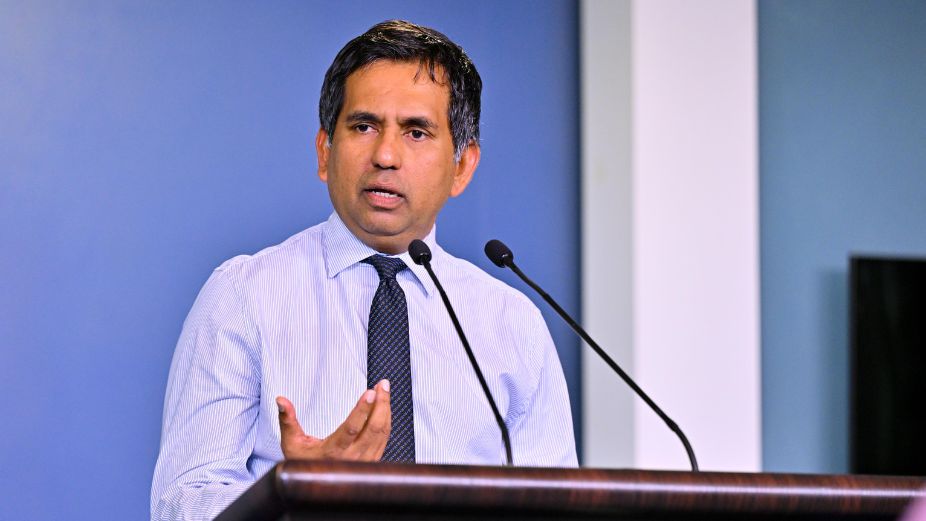
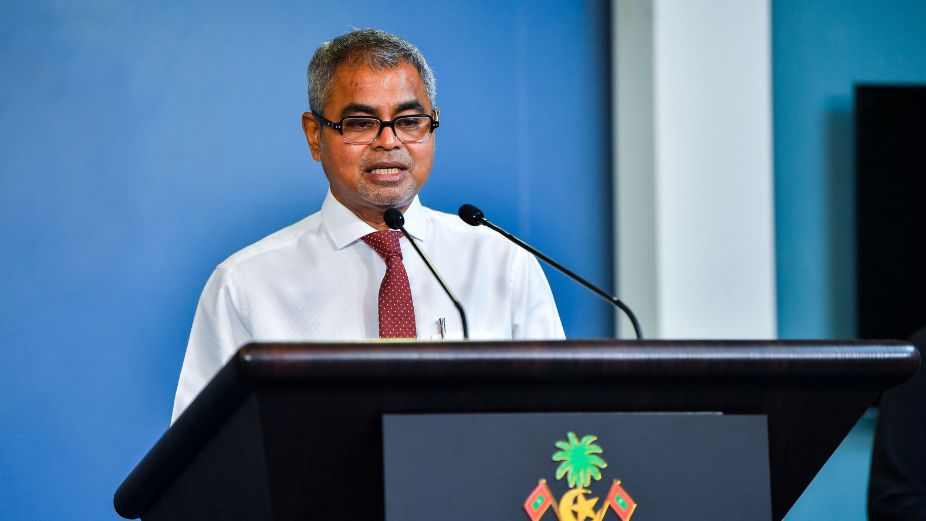
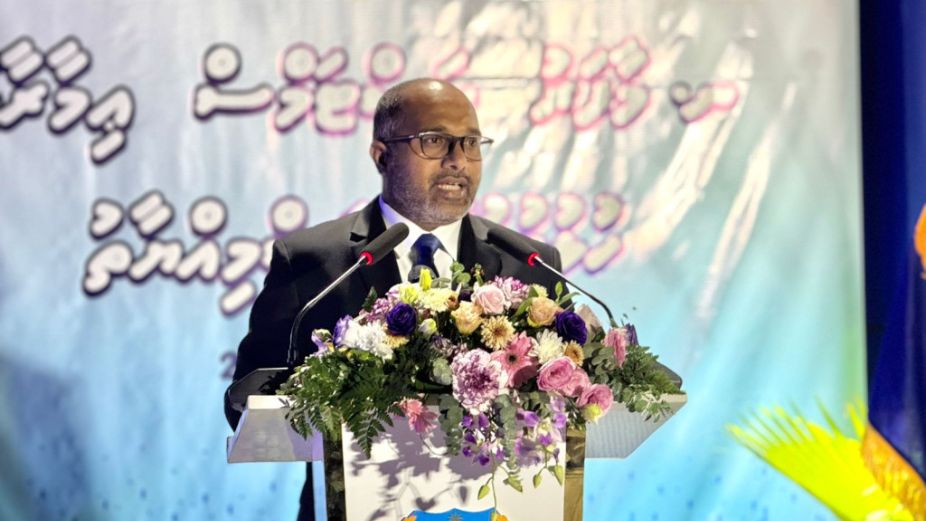
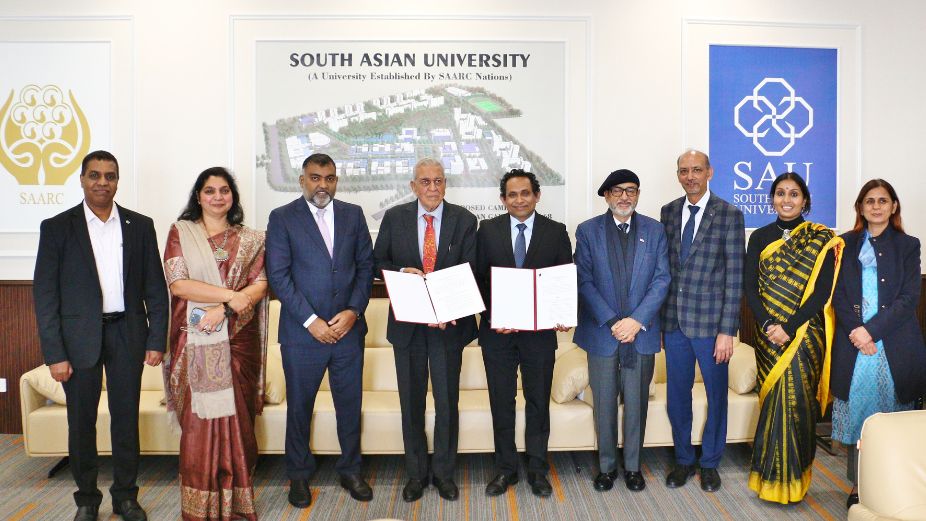
Villa College and South Asian University have signed a Memorandum of Understanding on 19 December 2025, formalising a new partnership aimed at strengthening academic collaboration and higher education development across South Asia.

The agreement sets out a framework for cooperation focused on faculty and student exchange, joint research programmes, and shared academic initiatives intended to deepen regional understanding and intellectual engagement. By bringing together two institutions with a shared emphasis on academic quality, the partnership seeks to expand opportunities for collaboration across borders.

Under the MoU, both institutions will work jointly on curriculum development, teaching initiatives, and academic events including conferences, seminars, and summer and winter schools. The exchange of academic publications and educational resources also forms part of the agreement, supporting wider access to research and learning materials for staff and students.

The partnership further provides for the development of dual and joint degree programmes, joint supervision of Master’s and Doctoral students, staff development activities, and mutual recognition of academic qualifications. These measures are expected to improve academic mobility and create more flexible pathways for higher education within the region.

Cultural exchange and collaborative research are also central to the agreement. Joint cultural programmes and research initiatives are intended to contribute to the preservation and promotion of South Asia’s shared cultural heritage, while strengthening people-to-people connections between the Maldives and India.

The MoU reflects a broader commitment by both institutions to building strong academic networks, supporting regional leadership, and contributing to knowledge creation and sustainable development across South Asia.

Air France Begins Operations at VIA Terminal 1 as Airline Count Reaches 36

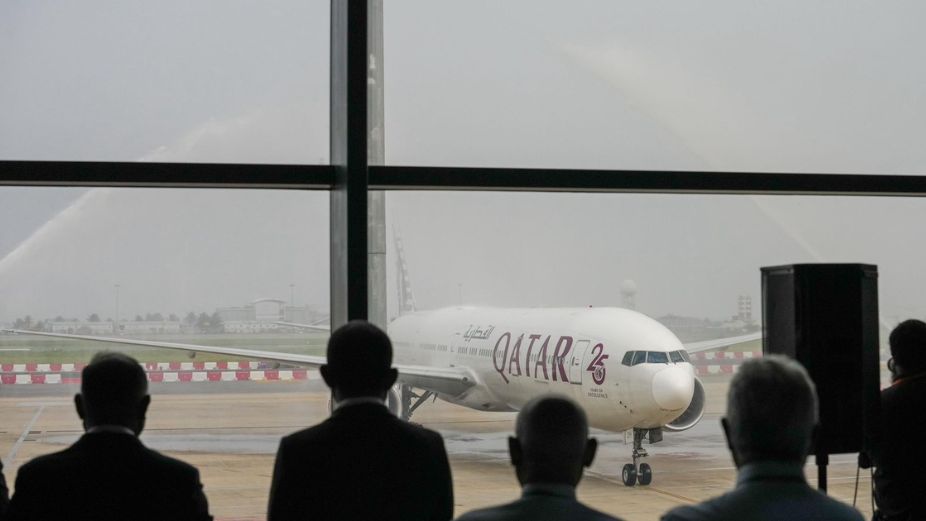
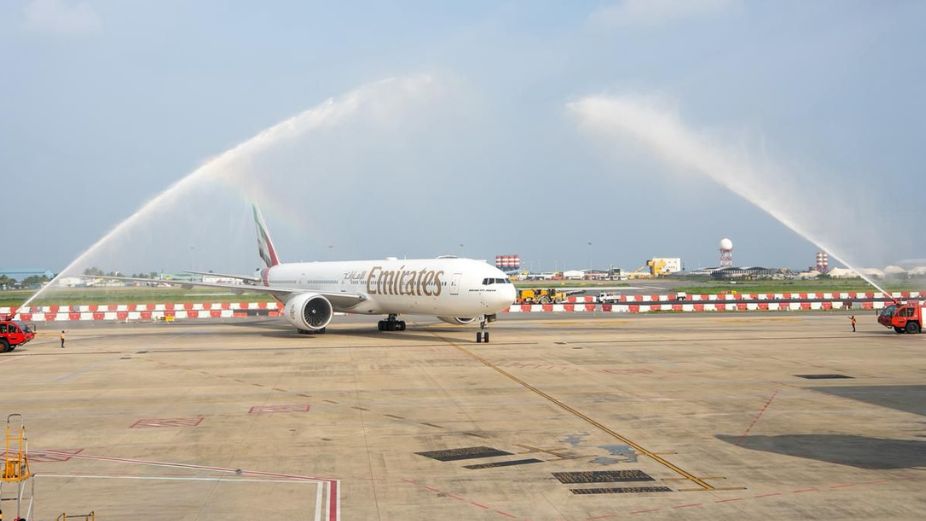
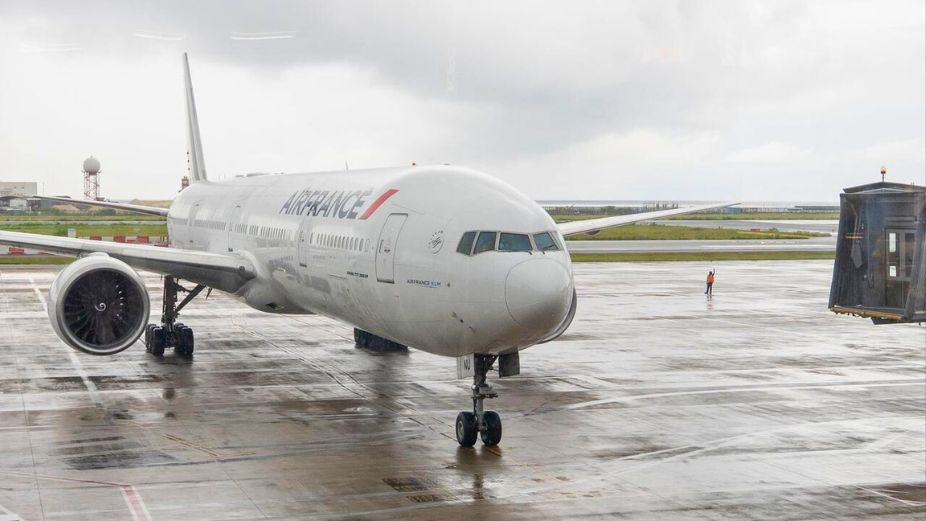
Velana International Airport’s Terminal 1 is now serving 36 airlines, following the addition of Air France as the latest carrier to operate from the new terminal, according to Maldives Airports Company Limited.

A special ceremony was held at Velana International Airport to mark Air France’s transition to Terminal 1. As part of the event, the airline’s check in counters were officially opened. Departing passengers received gifts, while arriving passengers on the first Air France flight to use the terminal were welcomed with cultural performances.

Air France is the first French airline to begin operations from Terminal 1. The carrier has maintained a presence in the Maldives since November 2017, and its move to the new terminal adds to the growing list of international airlines now operating from the facility.

MACL stated that efforts are underway to shift all airlines to Terminal 1 by the end of the year. The airport operator also confirmed that Emirates and Qatar Airways are scheduled to initiate their services from the new terminal by the end of this week.

The continued transition of airlines to Terminal 1 forms part of broader efforts to streamline operations and enhance passenger handling capacity at the country’s main international gateway.

December Arrivals Signal Strong Year End for Maldives Tourism

Tourist arrivals to the Maldives continued to rise in December, with figures for the first 20 days pointing to sustained year on year growth during what is traditionally the busiest month for the tourism sector.

Data released by the Ministry of Tourism and Environment show that 135,280 tourists visited the country between 1 and 20 December 2025. This represents an increase of 10.8 percent compared to the same period last year, when arrivals stood at 122,064. The daily average for the period was 6,764 visitors, reflecting steady demand heading into the final stretch of the year.

December’s performance builds on the broader trend seen throughout 2025. By 20 December, total arrivals for the year had reached 2,157,341, up from 1,959,699 at the same point in 2024. While the full month has yet to close, the December figures so far suggest the year end peak season is holding up well, even against a strong base from last year.

China remained the largest source market as of 20 December, accounting for 325,544 arrivals, followed by Russia with 267,341 visitors and the United Kingdom with 194,931. Germany and Italy rounded out the top five markets. The distribution highlights the continued importance of both Asian and European markets during the peak winter travel period.

Resorts continued to dominate accommodation choices, hosting nearly three quarters of all visitors so far this year. Guesthouses accounted for just over a fifth of arrivals, while hotels and safari vessels made up a smaller share. This pattern remained broadly consistent through December, underlining the central role of the resort sector during the high season.

With arrivals in December still underway at the time of reporting, final figures are expected to edge higher by month end. The data nevertheless point to a strong close to the year, with December reinforcing the Maldives’ position as a preferred winter destination and providing momentum as the industry looks ahead to the new year. 

MNU and Dhiraagu Partner to Support Student Innovation Through InnovateHub

Maldives National University has entered into a strategic partnership with Dhiraagu to strengthen student innovation and entrepreneurship through the initiative now branded as MNU InnovateHub Powered by Dhiraagu.

The partnership was formalised during a ceremony held at the university, marking a step in ongoing efforts to support youth-led innovation and expand the entrepreneurial ecosystem in the Maldives. Through the agreement, the existing MNU InnovateHub programme will operate under its new name, reflecting Dhiraagu’s role as a strategic partner.

MNU InnovateHub is designed to help students develop innovative ideas into practical and scalable solutions. The university-run incubator focuses on capacity building, mentorship, ideation, validation, and early-stage venture development. The programme also aligns with national development priorities and the United Nations Sustainable Development Goals, linking student innovation with broader sustainability objectives.

As part of the partnership, Dhiraagu will provide both financial and in-kind support to the programme. This includes mentorship contributions, participation as judges at pitch events, and the provision of high-speed fibre internet connectivity to the incubator space to support students throughout the incubation process.

The collaboration reflects Dhiraagu’s continued involvement in initiatives aimed at youth empowerment, digital innovation, and entrepreneurship. By supporting university-based incubation, the partnership seeks to contribute to the development of future-ready talent while strengthening links between academia and industry.

According to the partners, the initiative highlights the role of university–industry collaboration in creating opportunities for young entrepreneurs and supporting the growth of the Maldives’ innovation landscape, with a focus on solutions that contribute to economic and social progress. 

Maafaru International Airport Moves Ahead with Apron Inauguration and Terminal Expansion

Maafaru International Airport has moved ahead with the next phase of its development following the inauguration of a new apron extension and the commencement of construction works on an expanded passenger terminal.

The milestone was marked at the airport in Noonu Atoll with the participation of representatives from Island Aviation Services Limited, project partners, contractors and invited guests, reflecting the multi-stakeholder effort behind the airport’s gradual transformation into a key international gateway in the northern Maldives.

The apron extension, now operational, is intended to improve the airport’s capacity to handle aircraft movements and ground operations more efficiently. The project was financed by Maldives Islamic Bank and constructed by Maldives Transport and Contracting Company. According to the operator, the expanded apron allows the airport to better accommodate private aviation activity while supporting scheduled commercial services.

Alongside the apron inauguration, groundwork has begun on a terminal building extension, following the signing of a construction agreement in November 2025. The expanded terminal is expected to increase passenger handling capacity and improve arrival and departure flows as international operations continue to grow.

Development at Maafaru International Airport has progressed in stages since the start of commercial operations in 2019. A major step was the extension of the runway to 2,850 metres, a project funded by the Abu Dhabi Fund for Development and inaugurated in July 2025. The longer runway allows the airport to handle larger aircraft, strengthening its role in international connectivity. The introduction of Jet A-1 refuelling services in 2023 further enhanced operational readiness for both private and commercial flights.

Strategically located in Noonu Atoll, the airport has increasingly positioned itself as a gateway for high end tourism, private aviation and regional development in the north. Its ongoing expansion aligns with broader efforts by the Government of Maldives to strengthen aviation infrastructure, diversify international entry points and encourage more balanced regional growth.

With continued investment and partnerships across financing and construction, Maafaru International Airport is expected to play a larger role in supporting national connectivity and longer-term economic activity in the years ahead.

Ministry Opens Window for Migrant Workers to Regularise Status Before April

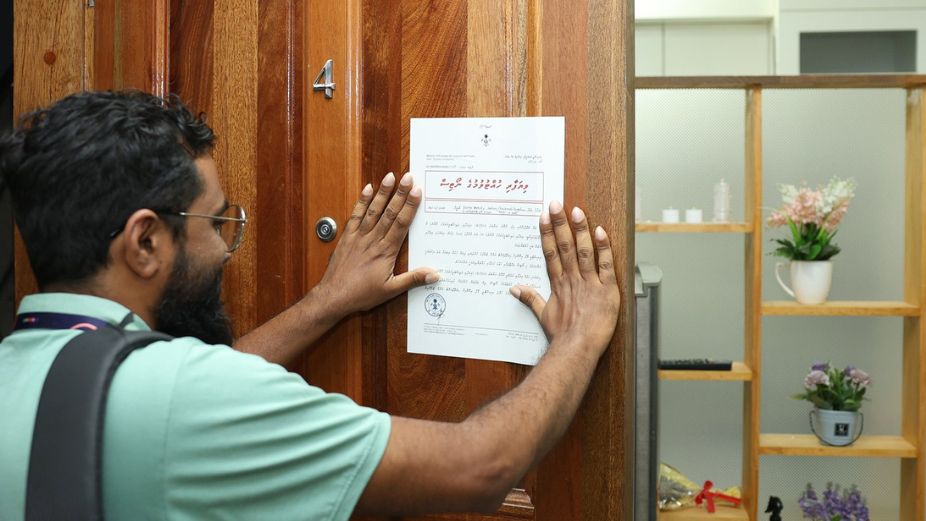
The Ministry of Homeland Security and Technology will launch the Mass Legalisation Program in January, providing undocumented immigrants in the Maldives an opportunity to regularise their status before April.

In a Gazetted announcement on Thursday, the ministry stated that the programme will run from 1 January to 2 April 2026. Migrant workers eligible to register include those without the required permits, those with expired permits, and other undocumented workers currently in the Maldives.

The programme is open only to individuals who have an expired work permit, are not blacklisted, entered the Maldives under a work permit, have not previously participated in a legalisation process, and whose current employer is not the same as any previous employer. Employers must have reported the migrant worker as missing in the expat system before 31 December 2025, and applications must be submitted by the employer via the expat system, which will update its user guide with instructions for the process.

Speaking at a public briefing on Thursday, held alongside the police, Customs Services, Maldives Immigration, and Maldives Ports Limited, Minister of Homeland Security and Technology Ali Ihusaan said the legalisation window will allow those registered through Operation Kurangi—but still remaining as illegal expatriates—to obtain valid work permits. This includes expatriates facing disputes with employers as well as those currently unemployed.

The Maldives has recently intensified measures against undocumented migrant workers, particularly in unregulated businesses in the food and service sectors. President Dr Mohamed Muizzu noted that 52 unregulated massage parlours were closed last week, with 24 shut down by inspection teams and 28 voluntarily closed. He added that the crackdown has extended to other illegal activities, with 38 unregulated businesses closed in the past two weeks, and called on citizens to support government efforts.

By presidential order, Dr Muizzu has also directed the Maldives Police Service, in coordination with relevant authorities, to begin questioning expatriates found in public areas between midnight and 6am.

Barceló Whale Lagoon Maldives Shifts to Meliá Management After Ownership Change

Barceló Whale Lagoon Maldives has transitioned to management by Meliá Hotels International following a change in ownership, marking the end of the resort’s association with the Barceló Hotel Group.

The resort, located in South Ari Atoll, was previously owned by Browns Investments PLC through its Maldives-based subsidiary and operated under the Barceló brand. In September 2025, Browns Investments announced that it had signed an agreement to sell the property to ASB Hotel Properties Maldives Private Limited, a local subsidiary of Dubai-based Albwardy Investment, for USD 57.5 million. The transaction was subject to regulatory and third-party approvals.

Subsequent disclosures by Browns Investments indicate that the sale has now been concluded, transferring ownership of the resort to the Albwardy-linked entity. Following the ownership change, management of the property has shifted to Meliá Hotels International.

Industry transaction advisories linked to the sale state that the resort will be operated by Meliá under the new ownership. Reflecting this transition, the property is now listed within Meliá Hotels International’s global portfolio as “Hotel Whale Lagoon Maldives,” signalling a move away from the Barceló brand.

While Barceló branding continues to appear on some booking and promotional platforms, the inclusion of the resort on Meliá’s official channels suggests that operational control has passed to the Spanish hotel group as part of the post-sale transition process.

No official announcement has yet been made regarding a full rebranding timeline or the specific Meliá brand category under which the resort will ultimately operate. Operations at the resort are understood to be continuing during the handover period.

Payment Maldives Seeks CEO to Lead National Payments Infrastructure

Payment Maldives Pvt Ltd, a subsidiary of the Maldives Monetary Authority, has announced an open call for applications for the position of Chief Executive Officer, seeking an experienced executive to lead the country’s national payments infrastructure.

The appointment will be made on a two-year contract, with the possibility of extension based on performance. The CEO will report directly to the Board of Directors of Payment Maldives and will be responsible for overseeing all core functions of the company, which operates under the oversight of the central bank to support digital transactions and financial inclusion across the Maldives.

According to the public announcement, the role calls for a performance-oriented leader with a strong background in payments, fintech, banking, or regulated financial services. The successful candidate will be expected to provide strategic direction, ensure operational reliability of national payment systems, and guide the organisation’s growth within a tightly regulated environment.

The terms of reference outline a broad set of responsibilities, including developing and implementing long-term strategy in coordination with the Board, maintaining secure and uninterrupted payment operations, and expanding participation in the national payments network. The CEO will also be tasked with promoting digital payment adoption across the country, including in remote atolls, while balancing commercial sustainability with public policy objectives.

Financial oversight forms a central part of the role, with responsibility for profit and loss management, transparent procurement practices, and the allocation of resources towards system security and inclusion initiatives. The position also involves acting as the primary point of engagement with regulators, government bodies, and international partners, as well as ensuring compliance with requirements related to risk management, anti-money laundering, and data protection.

Candidates are required to hold a master’s degree or equivalent in a relevant field such as finance, economics, information technology, law, public policy, or business administration. At least 15 years of senior professional experience is required, including a minimum of five to seven years in an executive leadership role with board-level reporting responsibilities. Familiarity with the Maldivian or a similar small-island financial and regulatory context is considered desirable.

Applications must be submitted by 15 January 2026 at 3:00 pm Maldives time, along with supporting documentation outlined in the announcement. Payment Maldives has stated that applications received after the deadline will not be considered.

Maldives and India Hold Third Consular Dialogue in New Delhi

The third round of the India–Maldives Consular Dialogue was held in New Delhi on 18 December 2025, bringing officials from both countries together to review cooperation on consular and visa-related matters.

The Maldivian delegation was led by High Commissioner of the Maldives to India, Aishath Azeema, while the Indian side was headed by Dr. Binoy George, Joint Secretary at India’s Ministry of External Affairs. Officials from the Ministry of Foreign Affairs and the Ministry of Homeland Security and Technology were also part of the Maldivian delegation.

The Consular Dialogue mechanism was established in 2017 to provide a structured platform for engagement on consular affairs, visa issues, and matters related to mutual legal assistance. The previous round of the Dialogue took place in Malé in 2018.

During the discussions, both sides reaffirmed their commitment to promoting people-to-people exchanges and strengthening cooperation in consular affairs. The delegations held wide-ranging discussions on improving coordination on consular matters and facilitating visa processes.

The importance of maintaining regular engagement through the Consular Dialogue framework was also emphasised, with both sides noting its role in supporting broader bilateral relations between the Maldives and India.

Maldivian Announces First-Ever Direct Melbourne–Malé Flights

Maldivian has announced plans to operate the first-ever direct flights between Australia and the Maldives, with a new Melbourne to Malé service to be launched in partnership with Australian travel company Luxury Escapes.

The weekly service is scheduled to operate on a seasonal basis from 17 May 2026, subject to regulatory approval from Australian authorities. Once in operation, it will mark Maldivian’s first direct operation to Australia and the first non-stop air link between the two countries.

At present, travellers flying between Australia and the Maldives typically transit through major international hubs. The introduction of a direct route is expected to shorten travel times and improve connectivity with one of the Maldives’ established long-haul tourism markets. Australia has remained a consistent source of visitors, with travellers from the country known for longer average stays.

According to the airline, arrival times into Malé have been planned to align with onward domestic and seaplane connections, allowing passengers to access islands across the Maldives using Maldivian’s existing network.

Maldivian Managing Director Ibrahim Iyas said Australia continues to play an important role in the Maldives’ tourism sector, noting that Australian travellers regularly rank among the top long-haul markets for the destination. He described the direct route as a historic step that strengthens ties between the two countries while supporting national tourism growth.

Luxury Escapes Co-Founder and Chief Executive Officer Adam Schwab said booking data shows the Maldives trending strongly for 2026, with hotel reservations rising and average stays of five to six nights. He added that around 20 percent of Australians travelling to the Maldives currently do so through Luxury Escapes packages, with the new service designed to support that demand.

Melbourne Airport Chief Executive Officer Lorie Argus said the new route would make Melbourne the only airport in Australia with a direct connection to the Maldives, adding that non-stop services are particularly attractive to travellers due to convenience and time savings.

Maldivian currently operates a mixed fleet across domestic, seaplane and international services, and the new Australia route adds to the airline’s growing international footprint while strengthening air links to key tourism markets.

Why Targeting the Workforce the Maldives Relies On May Backfire

Nationalism is often sold as protection. In practice, it frequently begins with classification, moves into suspicion, and ends with exclusion. In small economies, especially those that rely on mobility, services, and openness, that progression rarely stops at rhetoric. It reshapes policy.

Over the past weeks, the Maldives has entered that progression decisively.

Foreign worker quotas are being phased out across a wide range of professions, including nurses, teachers, engineers, pilots, accountants, beauticians, and dive instructors, with timelines ranging from two to five years. At the same time, police and immigration authorities have begun a nationwide programme to stop and question expatriates found in public spaces between midnight and six in the morning, following a directive announced by President Dr Mohamed Muizzu on social media. On the first night of the programme, 23 expatriates were questioned. One was arrested for violating existing laws and handed over to Immigration.

The government describes these actions as regulation and enforcement. Taken together, they represent something more coherent and more troubling: the steady normalisation of a worldview in which expatriates are no longer treated primarily as workers within an economy, but as a social problem to be managed.

This shift matters because the Maldives is not an economy that can function on symbolism alone. Census-based data shows that roughly one in four people living in the country is a foreign national. Expatriate workers dominate employment in tourism and construction, the two sectors that generate income, foreign exchange, and infrastructure at scale. Healthcare, education, logistics, and technical services rely on smaller but indispensable pools of foreign professionals. These are not marginal roles that can be substituted casually. They are embedded in how the country operates.

Localisation is a legitimate policy goal. But localisation without capacity is not policy. It is theatre.

Nursing cannot be replaced on a political timetable. Teaching cannot be scaled without years of training, mentoring, and retention. Aviation and marine professions operate under international licensing regimes that do not bend to domestic sentiment. Even service roles such as beauticians or guest relations officers persist not because employers prefer foreigners, but because demand exists and supply does not meet it consistently.

The revised expatriate employment regulation illustrates the problem clearly. After initial backlash, baby sitters were quietly removed from the phase-out list, an implicit acknowledgement that some decisions were made without basic labour market logic. Yet nurses, teachers, and pilots remain on the clock. The state reserves the right to revise lists again, which suggests awareness that labour availability may not cooperate with ideology. What remains unaddressed is the disruption risk during the interim.

Alongside labour restrictions, enforcement has taken on a distinctly performative character. Police are not stopping people because they are committing offences. They are stopping them because they are expatriates, in public, at certain hours. Behaviour becomes secondary to identity. This is not neutral law enforcement. It is profiling, justified by vague appeals to social norms.

That distinction is important. Illegal employment, proxy ownership, labour exploitation, and undocumented migration are real problems. They deserve serious enforcement. But enforcement aimed at illegality looks very different from enforcement aimed at visibility. When the state instructs police to question people based on who they are rather than what they are doing, it crosses from regulation into suspicion.

This is how nationalism hardens.

Extreme nationalism in small states often presents itself as defence of sovereignty and social order. In practice, it reframes structural economic challenges as cultural ones. Labour shortages become moral failings. Regulatory gaps become character flaws. Foreign workers stop being inputs in a production system and start being treated as contaminants.

The Maldives is not unique in facing these pressures. Small island economies across the world rely on migrant labour to sustain tourism, healthcare, and infrastructure. Those that function best do not deny this reliance. They manage it. They regulate entry, enforce standards, protect workers, and require skills transfer, while accepting that openness is not weakness but necessity.

What makes the current Maldivian moment distinctive is the convergence of labour policy, policing, and rhetoric. Biometric data has now been collected from more than 191,000 expatriates, with deportation threatened for non-compliance. Illegal businesses are being shut down in large numbers. Quotas are being cancelled. Night-time questioning is being normalised. Each step is defended as reasonable. Together, they create an atmosphere in which foreigners are constantly reminded that their presence is provisional and suspect.

Opposition figures have begun to articulate the concern more bluntly. Meekail Naseem, an opposition MP, described the policy direction as xenophobic and warned that it signals an erosion of civil liberties that will not stop with migrants. That warning should not be dismissed as partisan exaggeration. History suggests that when states normalise selective policing and identity-based suspicion, the boundary of who counts as suspect rarely stays fixed.

There is also a quieter cost that nationalism rarely accounts for. Economies do not respond to mood. They respond to capacity. When staffing gaps widen, service quality declines. When professionals leave, systems strain. When investors perceive unpredictability in labour access, they hesitate. None of this announces itself immediately. It accumulates.

The irony is that the Maldives is attempting to assert control over a workforce precisely because it is indispensable. That is not strength. It is misdiagnosis.

A serious labour policy would separate illegality from identity, enforcement from spectacle, and localisation from deadline politics. It would acknowledge that expatriates are not a temporary inconvenience, but a structural component of the economy the country has chosen to build.

Nationalism promises order. What it often delivers, instead, is fragility.

DhiraaguPay Offers MVR 1 Waffle Promotion with Meltz

Dhiraagu Fintech has announced a limited time promotion offering DhiraaguPay users the opportunity to purchase waffles for MVR 1 at Meltz outlets in Malé.

The promotion will take place on Saturday, 20 December, at Meltz Café, Meltz Crumble, and Meltz Caramel, starting from 10:00 am onwards. The offer will be available to the first 500 customers across the three locations.

To redeem the promotion, customers are required to make the payment using their DhiraaguPay wallet by presenting their Wallet ID at the point of purchase. New users are also eligible to take part by downloading the DhiraaguPay app, registering, and completing the transaction through the platform.

Dhiraagu Fintech said the promotion follows strong public interest seen in previous MVR 1 offers run in collaboration with merchant partners. The company noted that such campaigns are intended to encourage customer engagement while providing businesses with opportunities to reach wider audiences through digital payment platforms.

The company said it continues to focus on promoting secure and convenient digital payment solutions, while introducing fintech services aimed at supporting everyday transactions and the country’s broader digitalisation efforts. Dhiraagu Fintech operates as a subsidiary of Dhiraagu. 

Gov’t Pushes Back Timeline Again for Clearing SOE Payment Backlog

The government has once again adjusted its timeframe for settling unpaid bills owed by state-owned enterprises, as frustration continues to mount within the business community over delayed payments.

Outstanding receivables from government-owned companies have long been cited by both small and medium enterprises and larger firms as a drag on cash flow and business continuity. Despite multiple assurances this year, suppliers say delays remain unresolved, prompting renewed discussions at the highest level.

The issue resurfaced during President Mohamed Muizzu’s meeting with small and medium enterprises on Wednesday, where business owners described how unpaid bills were affecting their ability to operate. Several participants also raised concerns about having to meet tax obligations despite not receiving payment for goods and services already delivered.

The President said the government would look into regulatory options, with consultations planned between the Maldives Inland Revenue Authority and the Ministry of Finance to examine what relief or adjustments could be made within the current legal framework. He indicated that the aim was to identify a workable solution that addresses both payment delays and the knock-on impact on tax compliance.

While no figures were disclosed, the President said partial payments would be released to some businesses before the end of the month, with the remaining backlog expected to be cleared by the month of Ramadan. He also said that once payments are made, related issues linked to outstanding tax liabilities would be reviewed.

This is not the first time deadlines have been revised. In early October, the President said suppliers would be paid within five weeks. In early November, he said payments were being processed daily and would continue until all arrears were cleared. Later, at a meeting with residents of Machchangolhi in late November, he said the bills would be settled by the end of the year.

Ooredoo Fun Run Participants to Enter Lucky Draw for Travel and Merchandise Prizes

Participants of the upcoming Ooredoo Fun Run will stand a chance to win a range of prizes, including return air tickets and sports merchandise, as Ooredoo Maldives announced a lucky draw linked to the event.

All registered participants of the Ooredoo Fun Run will be automatically entered into the draw. Three winners will each receive return air tickets to Colombo, Sri Lanka, provided by partner airline Fits Air. In addition, one participant will receive a gift hamper from BootRoom, which includes football boots, jerseys, a snorkel kit, and other items.

The lucky draw is scheduled to be conducted live on the Ooredoo Fun Run stage at Hulhumalé Central Park, starting from 5:30 pm. Participants will be able to witness the draw and the announcement of winners as part of the post run activities.

The Ooredoo Fun Run is positioned as a community focused event centred on wellness and togetherness, bringing together participants of different age groups for an evening that combines physical activity with entertainment and social engagement.

The run is set to begin at 4:00 pm on Friday, 19 December, at Hulhumalé Central Park. Ooredoo has encouraged participants to remain at the venue after completing the run to take part in the live draw and the wider programme planned for the evening. 

SriLankan Airlines Commences Operations from VIA’s New Terminal 1

SriLankan Airlines has commenced operations from the new passenger terminal, Terminal 1, at Velana International Airport, marking another step in the gradual transition of airlines to the upgraded facility.

A special ceremony was held at Terminal 1 to mark the start of the airline’s operations from the new terminal. The event was attended by the High Commissioner of Sri Lanka to the Maldives, Mohamed Rizvi Hassen, along with SriLankan Airlines Country Manager Nayomi Thenakoon and senior officials from Maldives Airports Company Limited (MACL).

As part of the opening, SriLankan Airlines’ check-in counters at Terminal 1 were officially opened. Gifts were presented to 115 departing passengers travelling on the airline, while a welcoming programme with cultural activities was organised for the 277 passengers arriving on flight UL101, the first SriLankan Airlines flight to operate from the new terminal.

SriLankan Airlines is the second Sri Lankan carrier to begin services from Terminal 1. The national carrier first started operating flights to the Maldives on 1 September 1979, maintaining a long-standing presence in the market.

With the addition of SriLankan Airlines, Terminal 1 is now serving 33 airlines. MACL has said its objective is to provide a high standard of service and facilities to all airlines operating to the Maldives as operations continue to expand at the new terminal.

Governance, The Missing Link in Maldivian Businesses

Every successful business begins with a vision. A cause to believe in or a clear purpose that defines where it wants to go and why it exists. Yet turning that vision into lasting success requires more than ambition. It demands structure, direction, and accountability. 

Just as a skilled captain steers a Dhoni through unpredictable seas, effective governance guides a business through economic uncertainty. While the owner defines the destination, strong governance anchored by a capable board and empowered leadership ensures the organization stays on course, makes informed decisions, and endures over time.

In today’s evolving corporate landscape, governance has moved beyond compliance to become the cornerstone of sustainable growth and stakeholder confidence. It bridges the gap between vision and execution, ensuring success built on integrity and long-term value.

Why Governance Matters

Many business owners wonder why they should implement governance when their company already seems to be running well. The reason is long-term sustainability. Effective governance adds structure, accountability, and transparency, enabling owners to concentrate on strategy while entrusting day-to-day operations to their executive teams. Directors serve as custodians of the company’s vision, helping ensure that decisions support long-term value rather than short-term wins. 

In essence, governance provides the framework for how an organization is led, managed, and held accountable clarifying who makes decisions, who carries them out, and who ensures compliance with legal and ethical standards. 

How Proper Governance Became  Necessity.

Governance surged to the forefront of global business discussions because real-world failures exposed its importance. Although the foundations were laid by early frameworks like the Cadbury Report (1992) and the UK Corporate Governance Code, it was the corporate scandals and financial crises of the 2000s that proved how vulnerable organizations can be without strong oversight. 

Companies didn’t collapse due to poor products, but they fell because of weak governance, complacent ownership, unchecked executive power, and boards that lacked true independence. High-profile failures such as Enron and WorldCom triggered major reforms like the Sarbanes-Oxley Act (2002), teaching the world a clear lesson that, robust governance isn’t optional but it’s essential for long-term stability and trust.

Governance Landscape of Maldives

In the Maldives, governance principles are embedded in the Companies Act No. 07/2023 and the Capital Market Development Authority (CMDA) Corporate Governance Code. 

Publicly listed companies must comply with the CMDA Code. State-owned enterprises are overseen under the Privatization and Corporatization Act 3/2013 and related governance frameworks. Banks and non banking financial institutions have to adhere to Banking Act and prudential guidelines of Maldives Monetary Authority, and while Capital Market participants are regulated by CMDA. 

Privately held companies must maintain Articles of Association compliant with the Companies Act, including board composition and director responsibilities, though they are not required to follow the CMDA governance Code.

Why This Matters Now

According to December 2021 issue of Maldives Economic Review, Dhivehi Rayyithunge Bodu Store was established in December 1942 under an Act of Parliament. Is also recognised as the first registered company in the Maldives. Hence, no privately held company has surpassed the 100-year milestone.

Studies show that only around 30% of family businesses successfully transition to the second generation, about 12% make it to the third, and a mere 3% continue into the fourth generation or beyond. These findings are widely recognised in global family-business research, including analysis by the Conway Center for Family Business and the Family Business Consulting Group.

Governance is no longer just a box to tick or a compliance exercise. It has become a genuinely important conversation in Maldivian business communities for three key reasons.

  • First-Generation Transition: Many first-generation entrepreneurs are approaching retirement, and without governance, succession becomes risky.
  • From Survival to Scale: To grow, attract investment, and compete regionally, companies need robust plans, KPIs, and strategic board guidance.
  • Upholding the Cause: Governance ensures organizations remain true to their founding vision and values as they expand.

As the Maldives enters a new era of private-sector maturity, governance will determine which businesses endure beyond the first generation.

Steering the Future

The businesses are more than a commercial venture, it is a legacy and a source of livelihoods. Without governance, even strong enterprises risk losing direction. The future of Maldivian enterprise will be defined not by size or profit, but by governance that transforms vision into enduring legacy. 

Crowe Maldives remains committed to partnering with organizations seeking stronger governance, clearer decision-making, and sustainable growth. We work closely with owners, boards, regulators, and the wider business community to deliver governance and advisory solutions that are compliant, practical, and aligned with evolving market expectations.

MACL Begins Familiarisation Training for Seaplane Counters at New Terminal

Maldives Airports Company Limited (MACL) has begun operational flow familiarisation training for seaplane check in counters at the newly inaugurated Terminal 1 at Velana International Airport, as part of efforts to prepare the facility for full seaplane operations.

In a post shared on social media, MACL said the trial was conducted to assess and validate end to end passenger handling and operational workflows at the new terminal. The training involved two airline operators, Flyme and Maldivian, both of which participated in testing the operational processes for seaplane passengers.

The introduction of dedicated seaplane counters at Terminal 1 aligns with the Maldives operating the largest seaplane network in the world. The new terminal includes 24 hour check in counters specifically allocated for seaplane operations, reflecting the sector’s importance to the country’s tourism industry.

At present, 33 airlines are operating from the new passenger terminal, which was officially inaugurated on 26 July this year. The terminal spans 72,000 square metres and has been designed to handle up to 7.5 million passengers annually.

Facilities at Terminal 1 include 12 passenger boarding bridges, 47 conventional check in counters, six self check in kiosks, and an advanced baggage handling system with real time tracking. MACL has been gradually transitioning operations to the new terminal as part of broader plans to modernise passenger processing and improve operational efficiency at Velana International Airport.

Maldives and China Hold Seventh Joint Meeting on Safety of Chinese Tourists

The seventh meeting of the Joint Meeting Mechanism to Deal with the Issue of Safety of Chinese Tourists in the Maldives was held in Malé, bringing together officials and industry stakeholders to review safety standards and coordination measures linked to Chinese visitor arrivals.

The meeting was co-chaired by Minister of State for Foreign Affairs Sheryna Abdul Samad, Ambassador of the People’s Republic of China to the Maldives Kong Xianhua, and Minister of State for Tourism and Environment Dr Abdulla Niyaz. Participants included representatives from government ministries, security agencies, healthcare institutions, aviation and transport companies, tourism associations, disaster management bodies, humanitarian organisations, and insurance providers, reflecting a broad, multi-stakeholder approach to visitor safety.

In her opening remarks, State Minister Sheryna highlighted the longstanding partnership between the Maldives and China, noting that tourism remains a central element of bilateral cooperation. She said China continues to be the Maldives’ largest source market, with more than 320,000 Chinese visitors recorded so far this year, a figure she said reflects a high level of confidence among Chinese travellers.

The State Minister pointed to the need for stronger preventive measures, stricter enforcement of safety standards, and closer coordination across government agencies and the tourism industry. Particular attention was drawn to safety practices related to water-based activities at tourism facilities. She called for the Joint Meeting Mechanism to function as a more results-focused platform, with clear responsibilities, accountability, and time-bound actions.

Sheryna said ensuring visitor safety is a shared responsibility of government authorities, tourism operators, and partners in China. She highlighted the importance of cooperation in areas such as regulation, inspections, traveller awareness, and insurance coverage, reaffirming the government’s commitment to reforms aimed at safeguarding Chinese visitors to the Maldives.

Ambassador Kong Xianhua thanked the Maldivian government for its continued cooperation and efforts to protect Chinese tourists, noting the value of sustained engagement through the joint mechanism.

Looking ahead, State Minister Sheryna said the Maldives is working with the Chinese Embassy and the Ministry of Tourism to organise a ministerial-level forum on tourism cooperation next year. The proposed forum is expected to address safety and security issues while also covering wider areas such as investment and tourism promotion.

The meeting concluded with a shared commitment to implement practical measures, strengthen safety awareness, and maintain a secure and welcoming environment for Chinese tourists.

The Joint Meeting Mechanism was established in 2014 as a bilateral platform to bring together key tourism stakeholders. It is held annually to review the implementation of safety protocols, improve inter-agency coordination, and identify policy gaps requiring attention.

Dhiraagu NetProtect Offers Added Layer of Protection Against Online Scams

As online scams continue to target internet users across the Maldives, Dhiraagu NetProtect remains available as a digital security service aimed at reducing exposure to common online threats.

The service is designed to protect users from unsafe SMS links, social media links, and phishing websites by issuing alerts before potentially harmful content is accessed. This allows customers to avoid scams, fraud, and other digital risks while browsing online. According to Dhiraagu, the service blocked more than nine million security threats in November alone, reflecting the scale of online risks faced by users.

Dhiraagu NetProtect operates using AI-driven security technology that is continuously updated with real-time threat intelligence. This enables the system to identify emerging risks and provide ongoing protection without requiring users to install additional software or applications on their devices.

The service also offers features aimed at supporting online safety for children. Parents and guardians can use NetProtect to identify and block unsafe websites, set time limits for access to specific sites, and restrict internet usage during selected periods.

Dhiraagu mobile customers can access NetProtect for a monthly fee of MVR 35, while fixed broadband customers are charged MVR 50 per month. Activation can be completed through the DhiraaguApp, and the service can be customised based on individual needs.

Dhiraagu has stated that it continues to focus on providing digital solutions that address everyday online risks, alongside broader efforts to support safer internet use across the country.

37 Businesses Shut Down as Gov’t Intensifies Crackdown on Illegal Expatriate Operations

The Ministry of Economic Development and Trade has ordered the closure of 37 businesses as part of a nationwide crackdown on illegal expatriate run enterprises, signalling a renewed push to enforce compliance with economic and immigration laws.

The enforcement drive is being carried out by the National Taskforce on Combating Illegal Expatriate Operations and Businesses, which brings together officials from the economic and homeland security sectors, alongside the Maldives Police Service and immigration authorities.

According to the ministry, enforcement activity has increased markedly in recent weeks. Between late November and mid December, authorities received 252 public reports and carried out inspections at 98 business establishments across the country. Most of the closures were linked to violations of economic regulations, while a smaller number involved breaches of other applicable laws. Eight businesses were later permitted to resume operations after addressing the issues identified during inspections.

The ministry said the campaign is focused on two common forms of malpractice. These include the use of Maldivian citizens as proxy owners to circumvent legal ownership requirements, and expatriates operating businesses in 34 sectors that are legally reserved for Maldivian nationals.

Officials said investigative agencies are working closely with ministry teams to uncover concealed business arrangements that breach the Foreign Investment Act. The ministry also stressed the importance of public cooperation, encouraging citizens to report suspected illegal activity through designated hotlines, the ministry’s website, or the Immigration Watch platform.

The ministry acknowledged the role played by the public in supporting enforcement efforts, noting that community reporting has been key to identifying unlawful operations and strengthening regulatory oversight nationwide.

Subsidies Drive Spending as Maldives’ Fiscal Deficit Narrows in Latest Weekly Update

The Maldives recorded a fiscal deficit of MVR 1.9 billion as of 11 December 2025, according to the Ministry of Finance and Planning’s latest Weekly Fiscal Developments report, with higher subsidy spending offsetting steady gains in revenue.

Cumulative revenue and grants for the year reached MVR 36.0 billion, driven largely by tax receipts, which accounted for the bulk of government income. Tourism Goods and Services Tax remained the single largest contributor, reflecting the continued importance of tourism to state finances. Overall tax revenues stood at MVR 26.9 billion, while non tax revenues amounted to MVR 8.8 billion.

On the expenditure side, cumulative spending totalled MVR 37.9 billion, with recurrent expenditure continuing to dominate government outlays. Salaries, wages, and pensions reached MVR 13.4 billion, while administrative and operational expenses stood at MVR 19.2 billion. A notable increase during the week came from subsidies, which rose to MVR 3.4 billion, contributing significantly to the latest uptick in expenditure.

Capital expenditure remained subdued at MVR 5.4 billion, well below the approved allocation. Spending on infrastructure assets, including roads, bridges, airports, and other public works, reached MVR 4.8 billion, suggesting slower than planned execution of major development projects as the year draws to a close.

Despite the overall deficit, the government recorded a primary surplus of MVR 2.5 billion, meaning revenues exceeded expenditures when financing and interest costs are excluded. However, financing and interest payments amounted to MVR 4.4 billion, continuing to weigh on the overall fiscal position.

The report also shows continued transfers to the Sovereign Development Fund, which reached MVR 2.4 billion, alongside loan repayments of MVR 5.1 billion. Public sector investment spending stood at MVR 7.3 billion, with transport related projects accounting for the largest share, followed by environmental protection and housing related expenditure.

Taken together, the latest figures point to relatively stable revenue performance but persistent structural pressures on spending, particularly from subsidies and financing costs. With capital expenditure lagging behind projections, questions remain over the pace of project implementation and how fiscal priorities will be managed heading into the final weeks of the year.

Singapore Airlines Becomes 32nd Carrier to Operate from VIA’s Terminal 1

Velana International Airport’s Terminal 1 is now serving 32 airlines, with Singapore Airlines becoming the latest carrier to begin operations from the new terminal, according to Maldives Airports Company Limited.

A special ceremony was held at the airport to mark Singapore Airlines’ move to Terminal 1, during which the airline’s check in counters were officially opened. As part of the event, 205 departing passengers received gifts, while 244 arriving passengers on the first Singapore Airlines flight to use the terminal were welcomed with cultural performances.

The inaugural Singapore Airlines service operating from Terminal 1 was flown using an Airbus A350, marking the first time the aircraft type has been received at the terminal.

Data from the Ministry of Tourism’s latest Weekly Tourism Update shows that a total of 35 airlines currently operate flights to the Maldives. With 32 of these airlines now using Terminal 1, MACL said the airport operator is focused on delivering high quality and comprehensive services to carriers operating from the new facility.

The continued transition of airlines to Terminal 1 reflects the airport’s ongoing efforts to accommodate growing traffic and improve the passenger experience at the country’s main international gateway.

Ooredoo Maldives to Host Fun Run Kids Evening at Central Park Ahead of 2025 Event

Ooredoo Maldives has announced a dedicated Kids Evening as part of its Fun Run 2025 festivities, with the event scheduled to take place on 18 December at Central Park in Hulhumalé.

The pre-event celebration will run from 4:00 pm to 6:00 pm and is designed for children and families, offering an afternoon of games, entertainment, and interactive activities in a family-friendly setting. The initiative forms part of Ooredoo’s broader community engagement around the annual Fun Run, which attracts large participation each year.

According to the company, the Kids Evening will feature a range of activities where children can play, take part in friendly competitions, and win prizes. The Free Flying Association is also set to take part, showcasing Macaw birds during the event, while the popular RoboMan character will be present for interactive sessions and photo opportunities.

Ooredoo said the event aims to create a safe and vibrant space for families, offering children an enjoyable lead up to the main Fun Run 2025 activities. The Kids Evening is free and open to the public, with families encouraged to attend and take part in the celebrations at Central Park.

STO Launches Ramazan Bazaar 2026 with MVR 100,000 Grand Prize

STO General Trading has launched its Ramazan Bazaar 2026 promotion, offering discounts on household items and a chance for customers to win a cash prize of MVR 100,000. The annual promotion, organised ahead of the holy month of Ramadan, officially began following a ceremony held at STO People’s Choice on the night of 15 December 2025.

The launch event was attended by Chairman of the Housing Development Corporation and former Managing Director of STO, Ahmed Shaheer. STO said the Ramazan Bazaar forms part of its long standing practice of introducing special sales and promotions during Ramadan across its business segments.

The promotion will run until 18 March 2026 and will feature discounts of up to 50 percent on selected home appliances. STO said the offers are aimed at supporting households as they prepare for Ramadan by making essential items more affordable.

Customers who spend MVR 500 or more during the promotional period will receive a digital coupon. Each week, one customer from among those who receive coupons will be selected to win a gift hamper. At the end of the promotion, a lucky draw will be held, with one customer set to receive the grand prize of MVR 100,000 in cash.

The Ramazan Bazaar 2026 will take place at STO People’s Choice, the Villimale’ shop, and 11 regional outlets across the country. STO General Trading said the promotion continues to receive strong public support each year, reflecting demand for discounted household goods during the Ramadan period.

LATEST ARTICLES

Villa College, South Asian University Formalise Academic Partnership

Villa College and South Asian University have signed a Memorandum of Understanding on 19 December 2025, formalising a new partnership aimed at strengthening academic collaboration...

Air France Begins Operations at VIA Terminal 1 as Airline Count Reaches 36

Velana International Airport’s Terminal 1 is now serving 36 airlines, following the addition of Air France as the latest carrier to operate from the...

December Arrivals Signal Strong Year End for Maldives Tourism

Tourist arrivals to the Maldives continued to rise in December, with figures for the first 20 days pointing to sustained year on...

MNU and Dhiraagu Partner to Support Student Innovation Through InnovateHub

Maldives National University has entered into a strategic partnership with Dhiraagu to strengthen student innovation and entrepreneurship through the initiative now branded as MNU InnovateHub...

Maafaru International Airport Moves Ahead with Apron Inauguration and Terminal Expansion

Maafaru International Airport has moved ahead with the next phase of its development following the inauguration of a new apron extension and the...
- Advertisement -