







The Maldives has doubled its renewable energy generation capacity over the past two years, according to figures shared by the government, as efforts continue to reduce reliance on imported fuel and manage long-term energy costs.
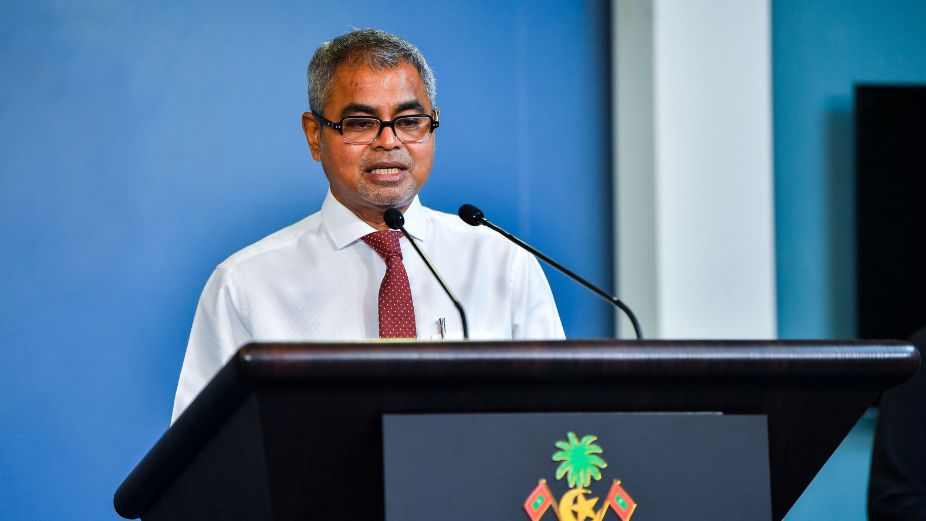
Minister of Tourism and Environment Thoriq Ibrahim said during a press briefing that renewable energy capacity has increased from 53 megawatts in 2023 to 110 megawatts at present. The expansion forms part of a broader strategy to lower dependence on fossil fuels, which currently supply around 92 percent of the country’s electricity, while solar accounts for the remaining share.
The Minister said fuel imports continue to place a heavy burden on public finances, with annual spending reaching USD 577.2 million. Electricity subsidies account for a further USD 149.2 million each year. Against this backdrop, the government has set a target to generate 33 percent of electricity consumption from renewable sources by 2028.
As part of this transition, renewable energy systems have already been installed on 102 islands. These include 28 megawatts of solar photovoltaic capacity and 10 megawatts of battery storage. According to the Ministry, the systems are estimated to save around 13 million litres of diesel and USD 12.3 million annually.
Installation work is also underway on a further 101 islands. This phase involves 164 megawatts of solar photovoltaic capacity and 158 megawatts of battery storage. Once completed, the projects are projected to reduce diesel consumption by 76 million litres a year, with annual savings estimated at USD 71.3 million.
One of the initiatives supporting household-level adoption is the My Solar programme, which allows users to finance solar systems through savings on electricity bills. The scheme is expected to reduce electricity costs for participants by up to 90 percent. In addition to solar, the government is also testing other renewable technologies, including a small-scale wind energy system, a solar-powered ferry, solar-powered community ice plants, and a tidal energy pilot project.
During the same briefing, the Minister said tourism revenue for the year is expected to exceed initial government projections. Earlier estimates anticipated 2.24 million tourist arrivals generating USD 5.45 billion in revenue. Based on current arrival trends, revenue is now forecast at around USD 5.55 billion, representing a 16 percent increase compared to the previous year.
As of Monday, tourist arrivals stood at 2.17 million, up from 1.97 million over the same period last year. This follows a record 2.05 million arrivals in 2024, which generated USD 4.79 billion in tourism revenue.
To support continued growth, the government has activated 6,665 new tourist beds over the past two years and has introduced policies aimed at expanding tourism into areas that have not previously seen large-scale development. The longer-term objective remains to increase annual tourism revenue to USD 6 billion.