
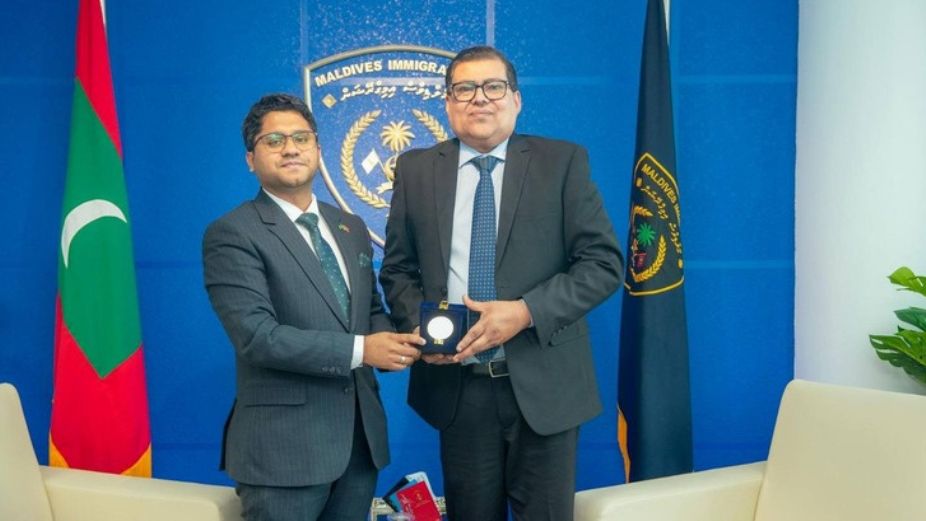



High Commissioner of Bangladesh Dr Md. Nazmul Islam expressed concerns regarding the treatment of migrant workers in the Maldives, to the Maldives Immigration Control General, CP (retired), Ahmed Faseeh, at the Maldives Immigration Office yesterday.
According to a Bangla-language press release published by the Bangladesh High Commission in the Maldives on Meta, the meeting took place in a constructive and cordial atmosphere, with detailed discussions on bilateral cooperation to protect the rights, dignity and welfare of Bangladeshi expatriates in the Maldives.
During the meeting, the High Commissioner raised concerns over the welfare of Bangladeshi workers, noting that many had entered the Maldives legally but later failed to secure the employment promised to them. He said this situation exposed workers to exploitation and hardship, and stressed the need for stronger safeguards against deception, including coordinated awareness efforts and effective measures to curb the so-called “free-visa” practice.
High Commissioner Dr Islam also highlighted the importance of establishing a secure and efficient banking system, including addressing foreign currency constraints. He further called for strict oversight to ensure fair wage structures are implemented, improved access to affordable and quality healthcare for expatriate workers, and firm action against individuals and organisations involved in fraudulent practices targeting Bangladeshi nationals. He shared complaints and information received by the High Commission with the Immigration Controller General.
According to the press release, the Controller General responded that companies and employers found engaging in fraudulent activities would be blacklisted and encouraged affected workers to file cases with the Labour Relations Authority (LRA). Both sides noted the importance of ethical and responsible recruitment systems in both countries and reaffirmed their joint commitment to the safety and security of Bangladeshi citizens.
Maldives Immigration also informed the High Commission that a verification letter from the Bangladesh High Commission is required if changes are identified in personal details on new passports submitted for government documentation. Authorities said written explanations are provided in cases of arrest or deportation, with reports shared with the Ministry of Foreign Affairs. The legal repatriation process takes an average of three weeks, according to Immigration.
The High Commissioner commended recent initiatives by Maldives Immigration aimed at improving expatriate welfare and expressed confidence in continued cooperation with Maldivian authorities. Both parties reiterated their commitment to jointly advancing the rights and wellbeing of Bangladeshi expatriates, in line with the longstanding relations between the two countries.
During the meeting, the Controller General also briefed the High Commissioner on recent developments, including the introduction of the e-visa system and immigration mobile applications. While acknowledging initial technical challenges, he said these would be resolved promptly. Visa status can already be verified online, with plans to enable visa issuance within 24 hours in the near future. He added that e-visas would be automatically converted upon payment of fixed fees for eligible visa holders, with the arrangement immediately applicable to new arrivals.
The discussions come amid heightened enforcement against illegal businesses operated by foreigners in the Maldives. In December 2025, President Dr Mohamed Muizzu instructed police to question foreign workers found engaging in suspicious activities during specified hours, as part of broader efforts to regulate migrant labour.