
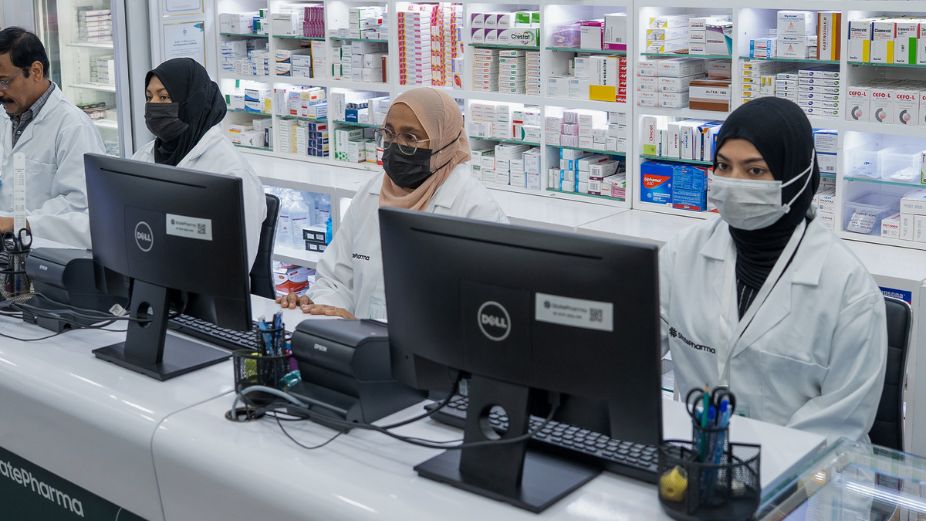



The opening of State Pharma’s first pharmacy marks an early test of the government’s plan to reorganise the supply of medicines in the Maldives, following years of recurring difficulties in accessing certain drugs and medical consumables.
The first pharmacy operated by the State Pharmaceutical and Medical Supply Company, or State Pharma, opened today. The outlet was inaugurated by Male’ City Group of Hospitals CEO Ibrahim Haleem and State Pharma Managing Director Dr Shah Mahir.
State Pharma said the pharmacy will operate 24 hours a day, with the aim of ensuring uninterrupted access to medicines and medical supplies. The company said the outlet was opened as part of efforts to improve public access to quality medicines and healthcare equipment.
According to the company, the first State Pharma pharmacy will stock commonly used medicines, dispense prescription drugs, and facilitate the import of medicines that are not available in the Maldives. The company is also preparing to supply medicines and medical equipment to patients admitted to Indira Gandhi Memorial Hospital.
The opening comes as the government prepares to shift pharmaceutical-related operations currently managed by State Trading Organization to State Pharma from July. STO has for years been responsible for importing medicines and medical consumables into the Maldives, including through its pharmacy operations. State Pharma was established in September last year as part of efforts to address repeated shortages and improve the organisation of the medicine supply chain.
Whether the new pharmacy can ease longstanding difficulties in obtaining medicines will depend on how State Pharma manages procurement, stock planning, import timelines, and distribution beyond the first outlet. A 24-hour pharmacy may improve access for patients in Male’, particularly for commonly used medicines and urgent prescription needs. However, the broader challenge has often been linked not only to retail access, but also to availability, import delays, supplier arrangements, and the ability to maintain reliable stocks across the country.
The planned transfer of STO’s pharmacy operations from July will therefore be a significant step in determining whether State Pharma can move beyond opening outlets and address wider supply issues. If the company is able to centralise procurement more effectively, improve forecasting, and maintain consistent stocks of essential medicines, it could reduce some of the difficulties faced by patients. However, the impact will likely become clearer only after the transfer is completed and the new system is tested over time.