

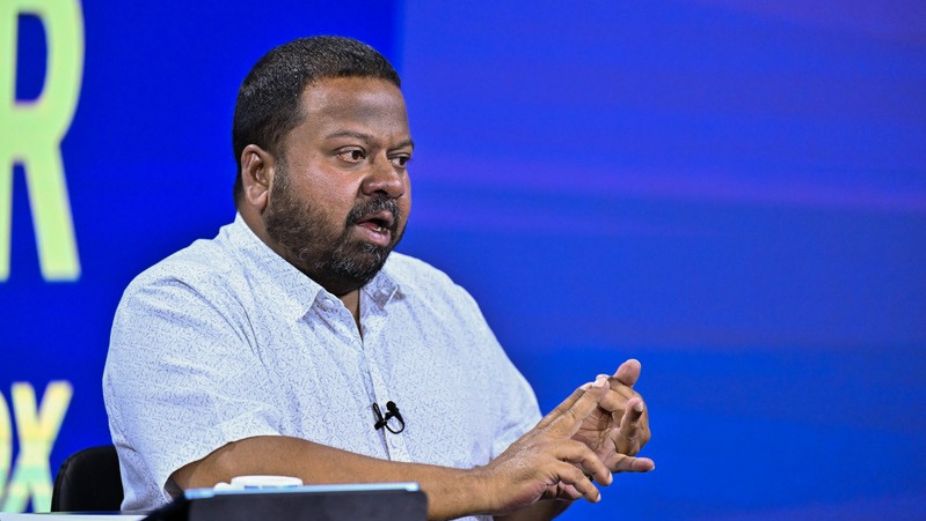




Chief Government Spokesperson Mohamed Hussain Shareef has said that keeping government expenditure within the approved budget, without additional borrowing or a supplementary budget, represents a more significant achievement than the recent change in the Maldives’ Fitch rating.
He made the remarks during Saturday’s session of the “Presser with the Spox” series, while responding to questions on the country’s financial and economic situation.
Shareef said the recent upgrade by Fitch Ratings reflected a positive development that could improve perceptions of the Maldives among financial institutions and development partners. However, he noted that stronger progress in the country’s credit profile would have a greater long-term impact by helping to attract investment and improve economic outcomes for citizens.
He said the government had maintained expenditure discipline through fiscal policy measures, including tax system reforms, tighter spending controls, and efforts to better align projected revenue with actual collections. He added that such measures demonstrate a focus on long-term national priorities, even when they are politically challenging.
The Spokesperson also referred to ongoing policy initiatives, including plans to restrict access to social media platforms for children under the age of 16 and the establishment of a State Pharma entity to address long-standing challenges in medicine and medical supply chains. He said both initiatives would be implemented following stakeholder consultations and were designed to provide structural solutions to persistent issues.
Shareef reiterated that the government’s policy direction prioritises long-term national interest over short-term political considerations.
Last week, Fitch Ratings upgraded the Maldives’ Long-Term Foreign-Currency Issuer Default Rating (IDR) to ‘CCC-’ from ‘CC’, citing reduced default risks following the repayment of a USD500 million sukuk in April and improvements in near-term external financing conditions.
The agency said the upgrade reflected a lower risk of default after the government met a major external obligation and implemented measures aimed at strengthening foreign currency inflows, including revenue reforms and the Foreign Currency Act.
Fitch also noted improvements in the Maldives’ external debt profile following the sukuk repayment, with sovereign and publicly guaranteed external debt obligations falling significantly in the second half of 2026 compared with earlier projections. It added that the government had secured additional financing support, including a rollover arrangement with the Abu Dhabi Fund and a separate facility from an Omani creditor to support energy-related financing needs.