


A long-running sovereignty dispute over the Chagos archipelago has now spilled into formal diplomatic rupture, with Mauritius suspending relations with the Maldives in response to Malé’s rejection of its claim to the territory.
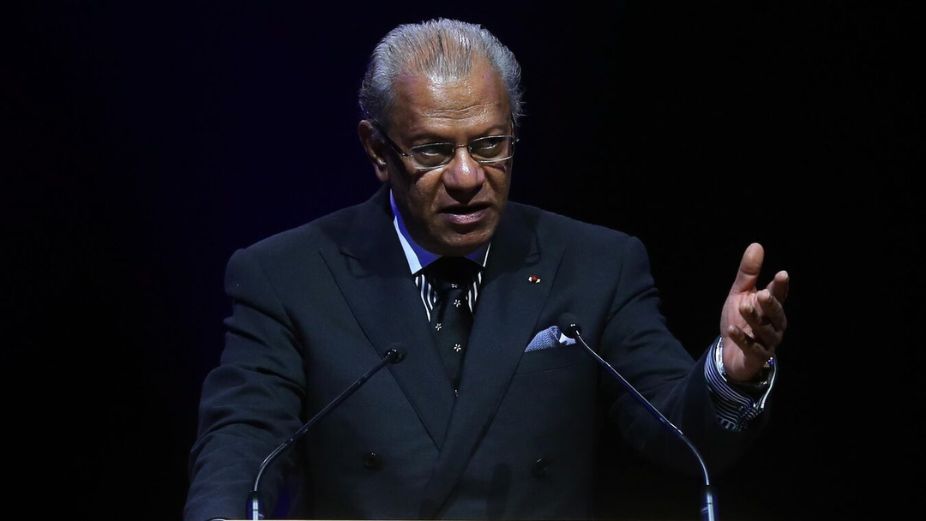
The decision was taken at a Mauritian cabinet meeting on Friday, where ministers cited the Maldives’ refusal to recognise Mauritian sovereignty and its objections to the draft agreement under which the United Kingdom is preparing to transfer control of the islands. Port Louis announced that diplomatic ties would be suspended with immediate effect.
The move follows a sharper and more public articulation of the Maldives’ position earlier this year. In his address at the opening of parliament, President Dr Mohamed Muizzu argued that Chagos forms part of the Maldives’ historical territorial sphere, referencing archival records and longstanding fishing activity by Maldivians in surrounding waters. He revealed that his government had sent formal objections to London in November 2024 and again in January 2026, contesting the proposed transfer of sovereignty to Mauritius and requesting discussions with the UK.
The administration has also reversed the posture adopted under the previous government. A letter sent by former President Ibrahim Mohamed Solih to the Mauritian Prime Minister was formally withdrawn, and the contested area has since been incorporated into the Maldives’ Special Economic Zone framework under domestic law.
For Mauritius, the issue is rooted in decolonisation. In 2019, the International Court of Justice issued an advisory opinion concluding that the United Kingdom’s continued administration of Chagos was inconsistent with international law and that the territory should be returned to Mauritius. Although the opinion was not binding, it was reinforced by a United Nations General Assembly vote. London later entered negotiations with Mauritius regarding the transfer, while maintaining that the sovereignty matter is strictly between the UK and Mauritius.
The maritime boundary question between the Maldives and Mauritius has already been partially addressed at the International Tribunal for the Law of the Sea. In proceedings over overlapping claims in a 95,000 square kilometre area, ITLOS delineated continental shelf entitlements, awarding roughly comparable maritime zones to both countries. That ruling, however, did not settle the broader sovereignty question over the islands themselves.
The dispute has also drawn political attention in the United Kingdom. Reform UK leader Nigel Farage recently travelled to the Maldives and publicly supported Malé’s historical claim. He argued that Mauritius’ claim lacks legitimacy and suggested that the Maldives could consider litigation at the International Court of Justice. Farage stated that he intended to travel onward to Chagos on what he described as a humanitarian visit and later alleged that he had been prevented from doing so. British officials, however, indicated that no formal request for access to the restricted territory had been submitted in advance.
Mauritius’ suspension of diplomatic relations marks a significant escalation. What had largely been a legal and historical disagreement has now evolved into a breakdown in bilateral engagement, introducing new uncertainty into an already complex regional dispute involving questions of decolonisation, maritime jurisdiction and strategic interests in the Indian Ocean.