

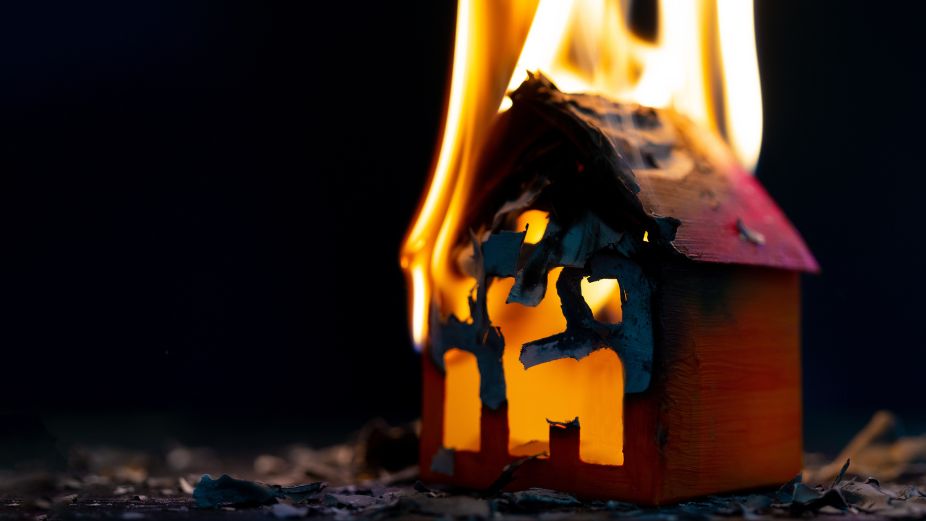


A fire that broke out in an expatriate worker accommodation block in ADh. Dhigurah last week has left several dead and others critically injured, with preliminary findings pointing to a gas leak in a kitchen area. The incident occurred in the early hours of the morning, when many residents were asleep, and rescue efforts were hindered by the intensity of the flames near the building’s only exit. While investigations are ongoing, the circumstances surrounding the fire have drawn attention beyond the immediate cause, raising broader questions about how such risks continue to exist in worker housing across the Maldives.
This is not an isolated incident. Fatal fires involving expatriate workers have occurred before, most notably the 2022 blaze in Malé that claimed ten lives. In both cases, the physical layout of the buildings played a decisive role. Highly congested spaces, limited ventilation, and single points of entry have repeatedly turned fires into deadly traps. The recurrence of these conditions suggests a pattern rather than a series of unrelated events, pointing to underlying weaknesses in how such accommodation is designed, approved, and monitored.
On paper, the Maldives has a framework intended to prevent such outcomes. The national building code requires provisions for fire safety, including structural stability during emergencies and the presence of multiple exits in larger buildings. More recent legislation, such as the Occupational Safety and Health Act, places responsibility on employers to ensure safe working and living environments. Regulations governing employer-provided accommodation also exist, requiring basic standards of shelter and oversight.
Yet the gap between regulation and practice remains significant. Enforcement appears inconsistent, particularly in smaller islands and rapidly developing areas where accommodation is often built quickly to meet labour demand. Requirements that exist in technical documents do not always translate into the structures that workers actually occupy. In many cases, buildings function outside the intended scope of regulations, either due to weak inspections or the absence of detailed, enforceable standards tailored specifically to worker housing.
The conditions in which many expatriate workers live reflect these gaps. Accommodation is often arranged by employers and designed to minimise costs, especially in areas where land is limited and expensive. This frequently results in overcrowded rooms, shared facilities, and makeshift arrangements in buildings not originally intended for residential use. In some cases, workers are housed above commercial spaces or in structures with limited ventilation and ageing electrical systems. These conditions increase not only the risk of fire, but also the likelihood that an emergency will escalate quickly.
The issue is not confined to one sector. Construction workers, who form a large portion of the expatriate workforce, are often housed in dense urban environments or temporary structures. On local islands with growing guesthouse industries, support staff may be accommodated in separate blocks that are built with fewer safeguards than those required in resort settings. In more remote sectors, such as fisheries, oversight becomes even more limited, with workers living in isolated or informal arrangements where safety standards are difficult to monitor.
Responsibility for regulating these conditions is spread across several institutions. Building approvals are typically handled at the local level, while labour standards fall under national authorities. Fire response and emergency services operate separately, responding after incidents occur rather than preventing them. This division of roles can create gaps in oversight, particularly when no single authority is tasked with ensuring that worker accommodation meets both structural and safety requirements in practice.
At the same time, recent policy efforts have focused heavily on managing the size and legality of the expatriate workforce. Programmes aimed at identifying undocumented workers, enforcing quotas, and collecting fees have expanded significantly. While these measures address aspects of migration control and revenue, they do not directly resolve the conditions in which legally employed workers are housed. The physical environment, where many of the most immediate risks arise, remains less visible within this policy focus.
Underlying these issues are broader structural pressures. The Maldives relies extensively on expatriate labour to sustain key sectors, from construction to tourism. Keeping labour costs low is often seen as essential to maintaining competitiveness, and housing is one area where expenses are frequently reduced. As a result, safety considerations can become secondary to affordability, particularly in settings where enforcement is limited or penalties for non-compliance are relatively minor.
The Dhigurah fire brings these dynamics into sharp focus. While the immediate cause may be traced to a gas leak, the scale of the loss appears closely linked to the design and conditions of the building itself. The absence of alternative exits and the proximity of the fire’s origin to the main entry point left little margin for escape, turning what might have been a contained incident into a fatal one.
Whether this moment leads to meaningful changes remains uncertain. Similar incidents in the past have prompted investigations and temporary attention, but the underlying conditions have persisted. The latest tragedy adds to a growing record that suggests the issue lies not only in individual acts of negligence, but in how worker housing is planned, regulated, and prioritised.