
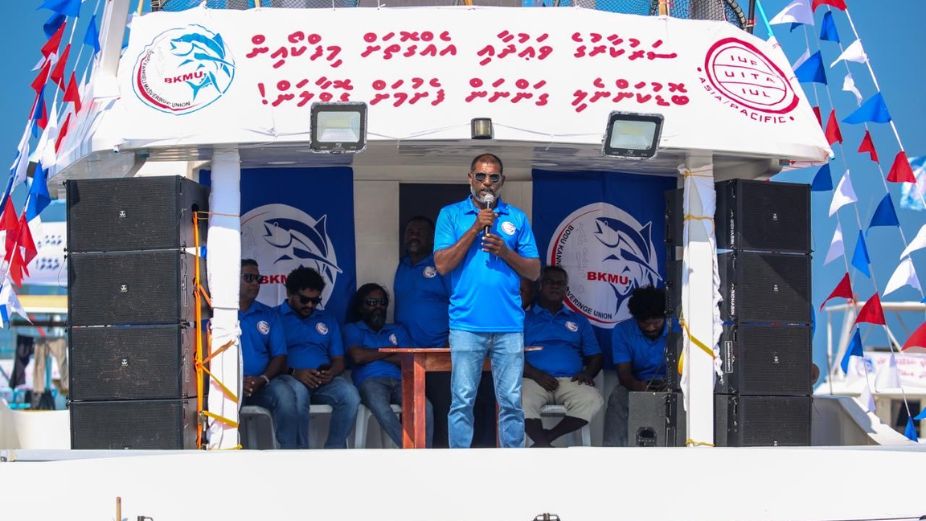



A large-scale protest by yellowfin tuna fishermen has taken shape outside Malé, reflecting months of growing frustration within the industry over unsold catch, fuel costs, and unfulfilled commitments. What began on Wednesday morning as a coordinated gathering of 49 vessels at the Hulhumalé Kanneli Jetty has now become a maritime standoff, with boats anchored just outside the capital’s main channel after being blocked by the MNDF Coast Guard.
The fishermen say their message has remained consistent: they want the government, through MIFCO, to resume buying their tuna, or to engage in meaningful dialogue to identify workable alternatives. Until then, they insist the protest will continue.
Their vessels sailed toward Malé carrying banners under the slogan “Dhenneh nu fureyne, dhenneh nu vaane” (will not sail, not again). The Coast Guard stopped the fleet before it could enter the lagoon, and the boats have since remained anchored with lights on, forming an unusual line of idle hulls just beyond the city’s edge.
For many fishermen, this moment represents the culmination of unresolved issues that have been raised for more than two years. Mauroof Zakir, the Kendhoo MP from the MDP and a senior official in the fishermen’s union, says the current situation is the result of repeated delays and unmet promises. According to him, preparations for this protest began mid-year after it became clear that concerns raised by big yellowfin tuna fishermen were not being acted upon.
Mauroof argues that the government can take immediate steps using existing infrastructure, particularly by utilising MIFCO’s storage and packing facilities at Kanduohgiri. He maintains that the demands are not unrealistic, nor are fishermen seeking subsidies or handouts. Instead, he says they simply want a system that ensures their catch is purchased and marketed so they can continue working.
The union has outlined three longstanding pledges that remain unaddressed: MIFCO buying large fish, setting a minimum price of MVR 80 to 100 per kilo for yellowfin tuna, and ensuring fuel is supplied at the base rate while improving access to ice. These issues, they say, have been repeatedly raised in meetings and letters without concrete results.
In his response, Fisheries Minister Ahmed Shiyam announced that practical work on a new tuna processing facility in Hulhumalé is scheduled to begin in January. He also pointed to fuel cost reductions, noting that STO has been instructed to provide fuel at the base rate in the Malé area, a request fishermen have made since last year. According to the Minister, similar arrangements will be available across at least one island in every atoll by the end of March.
Despite these announcements, Mauroof remains sceptical, stating that fishermen no longer believe the sector is on the verge of receiving the support the government repeatedly promises. He says deteriorating conditions, unsold catch, and rising financial pressure have forced fishermen to take collective action. The presence of expatriate crew members on board has also drawn tension, with the union accusing police of threatening arrests to deter participation. Mauroof notes that many expatriates live and work on the boats and accompany them by default, describing the warnings as an intimidation tactic rather than a legitimate legal concern.
Fishing remains one of the Maldives’ oldest industries, central to livelihoods across the islands. Yet the sector’s challenges have deepened, from fluctuating fish prices to the strain caused by limited processing capacity. This protest, visible just outside the capital, reflects an industry that feels pushed to its limits.
As the boats continue to wait at sea, fishermen say they will remain there until the government reaches an agreement with them. For now, the channel remains blocked, the vessels stay anchored, and an unresolved standoff continues to spotlight the gaps between policy, promises, and the day-to-day realities of the country’s fishing communities.