



With Ramadan approaching, the government has signalled a more assertive role in managing commodity prices as it did in 2025, leaning on expanded state distribution and closer market monitoring to limit seasonal price pressures.
State Trading Organisation’s role will be integral in achieving this, according to the government. Once focused narrowly on supplying flour, sugar, and rice, STO’s current pricing programme now covers a wider basket of essential goods, including vegetables, fruits, and additional food items. This expansion reflects a recognition that price volatility during Ramadan is no longer limited to staple grains alone, but increasingly affects fresh produce and everyday food items.
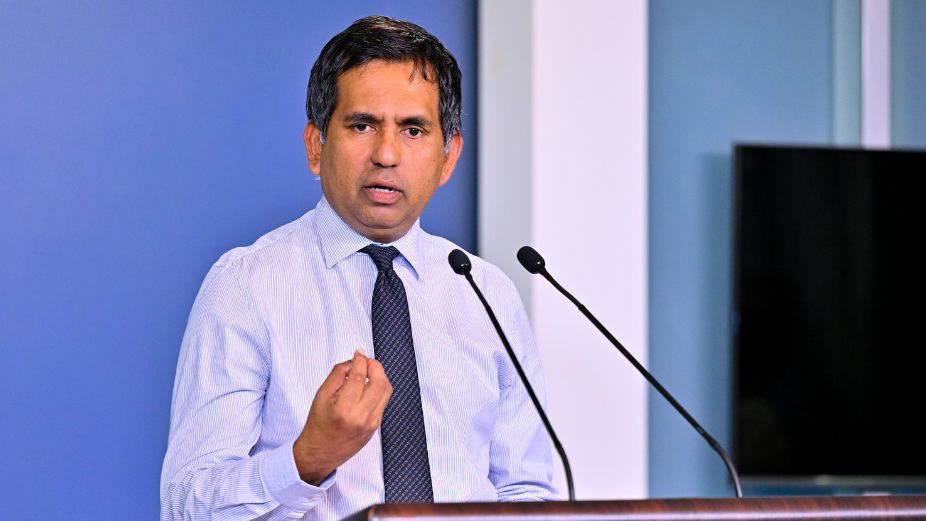
Minister of Economic Development and Trade Mohamed Saeed said the government is working to ensure uninterrupted supply across the country, with STO operations expected to be active in designated cities and islands with populations exceeding 3,000 ahead of Ramadan. If fully implemented, this would represent one of the broadest geographic rollouts of state-backed food distribution in recent years.
Beyond supply-side measures, authorities have stepped up price surveillance, with daily monitoring of 162 key commodities. This shift points to a more data-driven approach to market oversight, allowing the government to detect abnormal price movements earlier and respond before sharp increases filter through to consumers. While such monitoring has existed in the past, the scale and frequency now being described suggest heightened sensitivity to inflation risks during the fasting month.
The government’s intervention comes amid recurring concerns about Ramadan-driven price hikes, often fuelled by higher demand, supply bottlenecks, and opportunistic pricing. By prioritising wholesale distribution and positioning STO as a stabilising supplier to small retailers, the strategy appears aimed at dampening these pressures rather than replacing private market activity outright.
Criticism over state involvement in markets has resurfaced alongside these measures. In response, the government has framed its role as corrective rather than controlling, emphasising that interventions are designed to prevent price shocks while maintaining a free-market structure. How effectively this balance is maintained will likely depend on execution, particularly whether private suppliers adjust prices in response to STO’s expanded footprint.
As Ramadan approaches, the effectiveness of these measures will be closely watched, not only in terms of price stability but also in ensuring consistent availability across outer islands, where supply disruptions tend to be felt more sharply.