

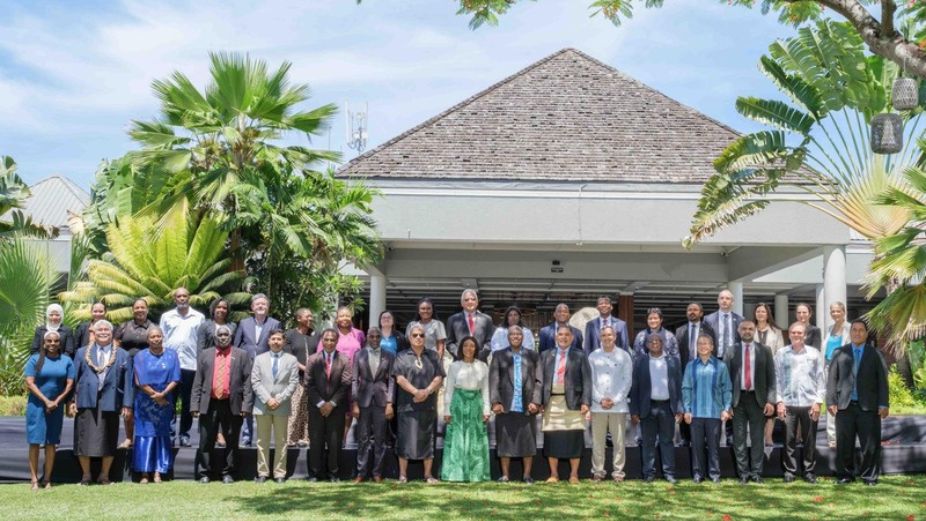



The Maldives has adopted the Commonwealth Nadi Declaration alongside other member states, committing to renewed efforts to strengthen democracy and uphold the rule of law amid increasing global pressures.
Commonwealth law ministers, including Attorney General Ahmed Usham, endorsed the declaration at the conclusion of their meeting in Fiji yesterday. The Nadi Declaration commits member countries to reinforcing democratic governance by strengthening legal systems, protecting human rights, and expanding public participation in decision-making.
Ministers agreed to advance the declaration through cooperation, capacity-building and collective action across the Commonwealth.
The declaration forms part of a broader ministerial outcome statement outlining measures to enhance legal protections for citizens in the face of mounting democratic, economic and climate-related challenges.
In the statement, ministers pledged to address misinformation and disinformation, including foreign interference in democratic processes. They also committed to improving access to justice for vulnerable groups, particularly women, young people and persons with disabilities.
Recognising the growing impact of climate change, ministers reaffirmed that states should retain their maritime zones, rights and entitlements even as rising sea levels alter coastlines.
Commonwealth Secretary-General Shirley Botchwey described the commitments as critical at a time when the rule of law faces increasing strain globally. She said weakening legal systems has direct consequences for daily life, affecting stability, fair employment and climate resilience. She added that member states must act collectively to ensure that commitments translate into tangible benefits for citizens.
The meeting took place against the backdrop of a continued global decline in adherence to the rule of law, with billions of people lacking meaningful access to justice.
Ministers underscored the role of independent legal institutions in sustaining democratic governance and supported the Commonwealth Secretariat’s renewed focus on strengthening democracy through legal reform and institutional support.
They also welcomed new tools developed by the Secretariat, member states and partner organisations aimed at reducing the cost of civil litigation, establishing family courts and reforming laws that criminalise poverty.
The meeting, held from 9 to 11 February 2026, was chaired by Fiji’s Minister for Justice and Acting Attorney-General, Siromi Turaga, who said ministers concluded discussions with a renewed commitment to partnership and to delivering lasting impact across Commonwealth countries.