



For decades, the Chagos Archipelago was a distant colonial quarrel between London and Port Louis, a dispute that seemed remote from Malé’s daily concerns. That distance has now collapsed. What once looked like a legal technicality over maritime coordinates has become one of the most consequential foreign policy challenges facing the Maldives in a generation.
At the heart of the matter lies a layered dispute. In 2019, the International Court of Justice issued an advisory opinion that Britain’s continued administration of the Chagos Islands was unlawful and that sovereignty should return to Mauritius. That opinion, while technically advisory, reshaped the diplomatic terrain. In 2023, the International Tribunal for the Law of the Sea, relying on that earlier opinion, drew a maritime boundary between Mauritius and the Maldives in waters south of Addu. The tribunal divided an overlapping area of roughly 95,000 square kilometres, granting the Maldives a slightly larger share but awarding nearly half to Mauritius.
To the previous Maldivian administration, the ruling was a technical clarification of a boundary that had never before been formally determined. To its political opponents, it was the loss of sovereign waters. The controversy became a rallying cry in the 2023 presidential election. President Dr. Mohamed Muizzu came to office promising to recover what he and his party described as forfeited territory.
Since then, the dispute has expanded beyond the maritime boundary. The President has asserted that the Maldives has the strongest historical claim to sovereignty over Chagos itself, citing proximity and historical ties. He has moved to retract a letter sent by his predecessor acknowledging Mauritian sovereignty, announced plans to amend domestic law to enshrine a full 200 nautical mile Exclusive Economic Zone, and established a commission to examine how the previous government handled the case.
In a striking development, the government deployed coast guard vessels and surveillance drones to patrol waters that the Hamburg tribunal allocated to Mauritius. The move signalled that the dispute would not remain confined to courtrooms and diplomatic notes.
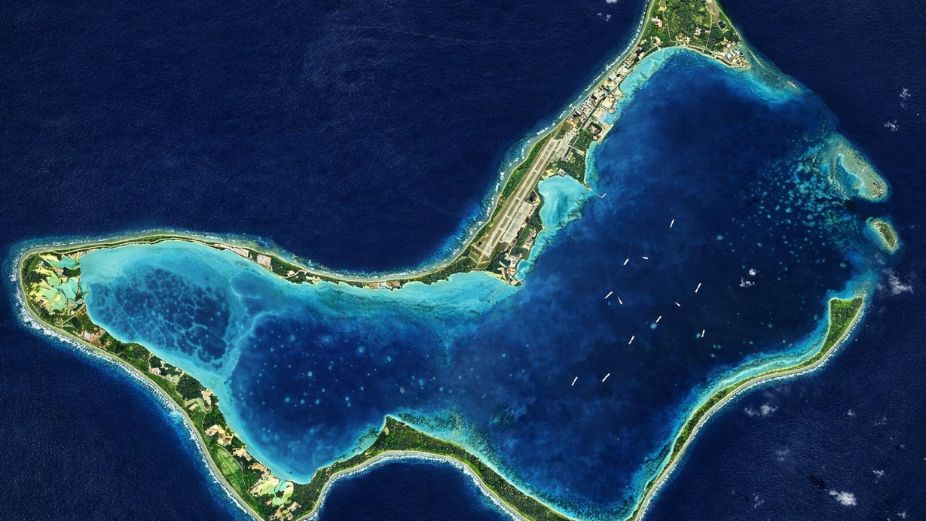
But this is not a contest occurring in isolation. The United Kingdom has agreed to transfer sovereignty of the Chagos Archipelago to Mauritius while retaining control of the strategically vital Diego Garcia military base under a 99-year lease to the United States. Washington has endorsed the arrangement as the most viable option available. India has firmly backed Mauritius, integrating the handover into its broader Indian Ocean strategy. A high-level American delegation is preparing to deepen security ties with Port Louis.
In other words, on the question of Chagos, the major powers have largely aligned.
For a small state like the Maldives, this alignment matters. International law, for all its imperfections, is the currency of small nations. The Maldives ratified the United Nations Convention on the Law of the Sea in 2000 and participated fully in the ITLOS proceedings. Its judgments are final and binding. While revision is theoretically possible under narrow circumstances, ignoring a ruling carries reputational risks that extend far beyond a single dispute.
The temptation to frame the issue as a simple matter of patriotism is strong. Sovereignty is emotive. Territorial integrity is central to national identity. Yet foreign policy is not conducted in slogans. It is conducted in a world where power is asymmetrical and where small states survive by navigating carefully between larger interests.
The Maldives has learned this lesson recently. The rupture in relations with India early in the current administration’s tenure, followed by a recalibration, revealed the costs of misreading geopolitical realities. Development assistance slowed. Strategic trust wavered. Repairing that relationship required quiet diplomacy rather than public confrontation.
Chagos presents a similar dilemma, but on a broader stage. The dispute is not only about a maritime boundary. It is also about sovereignty over islands that host one of the most significant American military installations outside North America and Europe. It is about decolonisation claims long advanced by Mauritius and endorsed by the United Nations General Assembly. It is about the rights of displaced Chagossians who were removed from their homeland to make way for a base and who remain largely excluded from decisions about its future.
The Maldives must decide what objective it is truly pursuing. If the goal is to overturn the ITLOS boundary, the path lies in law and diplomacy, not patrol vessels. If the ambition is to assert sovereignty over Chagos itself, that requires building a sustained international case, grounded in history and supported by alliances, not sudden declarations. If the priority is safeguarding potential continental shelf resources in the long term, that is a separate and ongoing legal process before the United Nations Commission on the Limits of the Continental Shelf.
Conflating these three questions risks weakening all of them.
There is also the matter of credibility. Small states rely on consistent adherence to international norms. The Maldives has often invoked international law in climate negotiations, in calls for protection of small island states, and in its own maritime claims. To disregard a binding tribunal decision when it proves politically inconvenient would complicate that posture.
None of this means that the Maldives must abandon its claims or cease defending its interests. It does mean recognising that strength for a small nation is measured not by displays of force but by disciplined strategy. Consultation with Mauritius, engagement with Britain and the United States, and coordination with regional powers are more likely to yield tangible gains than rhetorical escalation.
Even those sympathetic to the government’s position acknowledge that courtrooms have largely run their course. If a different outcome is sought, it will be achieved through negotiation. Major powers pursue their interests pragmatically. There is no reason the Maldives cannot do the same.
History offers perspective. The Chagos Islands were severed from Mauritius in 1965. Their inhabitants were displaced. For decades Britain resisted international pressure to relinquish control. Yet the arc of that dispute ultimately bent toward a negotiated settlement once the legal and diplomatic costs grew too high. Power shifted not through confrontation at sea but through persistence in international forums.
The Maldives, too, must decide what long game it is playing.
Presidents change. Political cycles turn. But states endure. A foreign policy built on patience, alliance management and respect for international law may not deliver immediate applause, yet it preserves the credibility upon which small nations depend.
Chagos is not only about what was lost or gained on a map. It is about how the Maldives understands its place in a world shaped by larger forces. Sovereignty matters. So does strategy.