
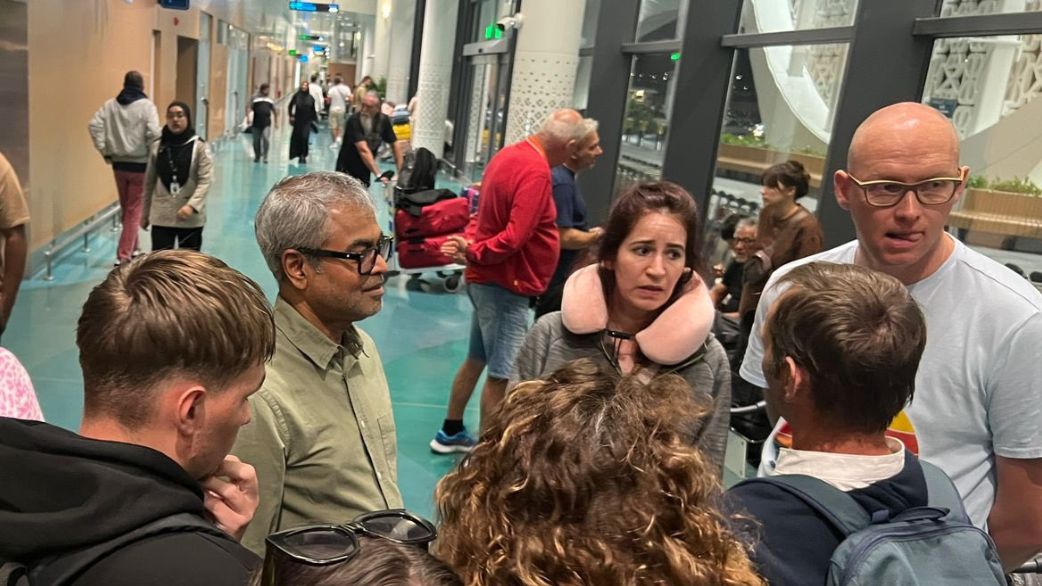



Maldives Immigration has announced temporary extensions for tourist visas as flight cancellations linked to the escalating conflict in the Middle East disrupt international travel routes to and from the Maldives.
In a public notice, Immigration stated that due to disruptions to international travel networks caused by the conflict on 28 February 2026, and the resulting cancellation of several flights to the Maldives, tourist visas will be extended for visitors currently in the country who are unable to depart before their visas expire.
The measure is intended to prevent tourists from falling into irregular status as a result of circumstances beyond their control. Visitors affected by flight cancellations have been advised to visit imuga.immigration.gov.mv for extensions.
The announcement comes amid heightened tensions in the Gulf region, where military exchanges involving the United States, Israel and Iran have led to airspace restrictions and operational adjustments by several international airlines. In previous regional crises, airlines have rerouted flights, suspended services, or faced delays due to safety concerns and insurance constraints, often affecting long-haul routes that connect through major Middle Eastern hubs such as Doha, Dubai and Abu Dhabi.
The Maldives is heavily reliant on these transit points for connectivity with Europe and parts of Asia. Any sustained disruption to Gulf airspace can therefore have immediate implications for passenger flows, particularly during peak travel periods.
Under normal circumstances, tourists visiting the Maldives are granted a 30-day visa on arrival, provided they meet entry requirements including confirmed accommodation and onward travel arrangements. Extensions are typically subject to approval and may involve additional procedures. The current decision effectively eases these requirements for those directly impacted by flight cancellations linked to the regional conflict.
While the government has not indicated how long the extension arrangement will remain in place, the move signals an effort to manage the operational fallout from geopolitical instability and to maintain the country’s reputation as a stable and visitor-friendly destination during a period of uncertainty.