



The Ministry of Homeland Security and Technology will launch the Mass Legalisation Program in January, providing undocumented immigrants in the Maldives an opportunity to regularise their status before April.
In a Gazetted announcement on Thursday, the ministry stated that the programme will run from 1 January to 2 April 2026. Migrant workers eligible to register include those without the required permits, those with expired permits, and other undocumented workers currently in the Maldives.
The programme is open only to individuals who have an expired work permit, are not blacklisted, entered the Maldives under a work permit, have not previously participated in a legalisation process, and whose current employer is not the same as any previous employer. Employers must have reported the migrant worker as missing in the expat system before 31 December 2025, and applications must be submitted by the employer via the expat system, which will update its user guide with instructions for the process.
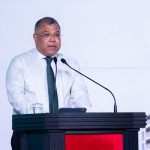
Speaking at a public briefing on Thursday, held alongside the police, Customs Services, Maldives Immigration, and Maldives Ports Limited, Minister of Homeland Security and Technology Ali Ihusaan said the legalisation window will allow those registered through Operation Kurangi—but still remaining as illegal expatriates—to obtain valid work permits. This includes expatriates facing disputes with employers as well as those currently unemployed.
The Maldives has recently intensified measures against undocumented migrant workers, particularly in unregulated businesses in the food and service sectors. President Dr Mohamed Muizzu noted that 52 unregulated massage parlours were closed last week, with 24 shut down by inspection teams and 28 voluntarily closed. He added that the crackdown has extended to other illegal activities, with 38 unregulated businesses closed in the past two weeks, and called on citizens to support government efforts.
By presidential order, Dr Muizzu has also directed the Maldives Police Service, in coordination with relevant authorities, to begin questioning expatriates found in public areas between midnight and 6am.