


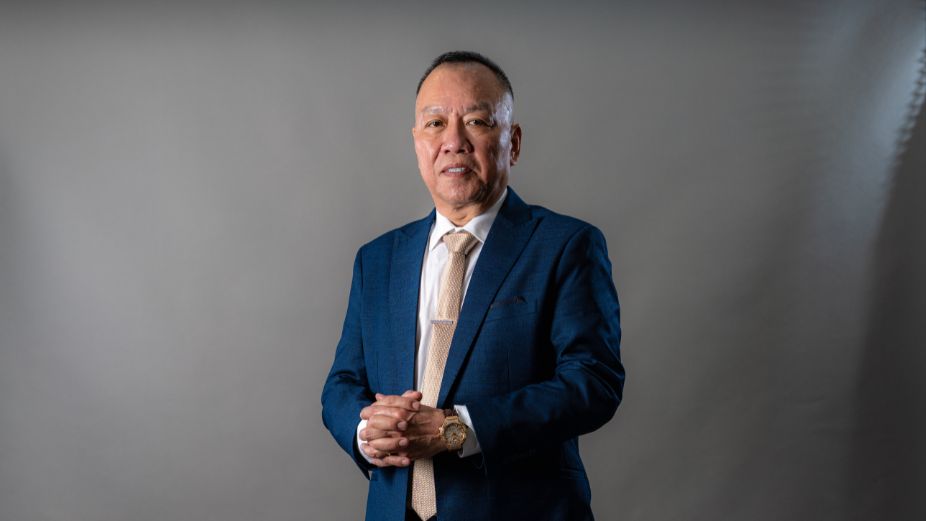


With a career spanning more than 30 years across education, finance, hospitality and real estate, Chen Jiaming has built his work around capital discipline and long-term value rather than short-term returns. Now as Chairman of Bayfancy, he brings that philosophy to the Maldives at a moment when residential development is becoming more considered and complex. In this interview, Chen reflects on the principles that shaped his career, the lessons drawn from operating across multiple markets, and why Bayfancy represents a commitment to quality, delivery and long-term livability.
Q1. You have built a career spanning more than 30 years across education, finance, hospitality and real estate. Looking back, what first drew you into business in the early 1990s?
I entered business not for short-term profit, but out of a deep interest in capital discipline and long-term asset value. In the early 1990s, I saw that sustainable wealth is created by combining sound management with assets that meet real social and economic needs. Influenced by Confucian values, I believed it was more meaningful to empower others than to pursue success alone.
This belief led me to invest in vocational and technical education, particularly for young people who had not succeeded in China’s college entrance examinations. Providing them with practical skills and better employment opportunities was not only an educational mission, but also a way to help individuals build a foundation for life and contribute meaningfully to society. From the beginning, I chose industries that are resilient across economic cycles and avoided chasing quick profits. That same philosophy continues to guide my work today.
Q2. Your work has taken you across China, the Philippines, Malaysia, Singapore and the Maldives. How have these different markets shaped your perspective as a business leader?
Every market has its own rhythm. China taught me scale and the importance of structure during periods of rapid growth. The Philippines and Malaysia showed me the value of cultural respect and regulatory balance. Singapore reinforced my belief in governance, financial transparency, and institutional discipline.
These experiences shaped a leadership style that balances strength with empathy, and places emphasis on building systems that are durable, disciplined, and people-centred.
Q3. When assessing new markets today, what factors matter most to you, and how did the Maldives perform against those benchmarks during your research?
I focus on three key factors: long-term stability, alignment between development policies and real economic needs, and the integrity of local partners. In the Maldives, I found a welcoming society, a clear national vision, and a commitment to managed economic growth.
I was impressed by the country’s openness, its emphasis on planned development, and the opportunities across tourism, marine product processing and export, and other emerging sectors. Most importantly, I observed a growing demand for high-quality housing driven by people’s pursuit of a better quality of life. These indicators confirmed that the Maldives is a place where responsible investment can create lasting value.
Q4. Among the opportunities you explored, Bayfancy stood out as the right entry point. What about the project gave you confidence to take on a leadership role rather than remain a passive investor?
Bayfancy was more than a project; it was a platform with long-term potential. Its architectural vision, respect for local context, and the professionalism and cohesion of its management team aligned closely with my standards.
My involvement provided strong financial backing to ensure the project remains on schedule and is delivered as promised. Beyond capital, I have worked closely with the team to further refine the final product, guided by a commitment to craftsmanship and quality. For more than 30 years, my business philosophy has been rooted in fulfilling commitments and delivering value, and I apply these principles to Bayfancy with the same discipline.
Q5. Residential development in the Maldives is entering a new phase, particularly at the luxury end. In your view, what defines a truly luxury residence in a small island nation?
True luxury is not defined by materials or size alone. In an island context, it is about creating an integrated lifestyle that respects residents’ needs, connects with nature, and offers privacy, comfort, and peace of mind.
A luxury residence should demonstrate excellence in architecture, thoughtful spatial planning, and attention to detail. It must balance sustainability, functionality, and aesthetic value, while offering something residents feel proud to own, live in, and preserve for the future.
Q6. A defining feature of your business legacy is financial discipline, including maintaining zero bank-loan liabilities across your companies. How does this philosophy shape decision-making in capital-intensive developments like Bayfancy?
Financial discipline begins with rational decision-making and avoiding excessive pursuit of high returns. We maintain balance by prioritising sectors with stable cash flow and resilience across economic cycles, while keeping exposure to high-risk investments deliberately limited.
In capital-intensive projects such as Bayfancy, we commit real capital upfront and avoid pressure from short-term capital recovery or market fluctuations. This approach allows us to focus on long-term value rather than immediate returns, and to build trust with buyers and partners through delivery and consistency, rather than ambition alone.
Q7. Bayfancy is being positioned as an energy-efficient and carefully planned residential environment. How do sustainability and long-term livability factor into your approach to development today?
Sustainability is no longer a trend; it is a responsibility. We do not build for handover, we build for decades. This means selecting durable materials, designing for energy efficiency and climate responsiveness, and creating living systems that are healthy and low-maintenance.
At Bayfancy, our focus is on shaping a lifestyle that is efficient, harmonious, and enduring. The goal is not simply to deliver homes, but to create a community that remains livable, valuable, and relevant over time.
Q8. Looking beyond Bayfancy Residence, what role do you hope your investments and leadership will play in supporting the Maldives’ long-term development?
I hope to contribute to raising standards in real estate development and to demonstrate what disciplined, long-term investment can achieve. Beyond Bayfancy, I intend to invest in areas such as education, training, hospitality, tourism services, and marine product processing and export.
These are sectors that generate employment, strengthen capabilities, and support sustainable growth. Ultimately, development must be rooted in partnership, mutual respect, and long-term thinking that serves future generations.