
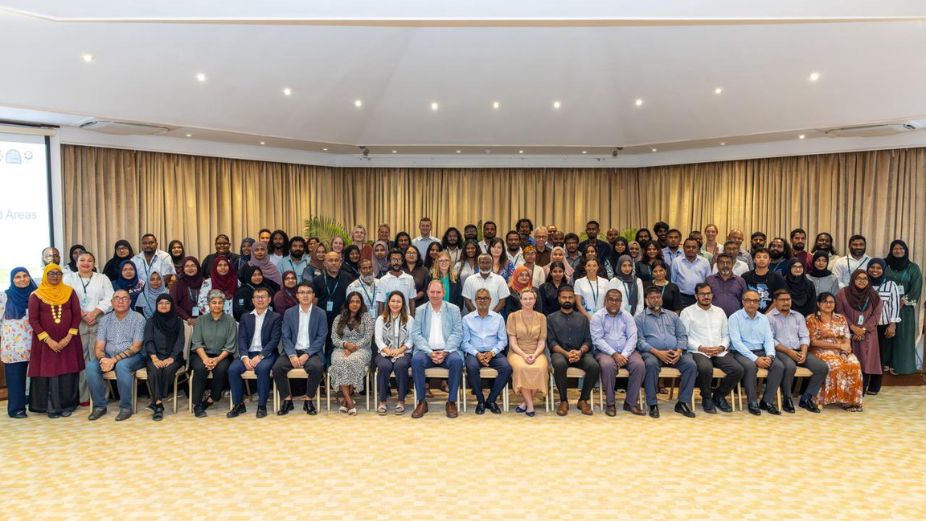



The Maldives and the United Kingdom yesterday marked five years of cooperation on marine conservation under the Ocean Country Partnership Programme, during an event held alongside the second Maldives Protected and Conserved Areas Forum.
The programme, delivered since 2021 under the UK’s Blue Planet Fund, has focused on strengthening marine protection frameworks, improving pollution monitoring, and building national capacity in marine governance. The five-year milestone was recognised during the forum hosted by the Ministry of Tourism and Environment.
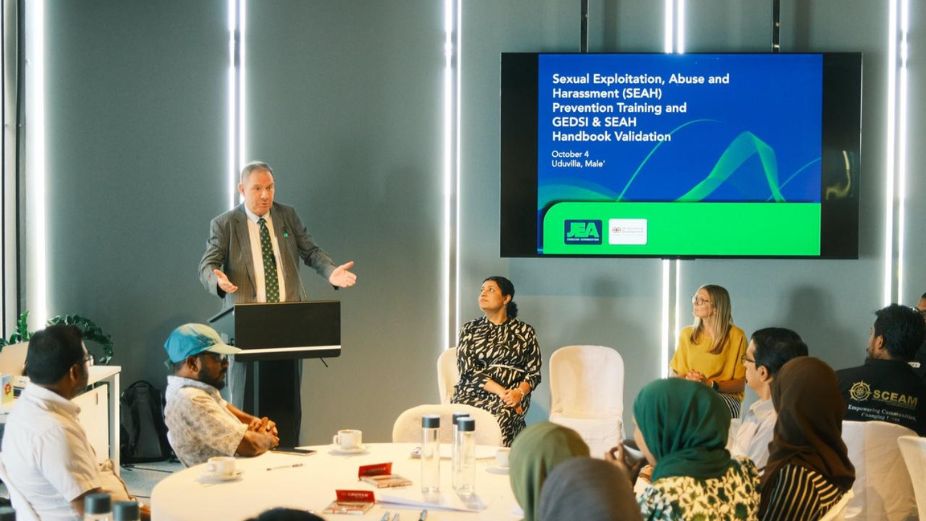
Speaking at the event, Minister of Tourism and Environment Thoriq Ibrahim said meeting global conservation commitments remained a challenge for small island developing states with limited resources.
“As a nation, and a member of High Ambition Coallition for Nature, we have committed to the 30×30 global targets advance conservation, and strengthen the institutional and governance mechanisms for protected and conserved area management. This is not an easy task,” he said, adding that cooperation across government, communities, civil society and academia was essential to move forward.
British High Commissioner to the Maldives Nick Low said the value of the partnership lay in continuity and locally led priorities.
“Continuity matters. Programmes come and go, but relationships and the capacity we build together, carry forward,” he said. “OCPP made the most impact when Maldivian priorities led and UK expertise followed.”
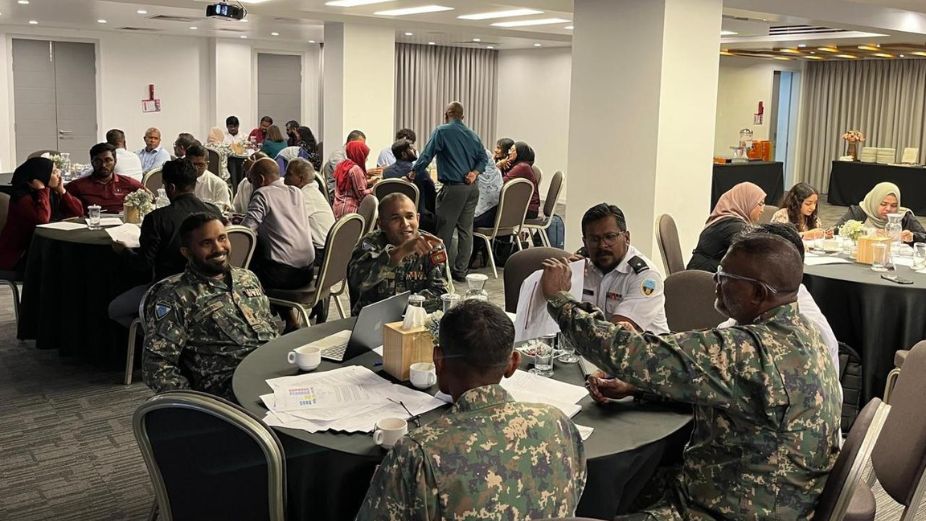
The programme brought together Maldivian institutions and UK technical agencies, including the Joint Nature Conservation Committee, the Centre for Environment, Fisheries and Aquaculture Science, and the Marine Management Organisation, to support marine protection efforts across the country. Areas of work included protected and conserved area management, pollution monitoring, emergency preparedness, and training initiatives.
Neil Hornby, Chief Executive Officer of the Centre for Environment, Fisheries and Aquaculture Science, said the collaboration demonstrated how applied science could translate into practical outcomes.
“The UK-Maldives OCPP partnership has demonstrated the power of science-led collaboration to deliver real-world impact,” he said, noting benefits for local communities, economic activity, and the marine environment.
The forum brought together government agencies, local communities, civil society organisations, private sector stakeholders, and youth representatives to share experiences and discuss future cooperation on marine protection.
Both countries have confirmed that cooperation on marine conservation and climate resilience will continue, as reflected during the second UK–Maldives Strategic Dialogue held in May 2025.