
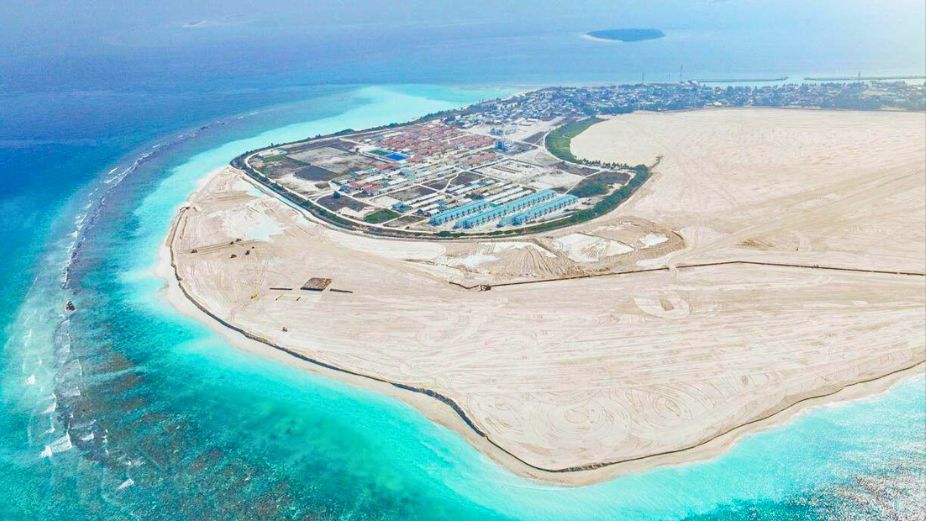



Land reclamation for the planned airport in Dhidhdhoo has been completed, marking a significant step in efforts to expand aviation infrastructure in the northern Maldives and reshape regional transport links. The operation created 112 hectares of new land within fifty days, providing the physical foundation for both the airport and additional housing and commercial areas tied to the project.
The reclamation was carried out using the Leiv Eiriksson, a trailing suction hopper dredger known for its large dredging capacity. The accelerated timeline signals the priority attached to improving access to the country’s northern atolls, where distance and limited transport options have historically constrained economic activity and public service delivery.
Dhidhdhoo functions as a regional centre with a registered population of around 5,000 but an estimated resident population closer to 7,000, reflecting inward migration for healthcare and education. Across Haa Alifu Atoll, which has about 16,000 residents spread across 14 inhabited islands, transport links remain heavily dependent on sea travel and a single aviation facility.
The proposed airport is positioned as part of broader plans to create a more integrated development corridor across the northernmost atolls. By reducing travel time and improving reliability, the facility is expected to influence trade flows, mobility for residents, and access to essential services, while also supporting tourism and small business activity in surrounding islands including Vashafaru, Filladhoo, Kelaa, Muraidhoo, Baarah, and Utheemu.
Until now, Hoarafushi Airport has served as the atoll’s only aviation gateway. A second airport would introduce redundancy and capacity that could alter how movement and economic planning are structured across the north, particularly as population pressures grow in Dhidhdhoo and neighbouring communities.
The reclamation phase also expands usable land on an island facing demographic strain, linking aviation development with urban growth. How effectively the airport integrates with housing, commercial planning, and regional transport networks will shape whether the project delivers sustained economic returns beyond improved connectivity alone.