
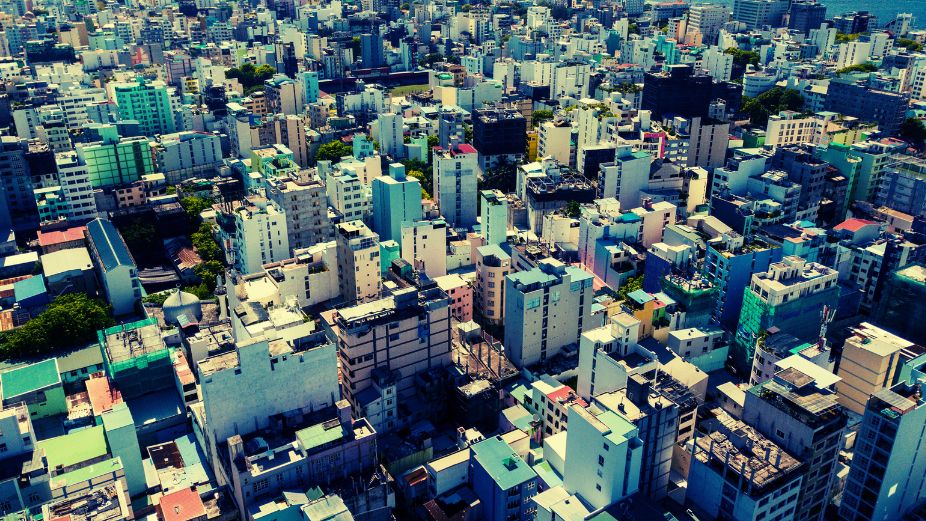




The Maldives has built one of the region’s highest per capita income economies through tourism, infrastructure expansion and public investment. Airports have expanded across atolls. Housing towers continue to reshape Greater Malé. Special Economic Zones promise diversification. Yet scale in a small island economy is not simply a question of ambition. It is defined by structural limits that shape what growth can realistically look like.
With a population of just over half a million, domestic demand is not just limited, it is structurally shallow. This matters because scale economies depend on volume. In larger countries, businesses can grow by selling more within their own borders. In the Maldives, that pathway closes quickly. Retail, banking, telecommunications and property do not just “reach saturation” in theory, they do so in practice, often leading to duplicated capacity, price competition, and declining returns on investment.
This is why tourism is not just important, but foundational. It solves the scale problem by importing demand. Each tourist effectively expands the size of the market, allowing businesses to operate at levels that would otherwise be impossible. But this also creates a single point of vulnerability. When global travel slows, the contraction is immediate. Revenues fall, foreign exchange tightens, and investment sentiment weakens in tandem. What appears as diversification within the domestic economy is often still indirectly tied to tourism flows.
The challenge, then, is not diversification in a generic sense, but competitive diversification. Alternative sectors must earn foreign exchange to replicate tourism’s role. Yet they must do so from a high-cost base. Geography raises transport costs. Scale limits production efficiency. Energy and logistics constraints add further pressure. This is why many diversification attempts struggle, not because of a lack of intent, but because they are competing in global markets without structural advantages.
Labour constraints deepen this dynamic. The domestic workforce is small, but more importantly, it is unevenly aligned with economic needs. High-value sectors require specialised skills that are still developing locally. As a result, growth relies on expatriate labour, particularly in construction and hospitality. This creates a dual effect. On one hand, it enables expansion. On the other, it exports a portion of income through remittances, limiting how much economic value is retained domestically.
At the same time, youth unemployment highlights a different issue, not a lack of jobs, but a mismatch. Education outputs and labour market demand are not fully aligned. Without correcting this, physical expansion risks outpacing human capital, reducing productivity gains and reinforcing dependency on external labour.
Institutional capacity acts as a quieter but equally binding constraint. Infrastructure projects, regulatory oversight, and economic planning all require depth of expertise. In a system of limited scale, this capacity cannot expand indefinitely or instantly. When multiple large projects are pursued simultaneously, execution risks increase. Delays, cost overruns, and coordination challenges are not incidental, they are a function of absorptive limits within the system.
Public finance reflects the same structural reality. Revenue is closely tied to tourism activity, while expenditure commitments, particularly debt servicing, remain fixed. This creates asymmetry. During periods of growth, expansion is straightforward. During downturns, adjustment becomes difficult. Fiscal space narrows quickly because the underlying revenue base is externally driven.
The implication is clear. Growth in the Maldives cannot rely primarily on expanding physical infrastructure or replicating models from larger economies. Scale will not come from size. It must come from efficiency, specialisation and value capture.
This means prioritising sectors where scale is not determined by population, such as high-value services, niche exports, and digitally enabled industries. It means improving productivity within existing sectors, particularly tourism, rather than relying solely on expansion. It also requires sustained investment in human capital, not just to reduce reliance on expatriate labour, but to move the economy up the value chain.
Most importantly, it requires recognising that in a small island economy, resilience is as important as growth. External shocks cannot be eliminated, but their impact can be managed through stronger institutions, better fiscal buffers, and a more deliberate approach to economic strategy.
The Maldives has already demonstrated that it can achieve high-income status within structural limits. The next phase is more complex. It is not about growing bigger, but about growing smarter within those limits.