






The Maldives has called for increased international financial assistance to help climate-vulnerable countries respond to the growing human rights impacts of climate change.
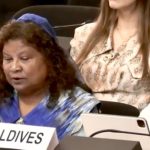
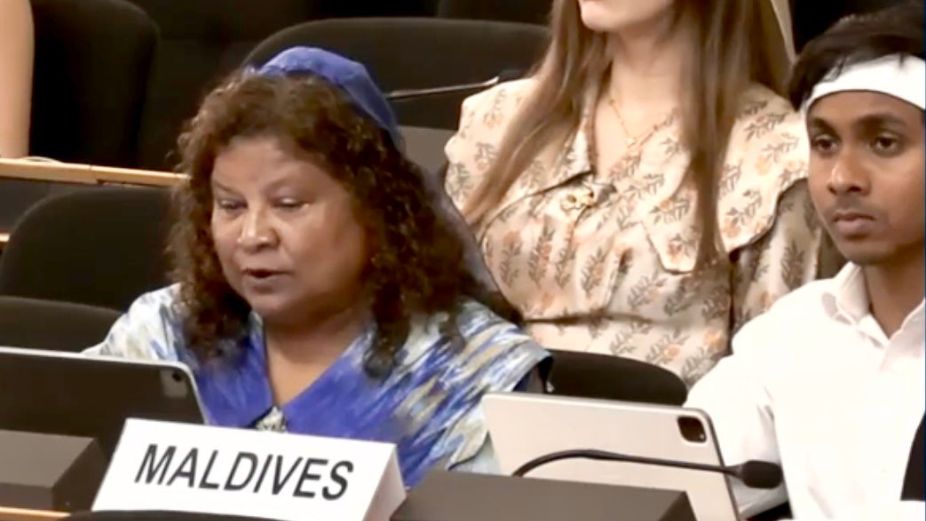
The appeal was made by the Permanent Representative of the Maldives to the United Nations Office in Geneva, Dr Salma Rasheed, during the 62nd session of the United Nations Human Rights Council. She delivered the statement at the Annual Panel Discussion on the Adverse Impacts of Climate Change on Human Rights.
The Maldives used the platform to draw attention to the disproportionate pressures faced by small island developing states and other vulnerable countries, where climate impacts can place strain on livelihoods, food security, access to water, housing, health and broader development prospects.
Dr Salma highlighted the need for stronger international support, particularly for countries whose exposure to climate shocks is not adequately reflected by conventional economic indicators. She called on states to adopt the Multidimensional Vulnerability Index, a United Nations-developed framework intended to assess vulnerability to economic, environmental and social shocks more comprehensively than measures such as Gross Domestic Product or income per capita.
The Maldives has argued that such tools are necessary to ensure that assistance is directed according to actual vulnerability and need, rather than income classification alone. For small island states, this has become a central issue in climate and development financing, as many remain highly exposed to external shocks despite not always qualifying for concessional support under traditional criteria.
The statement also called for greater grant-based adaptation finance, along with the full capitalisation and replenishment of multilateral climate funds. These include the Fund for Responding to Loss and Damage, which is intended to support countries facing climate impacts that cannot be avoided through adaptation or mitigation alone.
The Maldives noted that climate-vulnerable nations often carry the heaviest burden when climate change affects fundamental rights. For island states, rising seas, coastal erosion, warming oceans and extreme weather events can directly affect communities, infrastructure and economic activity, while also placing long-term pressure on national resilience.
During an interactive dialogue with the UN Special Rapporteur on Climate Change and Human Rights, the Maldives also highlighted the link between climate resilience and food security. The country presented its traditional pole-and-line fishing method as an example of sustainable fisheries management, noting that community-based approaches can support livelihoods while helping countries adapt to climate-related pressures.
The delegation stressed the importance of building stronger food security systems, particularly as climate change affects marine ecosystems, fish stocks and supply chains. It called for enhanced international cooperation, stronger grant-based financing mechanisms and greater support for locally led solutions.
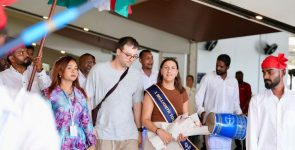
Alongside its participation in the Human Rights Council session, the Permanent Mission of the Maldives in Geneva also took part in a cultural exhibition. The Maldivian exhibition showcased the country’s cultural heritage, traditional handicrafts, local cuisine and literature, offering visitors an opportunity to learn about the Maldives’ customs, traditions and national identity.
The interventions reflect the Maldives’ continued effort to place climate vulnerability, financing access and human rights at the centre of international discussions on climate action.