Cabinet Approves Tobacco Campaign, Prison SIM Controls and Tourist Fare Review
- The Cabinet approved a national tobacco awareness campaign linked to a proposed generational smoking ban, with schools, island focal points, civil society organisations and sports figures involved.
- New security measures will target smuggled prison SIM cards by holding registered owners legally accountable and limiting unskilled foreign workers to one SIM each.
- Additional decisions covered upgrading the K. Guraidhoo special-needs facility and reviewing tourist airfares alongside infrastructure protection priorities.
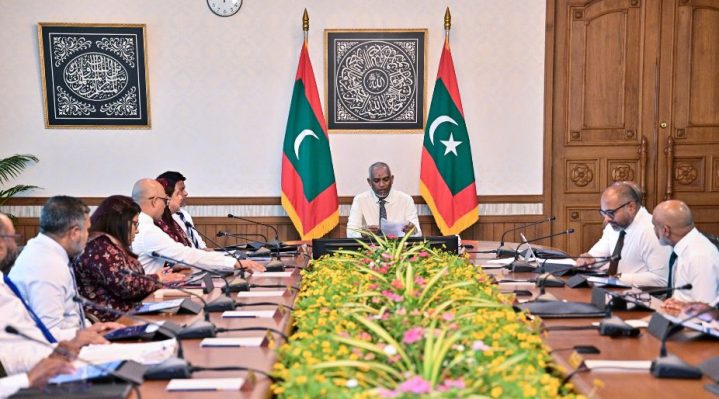
The Cabinet has agreed on a series of measures spanning tobacco control, public health, telecommunications security, detention policy, infrastructure protection and tourism airfares.
The decisions, taken at its meeting, are intended to turn several policy priorities into coordinated actions involving ministries, island communities, civil society organisations and state-owned companies.
Tobacco awareness campaign and generational ban






A national campaign on the health risks associated with tobacco and nicotine will be linked to preparations for the proposed generational smoking ban.
The Ministry of Health, Family, and Welfare will lead the campaign in coordination with the Ministry of Education, Higher Education, and Skills Development. The Cabinet also decided to establish an oversight mechanism to monitor its implementation.
Schools will form a central channel for communicating the generational ban and its public-health rationale. This places prevention and awareness among younger generations at the centre of the Government’s approach, alongside the legal measures being developed for the ban.
The Cabinet received the recommendations of a sub-committee assigned to lead the awareness campaign and review cigarette import tariffs before reaching its decisions.
Island-level participation
The Health Ministry will appoint a community focal point on every inhabited island to support local participation in the tobacco and nicotine awareness campaign.
At least one civil society organisation from each atoll will be involved in the first phase, while several organisations in the Greater Malé area will also participate. The approach is intended to extend the campaign beyond central government messaging and create a local presence across the country.
The campaign will additionally engage youth associates and sports figures. Targets will be established to support tobacco-free participation among athletes, in line with the Government’s requirement that national-team representatives must be free from tobacco use.
Guraidhoo special-needs facility
The Cabinet agreed to obtain the necessary support from relevant authorities to upgrade the Home for People with Special Needs in K. Guraidhoo.
The proposed upgrade is aimed at developing the facility into a fully equipped centre capable of providing comprehensive care for people with special needs.
SIM card controls and prison security
New measures will be introduced to address the use of mobile SIM cards smuggled into correctional facilities.
The Government will pursue legal and administrative action against the registered owners of SIM cards found to have been smuggled into prisons. The decision places responsibility on the registered subscriber, even where the card may have been used by another person.
The Cabinet also decided to tighten nationwide SIM issuance rules for unskilled foreign workers. Such workers will be limited to one SIM card, while replacements for lost or damaged cards will require a police-cleared process.
Pre-trial detention and copper theft
The Cabinet resolved to pursue targeted measures to reduce the number of people held in pre-trial detention. The stated objective is to bring the Maldives closer to countries with the lowest rates of pre-trial detention.
It also decided to address copper wire theft, which has increased alongside the high export value of copper. Further operational details of the measures were not specified.
Tourist airfares
Island Aviation Services Limited will review and reduce the airfares charged to tourists.
The decision places the state-owned airline within the Cabinet’s wider effort to address costs affecting the tourism sector, though the revised fares and implementation timeline have yet to be announced.