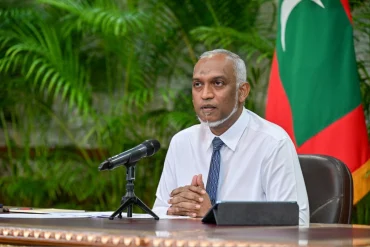
Chief Government Spokesperson Mohamed Hussain Shareef said debt repayments made over the past month did not affect the country’s US dollar cashflow or contribute to any shortage of foreign currency.
Speaking at the weekly “Presser with the Spox”, he responded to a journalist’s question on whether the President planned to intervene and reverse restrictions imposed by the Bank of Maldives (BML) on US dollar transactions, similar to previous intervention in 2024. The question also raised concerns about whether the bank had sufficient dollar reserves and called for greater transparency from BML.







Mohamed said the matter had already been explained, noting that both the Managing Director of BML and the government spokesperson had addressed the issue publicly. He added that further clarification could be provided if needed, including direct contact with relevant officials.
“Our cashflow and other things have not faced hurdles or difficulties because of this,” he said, while requesting journalist not draw conclusions linking recent debt repayments to the situation.
He also stated that the repayments made during the month were unrelated to the current foreign currency situation.
Commenting on the banking measures, Mohamed said recent changes introduced by BML were intended to ensure wider access to US dollars within regulatory limits and to reduce misuse.
He said BML plays a key role in providing foreign currency for essential imports such as fuel, medicine, staple goods, and student allowances.
“The bank also receives the money at limited amounts. In order to reduce the amount of misuse of the funds, we have taken two steps to address this. That’s it; nothing else changed,” he said.
The two key changes he was referring to were introduced on May 2 by BML, along with other measures as well. The processing of US dollar sales or support for telegraphic transfers during banking hours only, while inbound US dollar transfers remain available 24 hours a day, including on holidays; and adjustments to telegraphic transfer limits, which are managed over specific periods. He also said the bank covers a portion of foreign exchange needs at the official bank rate, while the remainder is met by customers.
Although Mohamed said the restrictions are intended to improve access and reduce misuse, and that BML users can still make up to 30 online transactions per month from their Rufiyaa accounts, users have reported difficulties processing transactions online even without reaching the monthly limit.
Some customers said that, after contacting customer service, they were informed that the bank has introduced limits on certain online platforms, restricting the number of daily transactions permitted. However, the message did not specify which platforms are affected or what the exact limits are.
In June 2025, the Bank of Maldives introduced a 30 percent processing fee on purchases from selected e-commerce platforms, including Temu, Shein, Alibaba, AliExpress, Lazada and eBay. The bank said the measure aimed to curb the misuse of personal debit cards for business purposes, particularly where cards are shared with third parties or used for high-volume imports through foreign websites.
Responding to concerns raised by users following the latest restrictions, BML spokesperson Mohamed Saeed said no restrictions have been placed on foreign currency spending for customers holding US dollar accounts. He added that limits apply only to certain online shopping platforms and that transaction caps have been introduced for purchases made through MVR accounts.
Saeed said the changes were introduced to address the concentration of US dollar allocations among a small number of users who were using personal foreign spending limits for business-related transactions on selected online platforms. He said a daily allocation system has been introduced to ensure more equitable distribution of foreign currency and to allow wider access for legitimate personal use.
Additionally, BML is seeking to raise up to USD 300 million through a planned sukuk issuance to strengthen foreign currency liquidity amid pressure from tourism-related headwinds and debt repayment needs. According to Bloomberg, the bank has begun discussions with investors across Asia, the Middle East and Europe to assess demand. If completed, it would mark BML’s first entry into international capital markets and is expected to carry a government guarantee, with Mashreq Bank assisting. The move comes as the Maldives manages external pressures linked to tourism flows, fuel costs and the balance of payments.