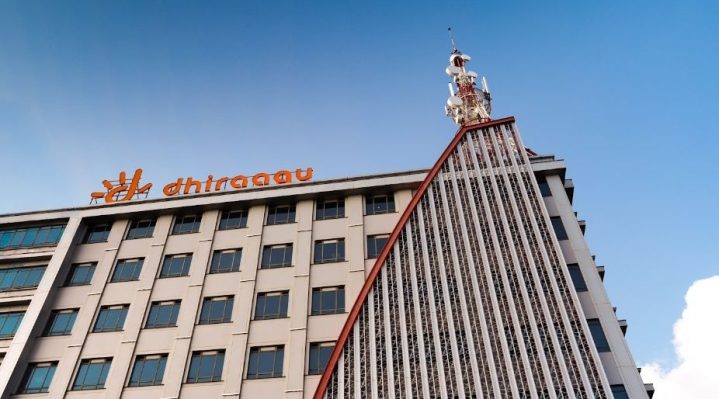
- Dhiraagu has evolved over 38 years from basic telephone trials to nationwide fibre broadband, completing its rollout to every inhabited island in 2024.
- Key milestones include internet services in 1996, a submarine cable to Sri Lanka in 2006, and a 1,253km domestic fibre backbone in 2012.
- Beyond connectivity, Dhiraagu offers business cloud services via its Tier IV-certified Hulhumalé data centre and the ESET-powered Cyber Protect security service.
At first, the achievement was getting a call through. In Dhiraagu’s early years, national network trials linked Malé with Laamu and Lhaviyani, and payphones were a principal means of access. People went to the connection. Thirty-eight years later, it follows them through the working day: into reservations, supplier messages, payments and the systems a business needs to keep running after its doors have closed.
Dhiraagu began operations on 1 October 1988, when the question of how to connect the Maldives was inseparable from its geography. The islands could be linked by telephone, but extending that access required equipment, investment and years of work across a vast stretch of sea. As the ways of communicating changed, so did what people expected a connection to do.
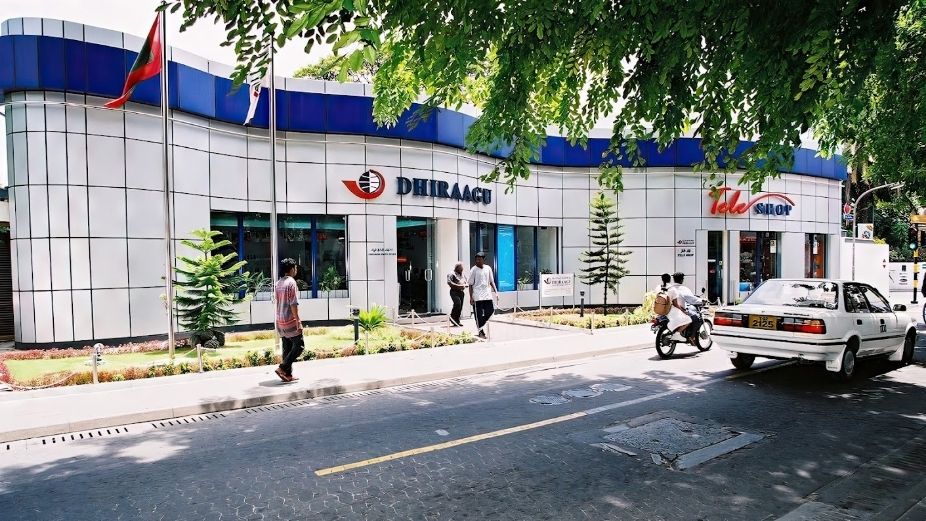






Internet services arrived in 1996, followed by mobile services. In 2006, a submarine cable connected the Maldives to Sri Lanka. A domestic fibre optic backbone completed in 2012 ran for 1,253 kilometres, linking the country from north to south. The sequence can look like a list of technical milestones. For businesses, it marked a gradual change in what could be done from an island: exchanging information more quickly, reaching customers more readily and coordinating work across locations.
That change continued as fibre broadband spread. Dhiraagu completed its rollout to every inhabited island in 2024. The reach of a network does not, by itself, tell us how every business uses it. It does mean that an enterprise outside Malé can consider digital tools that once depended on where reliable access was available. In a country where location has always shaped the practical limits of commerce, that is a consequential shift.
The demands placed on the network have grown alongside its reach. A connection that drops during a casual conversation is an irritation. One that fails while a business is taking bookings or trying to reach its records can disrupt the day’s work. Connectivity has become more valuable as organisations have built more of their operations around it, and more demanding for precisely the same reason.
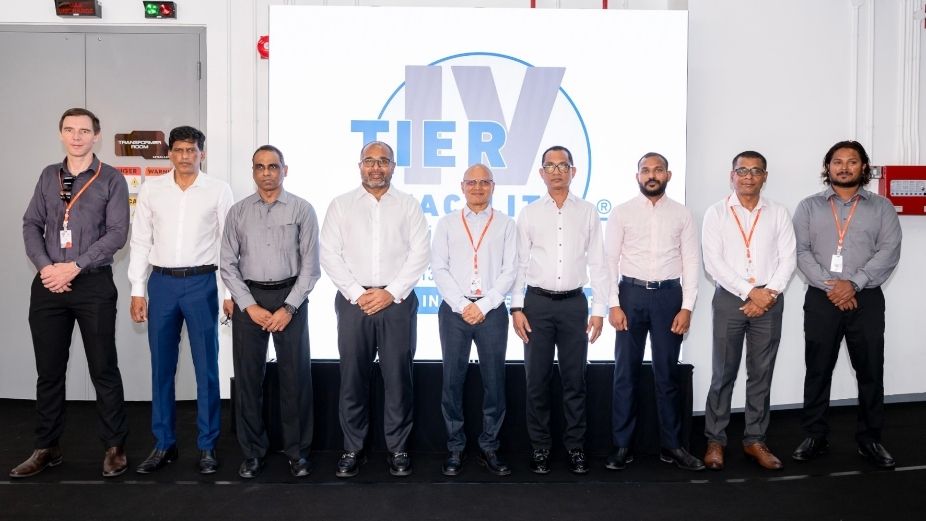
Dhiraagu’s business services reflect that progression. Alongside broadband and mobile connectivity, the company offers cloud services that let organisations run systems without owning all the equipment beneath them. Its data centre in Hulhumalé has received Tier IV certification for both its design and constructed facility from the Uptime Institute, recognising a high standard of resilience in its engineering. The distinction matters most when the infrastructure is out of sight. A business using a critical system wants it to be there each time a member of staff signs in.
As more work moves onto connected systems, keeping them available also means keeping them secure. This year, Dhiraagu introduced Cyber Protect, a managed service powered by ESET that helps organisations protect workplace devices against threats including malware and ransomware. It combines the technology with support from Dhiraagu’s local Security Operations Centre. The service addresses a familiar problem for smaller organisations: their exposure to digital risks can grow faster than their ability to build a specialist team.
Dhiraagu’s involvement in business forums, including a General Managers Forum focused on digitalisation in hospitality, points to the decisions that follow the construction of such systems. A resort has to work out where technology improves a guest’s stay. Another business has to decide which processes are worth changing and which tools its staff can realistically use. Those choices belong to the organisations themselves. Dhiraagu’s role is to give them more dependable ways to carry them out.
Artificial intelligence and automation will bring more choices of that kind. Their usefulness to Maldivian businesses will depend on the work they can improve, the information they require and the safeguards around them. The infrastructure built over Dhiraagu’s first 38 years gives businesses a stronger starting point from which to assess what comes next.
A payphone once made it possible to reach beyond the island on which a person stood. Today, the connection reaches into the ordinary operations of a business, often so quietly that its presence is taken for granted. The water between the islands has not changed. What a company can organise, sell and manage across it has.