India Sees Fintech and Clean Energy Driving Future Economic Ties with Maldives
- India and the Maldives are expanding economic ties through fintech, renewable energy and cross-border investment.
- Negotiations are under way on a bilateral investment treaty and a SAFTA Plus level Free Trade Agreement.
- India is introducing its Unified Payments Interface and offering fuel duty exemptions to support cooperation.
The Maldives and India are moving towards broader economic cooperation, with financial technology, renewable energy and cross-border investment expected to shape the next phase of bilateral relations.
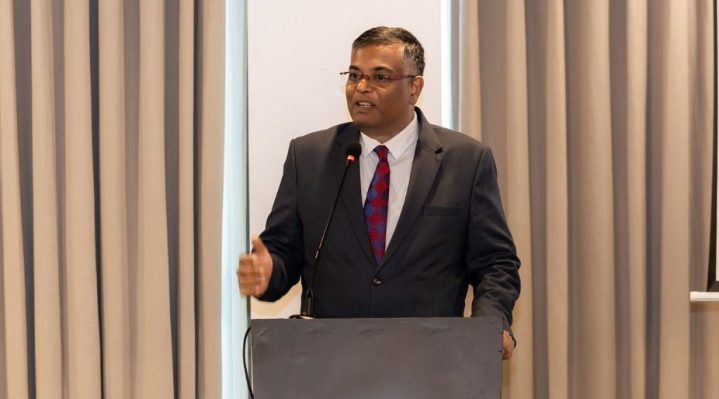
Indian High Commissioner to the Maldives G. Balasubramanian said Indian companies have already established a growing presence in the Maldivian tourism and agriculture sectors, while further investments are expected to enter the market.







Speaking on the Trade Desk podcast produced by the Ministry of Economic Development, Transport and Trade, High Commissioner Balasubramanian said an Indian company is undertaking agricultural projects in Baa Atoll. Another Indian company is also expected to launch a new investment in the Maldives later this year.
Indian participation in the tourism industry is continuing to expand, with six or seven companies currently developing resorts in the country. However, the High Commissioner indicated that future cooperation is likely to extend into financial technology, energy supply and renewable energy.
India is working with the Maldivian Government and Payment Maldives on the introduction of financial technology systems, including India’s Unified Payments Interface. The development could support faster and more accessible cross-border payment services between the two countries.
The two governments are also working to strengthen the legal and commercial framework for investment. Negotiations are under way to finalise a bilateral investment treaty intended to provide greater protection for Maldivian and Indian investments.
Discussions have also begun on a bilateral Free Trade Agreement, with the Terms of Reference already signed. The proposed agreement is being developed at a SAFTA Plus level and is expected to address barriers affecting the movement of goods and services between the two markets.
According to High Commissioner Balasubramanian, the Maldives currently provides tourism services to India valued at between USD 300 million and USD 400 million annually. India remains an important tourism source market, while the proposed trade agreement could create further opportunities for Maldivian businesses seeking access to the Indian market.
Maldivian tuna already enters India without import duties. A broader agreement could expand preferential access to additional goods and services while improving conditions for Indian investments in the Maldives.
Energy cooperation could also become a more significant component of the relationship. India recently exempted petroleum exports to the Maldives from the Special Additional Excise Duty and Road and Infrastructure Cess. The exemptions could reduce the cost of future fuel imports from India, particularly if Maldivian state-owned enterprises increase procurement of refined petrol and diesel from the country.
Together, the trade negotiations, investment protection measures and emerging cooperation in payments and energy signal a shift towards a more diversified economic relationship between the Maldives and India.