Maldives and UN Set Development Priorities Under New Cooperation Framework
- The Maldives and UN signed a five-year Sustainable Development Cooperation Framework (2027-2031) focused on sustainable financing, resilience and SDG progress.
- Sixteen UN agencies will participate in implementation, providing policy advice, capacity building and partnership support aligned with national priorities.
- The framework supports President Muizzu's vision of a fully developed Maldives by 2040, with a joint governance mechanism overseeing progress.
The Maldives and the United Nations have established a five-year framework to coordinate international support for the country’s development priorities, with a focus on sustainable financing, institutional capacity, resilience and progress towards the Sustainable Development Goals.
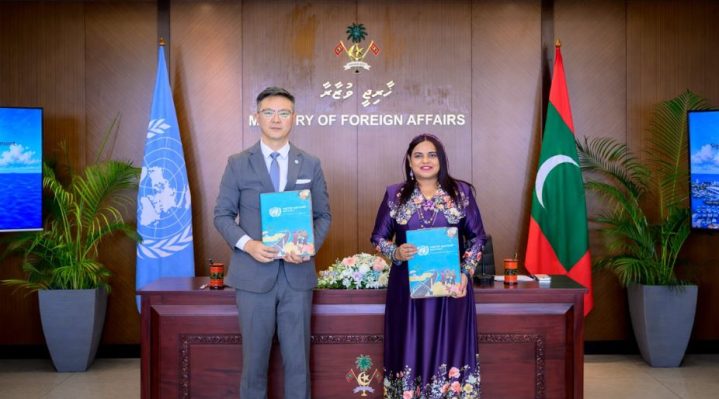
The United Nations Sustainable Development Cooperation Framework 2027-2031 was signed by Minister of Foreign Affairs Iruthisham Adam on behalf of the Government and UN Resident Coordinator Hao Zhang on behalf of the United Nations.






The framework will serve as the main strategic instrument guiding the UN Development System’s work in the Maldives. It sets shared priorities and coordinated actions for supporting national development objectives during the final years of the 2030 Agenda for Sustainable Development.
Sixteen UN agencies, funds and programmes will participate in its implementation: FAO, IFAD, ILO, IOM, UNDP, UNDRR, UNEP, ESCAP, UNESCO, UNFPA, UN-Habitat, UNHCR, UNICEF, UNIDO, UNODC and WHO.
The framework was developed following consultations with government institutions, UN entities, development partners, civil society organisations, academic institutions and the private sector. The process sought to align UN assistance with the Maldives’ changing development requirements.
As an upper-middle-income country and a Small Island Developing State, the Maldives continues to face constraints linked to climate vulnerability, limited institutional capacity and access to sustainable development financing. Under the framework, the UN will provide policy advice, support evidence-based decision-making, develop institutional and human capacity, and facilitate partnerships.
Minister Adam said the framework supports President Dr Mohamed Muizzu’s vision of achieving a fully developed Maldives by 2040. She called for partnerships that can help mobilise sustainable financing, technology and expertise while expanding productive capacity, improving resilience and investing in people and institutions.
She also said the framework’s success should be assessed through the tangible improvements it delivers for Maldivians.
Zhang said the agreement begins a new phase of implementation following the consultation process. He said the 16 participating UN entities would work with the Government and other partners to turn the framework’s priorities into coordinated development outcomes.
A joint governance mechanism will oversee implementation, review progress and ensure that UN assistance remains aligned with national priorities throughout the 2027-2031 period.