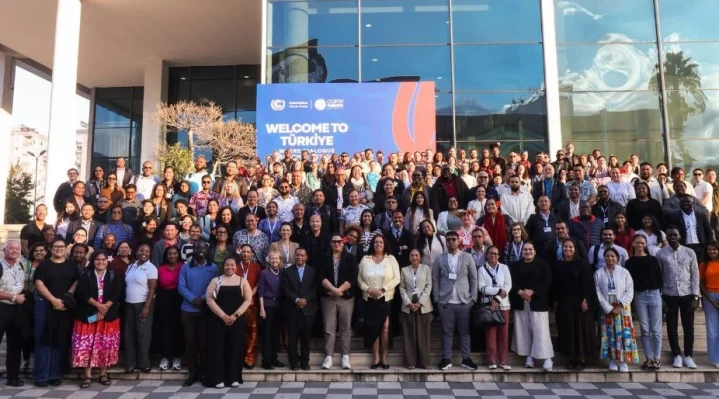
- Maldivian climate negotiators joined SIDS preparatory meetings ahead of COP31 in Antalya, Türkiye, running 9-20 November.
- Through AOSIS and the G77, the Maldives pushes for 1.5°C-aligned emissions plans, adaptation funding and loss and damage support.
- The Maldives' conditional NDC target of cutting 1.52 million tonnes CO2e by 2035 depends on accessible international climate finance.
Maldivian climate negotiators have participated in preparatory meetings of Small Island Developing States (SIDS) ahead of COP31 in Antalya, Türkiye.
The Ministry of Climate Change, Environment and Energy confirmed its negotiators’ participation in a post on X. The UN climate conference will run from 9 to 20 November, bringing governments together to negotiate emissions reductions, adaptation and the financing of climate action.







The Maldives negotiates through the Alliance of Small Island States (AOSIS) and the wider Group of 77 and China. These groups provide a platform for advancing shared interests within the UN climate process.
Ahead of COP31, AOSIS has called for national emissions plans consistent with limiting global warming to 1.5°C and faster delivery of financial and technical support. Its stated priorities include adaptation funding and ensuring that institutions addressing loss and damage deliver practical assistance to vulnerable countries.
Access to climate finance is another concern. In its response to the COP31 Action Agenda in September, AOSIS warned that eligibility requirements, limited institutional capacity and the small scale of island economies could prevent SIDS from benefiting from international initiatives. It called for stronger accountability and measurable results.
For the Maldives, international support is central to implementing its national climate commitments. Its Third Nationally Determined Contribution, submitted in February 2025, targets an emissions reduction of 1.52 million tonnes of carbon dioxide equivalent in 2035 against projected business-as-usual levels. The target is conditional on adequate finance, technology and capacity-building support.
The national plan also identifies adaptation needs across water supplies, coastal protection, tourism, fisheries and public infrastructure. It warns that limited fiscal space and difficulties accessing international climate finance constrain the country’s ability to respond.
That dependence on external support gives the financing discussions in Antalya direct relevance to the Maldives’ ability to put its climate plans into practice.