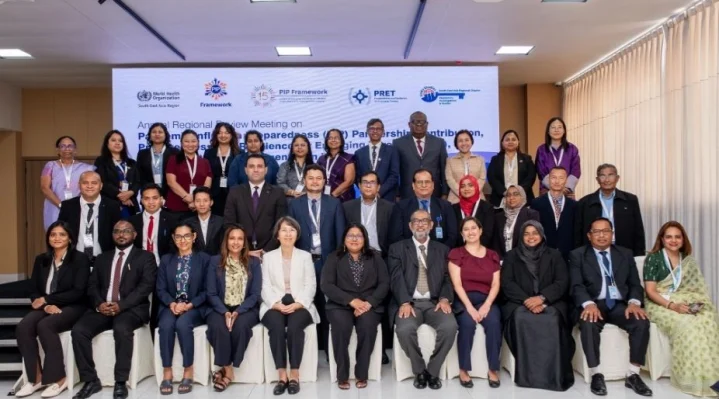
- The Maldives hosted a WHO South-East Asia regional meeting on pandemic preparedness, emphasizing regional collaboration and resilience.
- A three-day national workshop at Hotel Jen trained 50 officials in chemical and biological emergency readiness.
- Jointly organized by HPA, MNDF, and NDMA with WHO guidance, the training covered risk assessment, decontamination, and inter-agency coordination.
The Maldives has reinforced its national health security architecture through simultaneous efforts, hosting a major regional WHO conference on pandemic preparedness alongside a specialized training workshop for hazardous emergencies.
Speaking at the opening of the WHO South-East Asia Regional Review Meeting on Pandemic Influenza Preparedness (PIP), Preparedness and Resilience for Emerging Threats (PRET), and Unity Studies in Malé, Minister of Health, Family and Welfare Geela Ali highlighted the importance of regional collaboration, robust health systems, and collective preparedness. She emphasized that regional integration remains essential to build health security and long-term resilience across member states.







The regional gathering coincides with local efforts to scale up response protocols for chemical, biological, and radiological events. Minister Geela officially concluded a three-day national workshop held at Hotel Jen from 13 to 15 October, focused on bolstering national readiness for chemical and biological emergencies.
Jointly organized by the Health Protection Agency (HPA), the Maldives National Defence Force (MNDF), and the National Disaster Management Authority (NDMA)—with technical guidance from the WHO and its Regional Office—the workshop trained 50 officials from key institutions.
During the sessions, participants focused on risk assessment techniques, protocols for protective equipment usage, hazard identification, and standards for emergency decontamination and medical treatment. HPA noted that the training aimed to clarify institutional responsibilities and update standard operating procedures to ensure rapid, coordinated inter-agency action in the event of toxic substance exposure or infectious disease outbreaks.