MMA Figures Reveal Scale of State Foreign Currency Drain After Sukuk Repayment
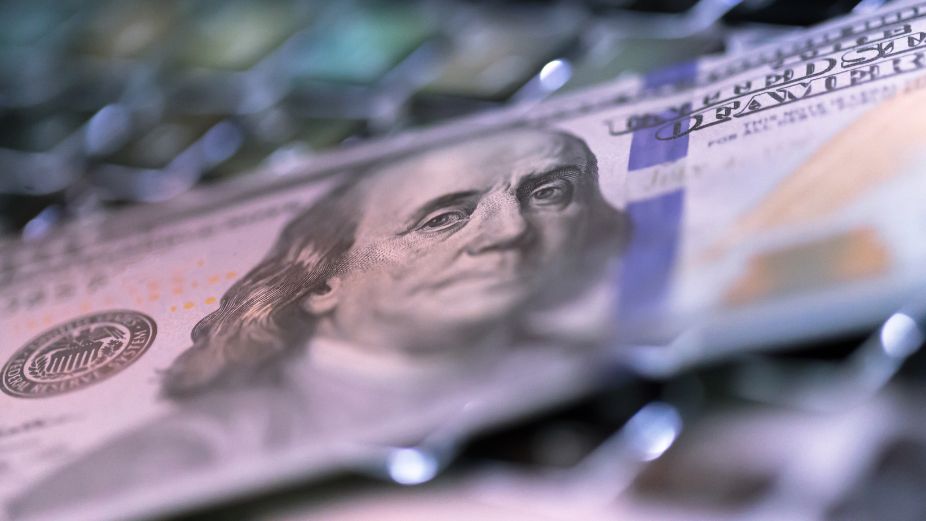
The Maldives’ April balance sheet offers a rare look at how quickly sovereign foreign currency liquidity can tighten when a large external debt obligation comes due.
Figures from the Maldives Monetary Authority’s Statement of Financial Position show that total foreign currency financial assets fell from MVR 22.13 billion at the end of March 2026 to MVR 12.90 billion at the end of April. The decline of around MVR 9.22 billion represents a sharp monthly contraction in the central bank’s foreign currency asset position, with the movement concentrated mainly in cash balances and securities.







The most visible shift was in cash and balances with banks, which dropped from MVR 17.07 billion to MVR 9.16 billion. Investments in securities also declined from MVR 4.31 billion to MVR 2.87 billion. Together, these two items accounted for most of the reduction in foreign currency assets.
On the liabilities side, the clearest movement came from the balances of Government and Government institutions in foreign currency. These deposits fell from MVR 5.79 billion at the end of March to MVR 576.6 million at the end of April, a decline of about 90 percent in a single month.
The timing strongly points to the settlement of the Maldives’ USD 500 million sovereign Sukuk as the main driver of the drawdown. The Government settled the Sukuk on 2 April 2026, including USD 500 million in principal and USD 24.68 million in profit payments, bringing the total repayment to USD 524.68 million. Public statements at the time said the repayment was made using the Sovereign Development Fund and official reserves.
That amount is equivalent to roughly MVR 8.1 billion, making it broadly consistent with the scale of the movement recorded in the MMA’s April balance sheet. The figures do not provide a full cash-flow breakdown, so they cannot trace every Rufiyaa or dollar across the system. But the size and timing of the fall suggest that the repayment, rather than an unannounced mobilisation of funds for infrastructure projects, was the central reason for the sudden contraction.
This also aligns with statements made before the repayment. In March, President Dr Mohamed Muizzu said more than USD 650 million had been set aside for the Sukuk repayment, including more than USD 320 million in the Sovereign Development Fund and USD 330 million in usable reserves. He said at the time that even after settling the obligation, the Government would retain more than USD 150 million.
Seen through the April balance sheet, that political assurance becomes a liquidity event. The repayment may have removed a major sovereign default risk, but it also reduced the visible stock of foreign currency buffers held within the central bank’s accounts. The balance sheet therefore captures both sides of the same achievement: the Maldives met a major external obligation, but the act of doing so drew heavily on state-held foreign currency resources.
This matters because the Government is simultaneously pursuing an ambitious development agenda. Major infrastructure ambitions, airport development, reclamation, logistics expansion and Special Economic Zone plans all depend, directly or indirectly, on access to foreign currency. In January, the Government re-established permitted activities and investment thresholds for Special Economic Zones, including USD 100 million minimum investments for several strategic activities and USD 500 million thresholds for sustainable township development projects.
However, the April numbers suggest that sovereign planning is operating within a narrower foreign exchange corridor after the Sukuk settlement. A state can announce large projects in Rufiyaa terms, award contracts, and plan physical expansion, but imported machinery, fuel, construction materials, consultants, equipment and debt repayments ultimately require dollars.
The pressure was not confined to the sovereign balance sheet. In early May, the Government said changes introduced by Bank of Maldives to overseas Maldivian Rufiyaa card transactions were aimed at prioritising dollar reserves for essential public needs, including food, medicine, fuel and students abroad. That statement points to a wider foreign currency management problem: even after avoiding a headline default, the system still has to ration dollar availability across essential imports, households, businesses and public obligations.
The April figures should therefore not be read simply as a sign of collapse. They also reflect a deliberate decision to use accumulated resources to remove a large near-term debt risk. The Sukuk settlement likely eased immediate concerns about sovereign repayment capacity and reduced one major pressure point in the country’s external debt calendar.
But the cost was visible. Government foreign currency deposits at the MMA were depleted rapidly, foreign currency assets fell sharply, and the central bank’s April position showed how much of the country’s external resilience had been tied to one scheduled repayment.
For businesses, the key question is what comes next. If foreign currency buffers are rebuilt quickly through tourism receipts, external financing, stricter foreign exchange enforcement or new inflows, the April drawdown may be remembered as a managed repayment cycle. If buffers remain thin, the same figures may mark a more difficult phase in which infrastructure ambitions, import demand and debt management compete for the same limited pool of dollars.
What the balance sheet reveals is the deeper fiscal tension: the Maldives can meet major obligations, but each large payment narrows the space available for the next promise, the next project and the next external shock.