President Muizzu Reshapes Cabinet After Election Setback
A sweeping restructuring of the administration has reduced the size of the cabinet and consolidated several key portfolios, marking the most extensive reorganisation since President Muizzu assumed office.
The latest changes bring the number of ministries down to 15, compared with the 22 ministers initially appointed when the administration began in November 2023. The move follows a series of earlier adjustments to ministerial portfolios over the past two years, but represents a more comprehensive shift in structure and responsibilities.






Ten ministers stepped down ahead of the reshuffle, including those overseeing defence, foreign affairs, health, tourism, social development, and higher education. Their resignations cleared the way for a reconfigured cabinet with merged and expanded mandates across multiple sectors.
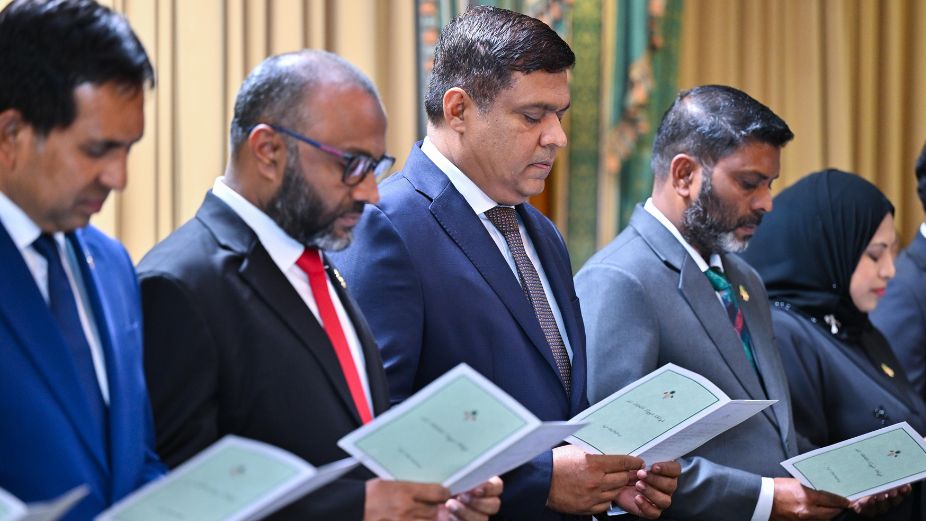
The ministers sworn in on Tuesday evening and their portfolios are as follows:
- Moosa Zameer – Minister of Finance and Public Enterprises
- Ali Ihusaan – Minister of Homeland Security, Labour and Technology
- Dr Iruthisham Adam – Minister of Foreign Affairs
- Ismail Shafeeu – Minister of Education, Higher Education and Skills Development
- Geela Ali – Minister of Health, Family and Welfare
- Mohamed Saeed – Minister of Economic Development, Transport and Trade
- Dr Mohamed Shaheem Ali Saeed – Minister of Islamic Affairs and Endowments
- Mohamed Ameen – Minister of Tourism and Civil Aviation
- Abdulla Rafiu – Minister of Youth Empowerment, Sports and Fitness
- Heena Waleed – Minister of Arts, Culture and Heritage
- Dr Abdulla Muthalib – Minister of Infrastructure, Housing and Urban Development
- Ali Shareef – Minister of Climate Change, Environment and Energy
Structural changes extend beyond personnel shifts. The education and higher education ministries have been merged into a single entity responsible for education and skills development, while labour functions have been reassigned to the Homeland Security ministry. Transport responsibilities have been integrated into the economic portfolio, while civil aviation has been paired with tourism. The Ministry of Social and Family Development has been dissolved, with its functions distributed across other ministries.
Despite the broad overhaul, two portfolios remain without appointed ministers, with no immediate replacements named for defence or local government. The cabinet will continue to include the Attorney General and two ministers who were not part of the reshuffle.
The restructuring follows the outcome of the April 4 parliamentary elections, which introduced new political pressures despite expectations of a stronger mandate for the administration. While the President’s Office framed the changes as an effort to streamline government functions and improve service delivery, the timing has drawn attention to the broader political context surrounding the reorganisation.