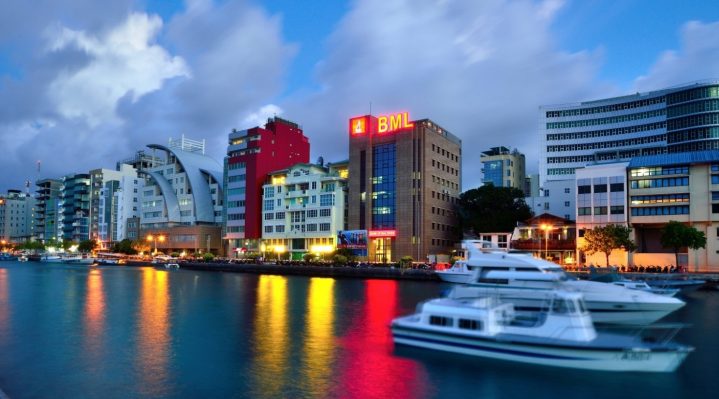
- BML earned a spot in Forbes' inaugural 2026 World's Top Performing Banks ranking, placing in Tier 6 alongside institutions with USD 3-10 billion in assets, assessed on profitability, growth, capital resilience and asset quality.
- The bank's third-quarter report showed record earnings, with nine-month profit after tax reaching MVR 1.93 billion, up 26%, driven by stronger net interest income and a sharp drop in bad-debt charges.
- BML reported a 28% cost-to-income ratio and a 38% capital adequacy ratio, both far stronger than international benchmarks and the 12% regulatory minimum.
Bank of Maldives’ inclusion in Forbes’ inaugural World’s Top Performing Banks ranking gives the country’s largest bank an international benchmark for its financial performance. For an institution serving a small, tourism-dependent economy, the significance lies in how its profitability, funding and asset quality compare with banks operating at a similar scale elsewhere.
Compiled with market research firm Statista, the 2026 list includes 500 banks from 89 countries. BML features in Tier 6, covering institutions with assets of between USD 3 billion and USD 10 billion. Banks were divided into six asset-size groups before their scores were calculated, allowing comparisons between institutions of broadly comparable size.







The assessment examines several aspects of banking performance together. Profitability carries a weighting of 30%, growth and earnings quality 20%, capital and funding resilience 25%, and asset quality and efficiency another 25%. Measures include returns on assets, operating costs, earnings stability, deposit growth and the relationship between lending and deposits.
Eligibility also required published accounts for the most recent fully available audited financial year and at least three consecutive years of financial data. The approach gives the recognition substance: sustained earnings and the resources supporting a bank’s balance sheet matter alongside its ability to expand.
Forbes published the ranking in September. BML’s subsequent third-quarter report provides a more recent picture of its financial position, showing record earnings alongside substantial growth in lending.
Profit after tax reached MVR 1.93 billion in the first nine months of 2026, up 26% from the corresponding period last year. Third-quarter profit increased by 36% to MVR 647.2 million.
The accounts help explain that increase. Net interest income, broadly the difference between interest earned and funding costs, rose by about 20% in the quarter compared with a year earlier. Operating profit before provisions increased by roughly 14%. Meanwhile, the charge for bad and doubtful debts fell from MVR 140 million to MVR 23.9 million, contributing materially to the faster growth in final earnings.
BML also reported a cost-to-income ratio of 28%. That means operating expenses absorbed roughly MVR 28 of every MVR 100 in operating income, leaving a substantial share available to cover credit losses, taxation and profit. This ratio compares very favourably with international banking benchmarks, where cost-to-income ratios between 40% and 60% are common regionally and globally.
Capital provides another measure of the bank’s position. Its capital adequacy ratio stood at 38% at the end of September, compared with the regulatory minimum of 12%. The ratio measures capital against risk-weighted assets and indicates the buffer available to absorb losses. This is another key achievement, with the ratio notably high by international banking standards: at the end of 2025, major European banks reported an aggregate total capital ratio of around 20%.
Net loans and advances reached MVR 32.9 billion, compared with MVR 25.2 billion at the end of December. Customer deposits grew by 14% over the same period to MVR 42.36 billion. Its reported loan-to-deposit ratio was 77.6%, indicating that lending remained comfortably supported by its deposit base and at a relatively conservative level by international banking standards.
Loan quality improved alongside that expansion. BML reported that its Stage 3 loan ratio, measuring the proportion of credit-impaired loans, declined from 6% at the end of 2025 to 4.8% in September. This adds another dimension to the growth story: the reported share of troubled loans fell as lending increased.
For the Maldives, these indicators have practical consequences. A profitable bank with substantial capital has greater capacity to finance businesses and households while absorbing losses when borrowers encounter difficulties. That strength becomes particularly important when the Maldivian economy faces external shocks or other pressures, allowing the bank to continue supporting customers and economic activity through more difficult periods. BML’s role also extends into the international payments that keep an import-dependent economy functioning.
According to its Q3 report, the bank processed USD 2.86 billion in outward foreign currency payments during the first nine months of 2026. Separately, it supplied USD 722.1 million to customers against rufiyaa, almost matching the amount provided throughout 2025.
The Forbes recognition gives BML an external reference point for its financial performance. Its relevance to the wider economy rests on the foundations that such an assessment examines: sustainable earnings, dependable funding and the ability to expand lending while keeping credit risks under control.