The Next Test for Maldives Tourism Is Value, Not Just Volume
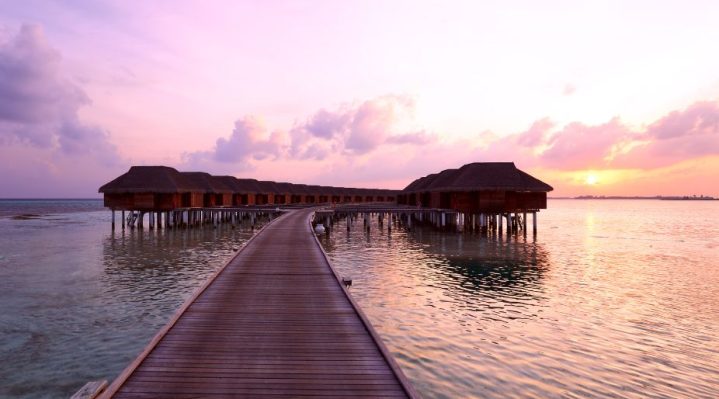
- Maldivian tourism, long measured by arrivals, must now prioritize value per visitor, resilience, and local benefit.
- Shorter stays weaken growth despite rising arrivals, making bed nights and spending per tourist critical.
- Fragile coral reefs, sea-level rise, beach erosion, and weak waste management threaten tourism's natural foundations.
For more than 50 years, the success of Maldivian tourism has been measured largely through expansion: more arrivals, more resorts, more beds, and more revenue flowing into the economy.
By those measures, the sector remains strong. Tourist arrivals reached 2.25 million in 2025, a 9.8 percent increase from the previous year, according to the Maldives Monetary Authority’s statistics database. In 2026, the Maldives welcomed its one millionth tourist on 21 June.







But the next phase of Maldivian tourism cannot be judged by arrivals alone. The same growth that supports foreign exchange earnings, employment, government revenue, and private investment is also exposing deeper questions about resilience, local benefit, environmental pressure, and the long-term health of the natural assets on which the industry depends.
The World Bank estimates that tourism represents around 21 percent of GDP in the Maldives. It has also noted that although arrivals increased in early 2025, shorter stays weakened growth, making average bed nights and spending per tourist increasingly important for the country’s medium-term outlook.
This means the core policy question is shifting. The issue is no longer only how many visitors the Maldives can attract, but whether each phase of growth creates stronger communities, better jobs, greater value per visitor, and a tourism model less exposed to climate, geopolitical, and economic shocks.
The pressure behind the numbers
The Maldives sells a highly specific promise to the world: coral islands, clear lagoons, beaches, privacy, and a sense of environmental abundance. Yet these are not unlimited assets. They are fragile systems carrying the weight of both climate change and development pressure.
A World Bank climate report has warned that coral reefs, which support tourism, fisheries, beach formation, and coastal protection, are already under severe stress. It projects sea-level rise of up to 0.9 metres by 2100 and says coastal flooding could damage up to 3.3 percent of the Maldives’ total assets by 2050 under typical 10-year flood conditions if adaptation is insufficient. The same report notes that more than 90 percent of surveyed resorts reported beach erosion, while 60 percent reported infrastructure damage.
The environmental challenge is also visible in waste management. The Utility Regulatory Authority’s Waste Management Statistics Report 2024 found weak compliance in infrastructure and waste handling, with open burning and poor leachate and odour management still common. It also recorded resort waste generation at 2.17 kilogrammes per person per day, while cautioning that resort estimates were based on a limited number of locations and standardised assumptions.
These issues do not diminish the importance of tourism. They show why tourism growth must be managed as a national resilience question, not only a marketing target.
A wider definition of success
The Maldives has already recognised this shift in policy. The Fifth Tourism Master Plan sets out goals that include spreading the benefits of tourism across atoll communities, offering new products and experiences, building climate resilience, improving transport services, strengthening the tourism workforce, advancing digitisation, improving data analytics, and raising industry standards.
That direction matters because the Maldives’ tourism model is no longer competing only on scenery. Many destinations now offer luxury accommodation, wellness, remote escapes, and high-end service. The Maldives’ advantage increasingly depends on whether it can convert its natural and cultural identity into a more durable form of value.
This could mean measuring success through longer stays, higher retained value, local procurement, stronger links between resorts and nearby islands, better career pathways for Maldivians, lower waste per guest night, reef health, renewable energy use, and community benefit. Arrival numbers will remain important, but they should not be the only scoreboard.
From isolated good practice to national learning
Across the tourism sector, practical solutions already exist. The Maldives Tourism Climate Action Plan notes that initiatives such as waste management practices, seagrass restoration, community-led mangrove conservation, and coral reef rehabilitation have already emerged within the industry.
The challenge is that many of these efforts remain fragmented. One resort may develop a strong waste model, another may work with nearby communities on conservation, and another may invest in renewable energy or local sourcing. But unless the lessons are measured, compared, and shared, successful practices often remain confined to individual properties or atolls.
This is where better data becomes central. Tourism statistics already track arrivals, markets, accommodation types, and occupancy. The next step is to build more consistent indicators around environmental performance, community links, workforce outcomes, and resilience. Done well, this would not be a reporting burden for the sake of bureaucracy. It would help identify what works, where it works, and how it can be adapted elsewhere.
Growth in a more uncertain world
The need for resilience is also economic. The World Bank’s 2026 Maldives Development Update warned that the current account deficit is expected to widen in 2026, driven by lower tourism receipts and higher import costs linked to the Middle East conflict. It also identified disruptions to tourism flows, supply chains, and the cost of essential imports as key external risks.
This matters because Maldivian tourism is deeply connected to global aviation routes, imported food, fuel, construction materials, and foreign exchange availability. A disruption far beyond the Maldives can quickly affect room nights, operating costs, ticket prices, and investor confidence.
A stronger tourism model therefore needs more than promotion. It needs air connectivity that is diversified across routes and markets, energy systems less exposed to fuel price shocks, better local supply chains, and destination planning that accounts for environmental limits.
The next phase of Maldivian tourism
The Maldives does not need to move away from growth. Tourism remains the country’s most important economic engine, and continued expansion will be essential for jobs, revenue, investment, and foreign exchange.
But the meaning of growth has to change. A record year is less meaningful if visitors stay for shorter periods, if communities see limited benefit, if waste systems lag behind demand, or if the natural assets that draw travellers become more expensive to protect.
The next phase of Maldivian tourism should be judged by whether the sector can generate more value without exhausting the foundations of its success. That means stronger links between resorts and island communities, better measurement of environmental impact, more resilient infrastructure, improved workforce development, and a clearer system for scaling what already works.
For the Maldives, the future of tourism will not be defined simply by how many people arrive. It will be defined by how much lasting value each visitor helps create, and whether the country can protect the islands, reefs, communities, and livelihoods that made the destination successful in the first place.