Vice President Attends CHOGM as Investment and Finance Lead Agenda
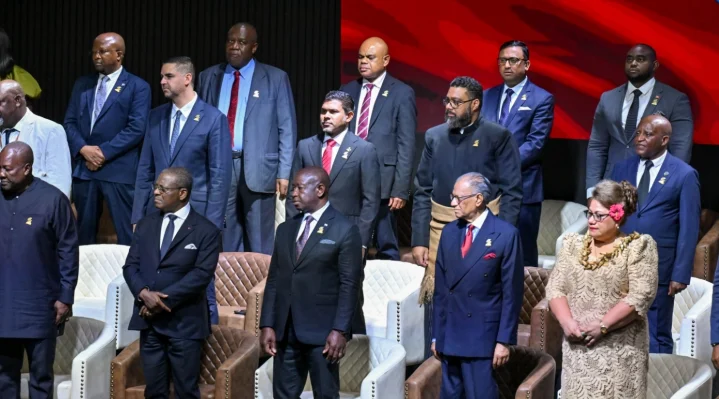
- Vice President Hussain Mohamed Latheef attended the opening of CHOGM 2026 in Antigua and Barbuda, held under the theme of accelerating partnerships and investment.
- The summit focuses on mobilising finance for over USD 52 billion in investment-ready projects from 28 developing Commonwealth countries, covering skills, climate finance and green energy.
- Leaders discussed affordable finance, sustainable debt and wider use of the Multidimensional Vulnerability Index, issues highly relevant to small island economies like the Maldives.
Vice President Uz Hussain Mohamed Latheef attended the opening of the Commonwealth Heads of Government Meeting (CHOGM) 2026 as member countries pursue closer investment partnerships and changes to financing arrangements for vulnerable economies.
The official opening of the 28th CHOGM took place on 3 November in St John’s, Antigua and Barbuda, with King Charles III, Head of the Commonwealth, joining leaders and delegation representatives from across the association.






The ceremony included addresses by Antigua and Barbuda’s Prime Minister Gaston Browne and Commonwealth Secretary-General Shirley Botchwey, alongside cultural performances. The Vice President also joined leaders and delegation representatives for the official group photograph.
Running from 1 to 4 November, this year’s meeting is being held under the theme “Accelerating Partnerships and Investment for a Prosperous Commonwealth”. The biennial gathering brings together the Commonwealth’s 56 member countries to discuss shared economic, political and development priorities.
A central feature of the 2026 summit is direct engagement between government leaders, investors, international financial institutions and philanthropists. Dedicated sessions aim to mobilise financing for a pipeline of investment-ready projects worth more than USD 52 billion from 28 developing Commonwealth countries.
The projects represent potential investments seeking finance, rather than funding already secured. The discussions cover areas including skills development, climate finance and green energy, reflecting an effort to connect the Commonwealth’s diplomatic network more closely with development and business opportunities.
Access to affordable finance is another major issue. Leaders are considering a common approach to sustainable debt and concessional funding that gives greater weight to countries’ vulnerability.
In his opening address, Prime Minister Browne argued that national income alone does not adequately reflect a country’s exposure to disasters or its capacity to recover. He called for wider use of the Multidimensional Vulnerability Index alongside existing financing criteria, faster access to climate finance and debt arrangements that allow vulnerable governments more room to fund recovery.
For small island economies such as the Maldives, these discussions are relevant to how development and climate resilience projects can be financed without placing additional pressure on public finances.
The agenda also includes reducing barriers to trade between Commonwealth countries, expanding education and entrepreneurship opportunities, and strengthening democratic institutions. Separate business, youth, women’s and people’s forums provide space for participation beyond government delegations.
Secretary-General Botchwey, attending her first CHOGM in the role, outlined plans for a trade and investment conference in 2027 to carry the agenda forward. That follow-up is intended to bring trade, finance and investment ministers together with business leaders, linking the summit’s discussions to further work on investment and market access.