VMC Forecast 100,000 Extra Tourists From Its Liverpool Deal. Did They Come?
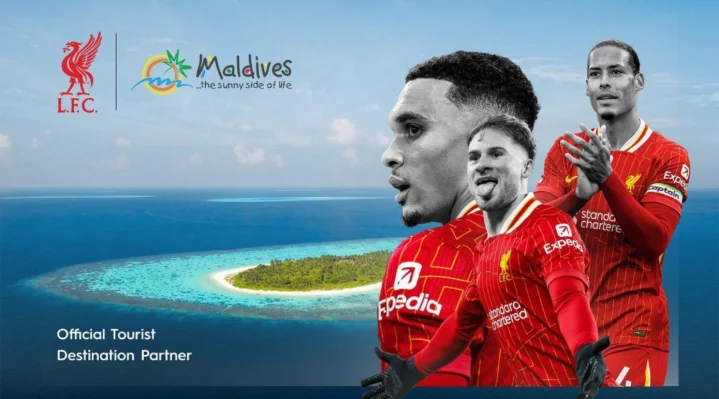
- Visit Maldives forecast over 100,000 extra tourists and up to USD 200 million in revenue from its Liverpool FC partnership, but never published booking or arrival figures tied to the deal.
- The campaign showed strong engagement, including a 400 per cent website traffic surge and USD 17 million in media value, yet media value measures exposure rather than actual traveller spending.
- The Maldives recorded a record 2.25 million arrivals in 2025, clearing the central bank's 2.2 million target but falling short of the 2.3 million figure linked to the Liverpool deal.
When Liverpool played Everton at Anfield in April 2025, President Dr Mohamed Muizzu was in the stands and Visit Maldives was on the stadium’s advertising boards. In London, the islands appeared on taxis, buses and the Underground. The country’s tourism promotion agency had put a number on what all that attention could buy: more than 100,000 additional tourists that year.
The Maldives went on to record its busiest year for tourism. Visit Maldives reported a surge in website traffic after an email to Liverpool supporters and said the partnership generated more than USD 17 million in annual media value. But its annual report, published the following year, gave no tally of bookings or arrivals generated by the deal. The public record is clearer about where the Maldives appeared than about how many people travelled because of it.
The Promise Behind the Advertising






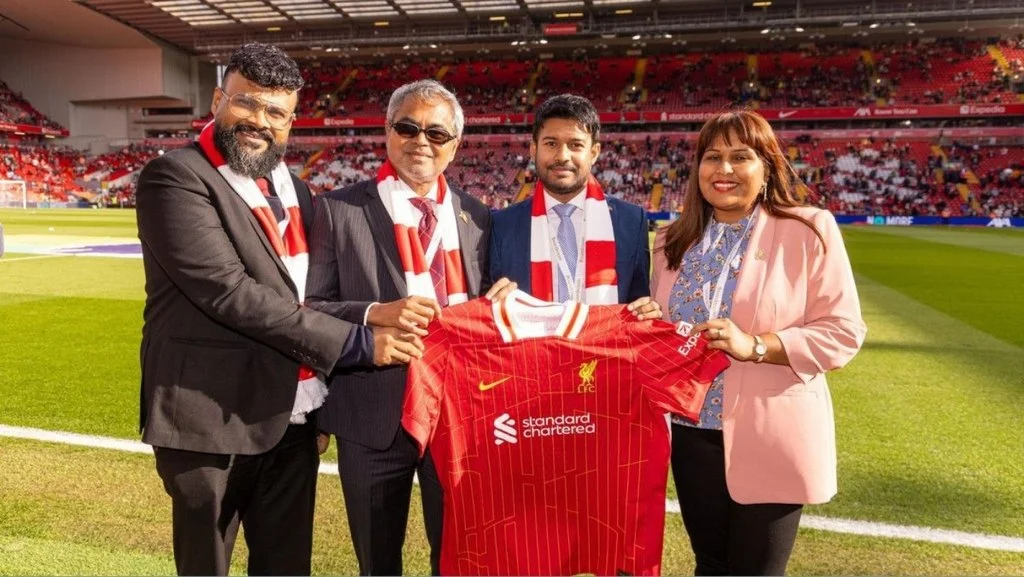
The agreement, announced in March 2025, made the Maldives Liverpool FC’s official tourist destination partner. It covered the club’s men’s and women’s teams and gave Visit Maldives access to an international fanbase well beyond Britain. The corporation’s annual report lists May 2028 as the original end date.
Visit Maldives initially forecast more than USD 100 million in tourism revenue from the additional visitors. Two weeks later, while promoting the UK outdoor campaign, it put the figure at USD 200 million. The corporation also estimated the campaign investment at about USD 2.5 million and projected an annual return of more than 20 times the initial investment. Its announcement gave no details on how it calculated that return or how it would identify travellers who came because of the campaign.
There were signs that Liverpool’s audience was paying attention. In August 2025, Visit Maldives reported a 400 per cent increase in daily website traffic after an email directed supporters to a page featuring offers from Maldivian properties. That December, 50 Liverpool members competed in a penalty shootout for a holiday at Kandima Maldives. Finley McGovern, 19, won and chose to take his twin sister.
The email offered a way to follow supporters from a Liverpool promotion to a resort offer. Visit Maldives disclosed the rise in traffic without publishing the number of visitors behind it or how many went on to book. Its estimate of more than USD 17 million in annual media value measures the value it assigned to exposure. The original tourism revenue forecast was for money spent by travellers.
A Record Year and a Reversal in Britain
The Maldives welcomed 2.25 million tourists in 2025, nearly 200,000 more than the previous year. The Maldives Monetary Authority estimated travel receipts at about USD 5.6 billion, up from USD 4.8 billion. Arrivals cleared the 2.2 million target cited by the central bank, while falling short of the 2.3 million figure that then Tourism Minister Thoriq Ibrahim said the Liverpool partnership would help the country surpass.
Britain sent 202,172 tourists in 2025, an increase of 11.3 per cent. That market was already growing before the deal. UK arrivals had risen 16.4 per cent in 2024 and were up about 15 per cent in the first two months of 2025, before the sponsorship was announced. China and Russia together accounted for roughly three-fifths of the Maldives’ net increase in tourists in 2025. The campaign could reach fans in both markets, but the national arrivals figures cannot isolate its contribution.
By the end of October 2026, UK arrivals had fallen to 135,897, down about 16 per cent from the same period a year earlier. Total tourist arrivals were down 3.5 per cent. Finance Minister Hassan Zareer told Parliament that disruption at Middle Eastern transit hubs had particularly affected travellers from Europe. The reversal shows how much an important market can move for reasons outside a tourism board’s control. The same caution applies when arrivals are rising.
What We Know About the Cost
Visit Maldives published a cost estimate for the UK outdoor campaign when it announced the promotion. The launch materials did not disclose the value of the multi-year agreement with Liverpool FC, leaving two figures unclear: how much the Maldives committed to the partnership and how much it has paid so far.
Visit Maldives reported a profit of MVR 16.7 million for 2025, down from MVR 27.5 million a year earlier. Its audited accounts recorded MVR 154.2 million in government grant income and MVR 32.5 million in its own revenue. The accounts show how heavily the corporation depends on public funding and give no separate figure for what the Liverpool sponsorship cost that year.
The Liverpool partnership delivered some of what Visit Maldives wanted. It put the country on advertising boards at Anfield and gave the tourism agency a direct way to reach supporters around the world. When Visit Maldives sent those supporters offers from Maldivian properties, it reported a surge in website traffic. That shows the campaign could get people to look. The stronger claim, that it would persuade more than 100,000 additional tourists to visit in 2025, remains unverified.
For a state-owned tourism agency, the question is what that attention was worth. Visit Maldives has reported how much it believes the exposure was worth, but the public record gives no clear account of what the partnership cost or how much visitors drawn by it spent. Until those figures are available, the case for the deal rests on the audience it reached. The case that it was worth the money remains open.