




The government is preparing to introduce austerity measures designed to limit disruption to the public, as officials assess the potential economic impact of ongoing tensions in the Middle East and Gulf.
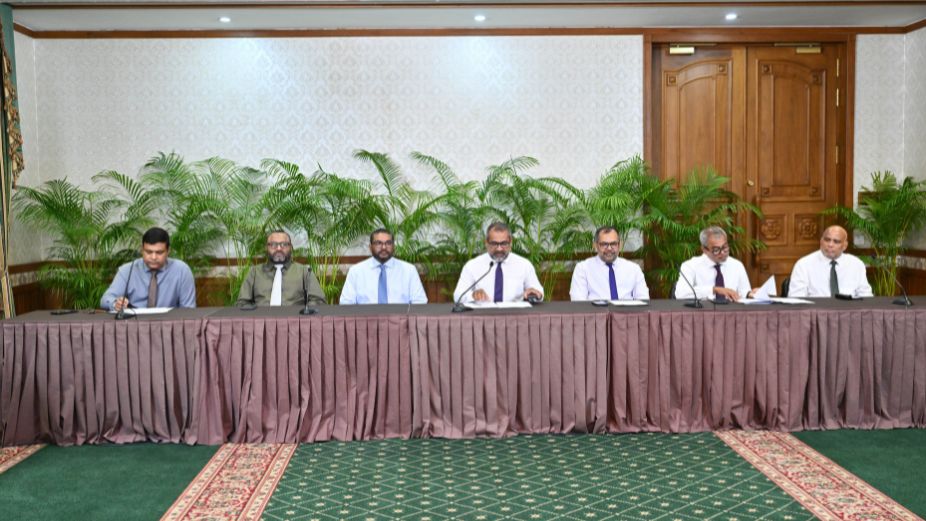
Speaking at a press briefing at the President’s Office, Minister of Foreign Affairs Dr Abdulla Khaleel said the approach would prioritise maintaining normalcy for citizens while managing emerging risks. The briefing was held by the Special Cabinet Committee formed to coordinate the government’s response to the situation.
Finance Minister Moosa Zameer said the President has directed that essential public services and basic needs must be safeguarded, even if the tensions persist over an extended period. He noted that key institutions, including the Maldives Monetary Authority, Maldives Inland Revenue Authority and the Finance Ministry, are working together to ensure the continued availability of fuel, staple food items and essential medicines, while also maintaining support for government-sponsored students abroad through course fees and stipends.
Zameer also indicated that measures are being implemented to manage government cash flow, alongside broader efforts to contain expenditure. While acknowledging that other countries have publicly outlined austerity policies, he said the Maldivian government has opted not to disclose specific measures, citing potential adverse consequences. The current strategy focuses on reducing spending and managing finances cautiously.
The Special Cabinet Committee, established on 28 February, comprises nine cabinet ministers and is tasked with coordinating actions to mitigate any economic or logistical impact on the Maldives. The committee is expected to provide regular updates, with briefings scheduled weekly.