






A joint initiative between the Maldives and the United Kingdom is underway to protect mangrove ecosystems while strengthening community resilience and livelihoods in K. Huraa.
The project, delivered under the UK Government’s Sustainable Blue Economies Programme, is being implemented by the UK’s Joint Nature Conservation Committee in partnership with the Ministry of Climate Change, Environment and Energy and the K. Huraa Council. The initiative focuses on improving mangrove management through technical research and community engagement.
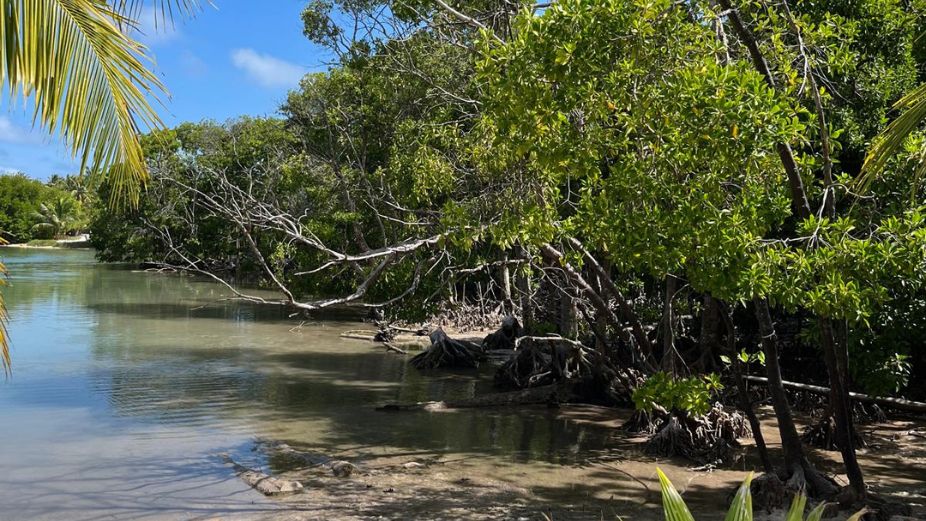
Mangroves play a key role in coastal protection, acting as natural barriers against erosion and storm surges, while supporting fisheries, storing carbon, and sustaining local livelihoods. However, these ecosystems in the Maldives face increasing pressure from development and climate-related impacts, including rising sea levels.
The project centres on the mangrove area in K. Huraa, which is protected under the Environment Act but continues to face threats from infrastructure development and construction. Work under the initiative includes research to better understand vulnerabilities and the benefits provided by the ecosystem, alongside efforts to integrate community knowledge into management practices.
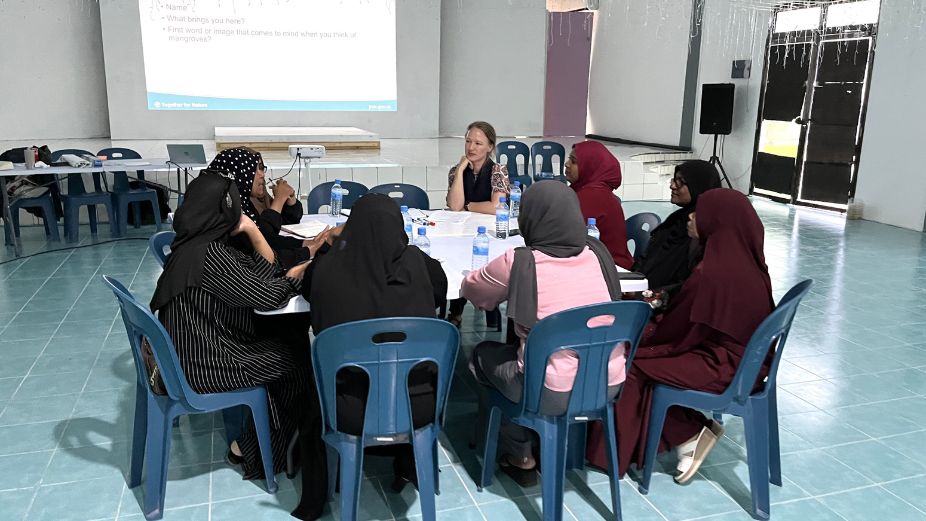
Women and young people are expected to play a central role, with participatory engagement designed to support community stewardship and create pathways for employment in conservation, eco-tourism, and environmental education.
The initiative is also addressing data gaps on the impacts of climate change and human activity on mangroves. Findings from the project are expected to inform a Conservation Action Plan for K. Huraa and contribute to approaches that could be applied more broadly across the Maldives.
British High Commissioner Nick Low stated, “For communities like K. Huraa, mangroves are not just ecosystems. They are protection, food security and opportunity. The United Kingdom is pleased to be working with Maldivian partners to place local people, especially women and young people, at the heart of protecting and managing these vital natural assets. This project shows how local knowledge and international expertise can come together to build resilience from the ground up”.
Muhusina Abdul Rahman, Director of Protected Areas at the Ministry, said, “This project has been particularly valuable in placing communities at the centre of protected area management. Through close collaboration with local councils and community members, and with the support of partners such as JNCC and SBE, the work reflects local priorities while strengthening long-term capacity and shared stewardship of our natural environment.”
Dr Louise Anderson of the Joint Nature Conservation Committee added, “The K. Huraa community’s knowledge and priorities are at the heart of this work. Their generosity in sharing their expertise and time has helped us improve recommendations to understand and care for this mangrove, enabling us to collectively build on earlier work. What we’ve learned together is now shaping practical, real-world recommendations for protecting mangroves across the Maldives as our climate changes.”
The project forms part of broader efforts by the UK to support climate resilience and sustainable development in small island states through nature-based solutions.