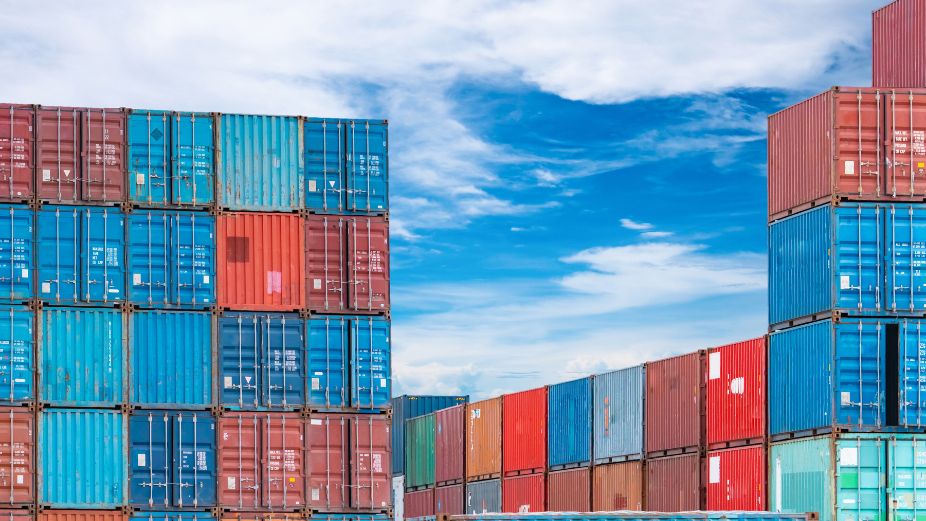
A shift in government structure that brings trade and transport under a single ministry is expected to reshape how goods move across the Maldives, with officials pointing to potential gains in efficiency and cost management.
The integration places transport-related responsibilities within the mandate of the Ministry of Economic Development, Transport and Trade, reflecting the close relationship between logistics and commercial activity in an import-dependent economy. The move follows broader administrative changes aimed at aligning key economic functions.







Speaking on the ministry’s “Trade Desk” podcast, Permanent Secretary Yoosuf Riza described the consolidation as a practical step to improve coordination between two closely linked sectors. He indicated that aligning policy decisions across trade and transport could help address inefficiencies in the supply chain.
Transport is identified as one of the largest contributors to the Maldivian economy after tourism and fisheries, underscoring its role in supporting the movement of goods across the country’s dispersed geography. With most goods imported and distributed across islands, the efficiency of the transport network has a direct impact on business operations and market conditions.
According to the ministry, the combined oversight is expected to support efforts to stabilise prices by improving the movement of goods and reducing logistical bottlenecks. Better coordination of policies is also seen as a way to lower transport-related costs and improve overall operational efficiency for businesses.
The changes are likely to have implications for small and medium enterprises, which rely heavily on consistent and affordable logistics. Improved alignment between the two sectors may ease access to markets and reduce the burden of transport costs, particularly for businesses operating outside the capital.
The integration is also intended to support longer-term solutions to persistent supply chain challenges, including the delivery of goods to outer atoll islands, where logistics constraints have historically affected availability and pricing.