Between Tradition and Ambition: The Changing Role of Women in Maldives
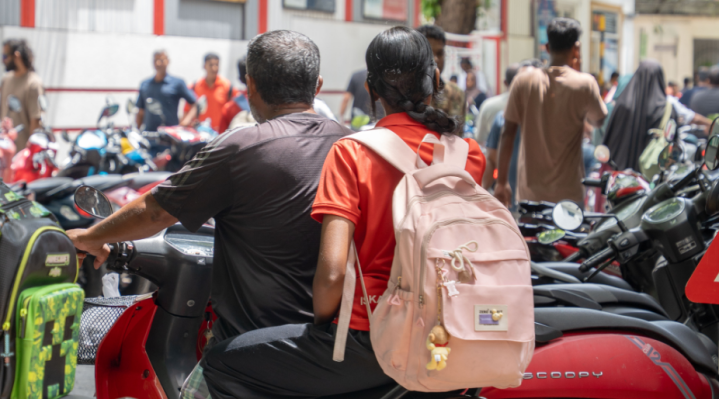
- International Day of the Girl Child spotlights progress and persistent gaps for Maldivian women and girls.
- A survey of 26 participants offers qualitative context on evolving gender perceptions and expectations in Maldives.
- Daughters face dual pressures: traditional domestic duties and modern educational and career ambitions.
Observed annually on October 11, the International Day of the Girl Child highlights both progress and persistent gaps for Maldivian women and girls. Despite greater access to education and employment, shifting attitudes have not fully translated into everyday practice—leaving women underrepresented in leadership and their contributions frequently overlooked due to lingering traditional expectations.
To explore these perceptions and expectations, a survey was conducted with 26 participants (20 women and six men) aged 18 to 46 and above. Their insights, which offer a valuable qualitative window into contemporary Maldivian society, are integrated throughout this report. However, it is to be noted that, due to the small sample size, these findings serve to provide contextual perspective rather than a definitive representation or generalization of broader public opinion.
The Woman Maldivian Society Inherited







Historically, Maldivian women were essential to island economies and family survival, managing household duties, childcare, and local production alongside men. Research by the UN Food and Agriculture Organization (1999) documents women’s crucial roles in processing and preserving fish, home gardening, coconut processing, and crafting coir rope and mats. While men operated primarily in open-sea fisheries and public life, women’s informal labor—both income-generating and domestic—formed the backbone of community livelihoods.
Beyond economic contributions, societal expectations firmly assigned domestic management and relative care to women. A UNFPA review (1997–1999) highlights how this traditional division of labor established a clear public-private divide, associating men with outward civic roles and women with home life. These ingrained patterns shaped intergenerational expectations, quietly socializing children to accept distinct gender roles within the family unit.
The Daughter Society Raises
In contemporary Maldivian families, daughters navigate a dual expectation: fulfilling traditional domestic duties while pursuing modern educational and career goals. While structural developments and the Gender Equality Act (2016) have expanded formal opportunities, gender socialization within the home remains deeply traditional. Primary data from our survey of 26 respondents reflect these dynamics, aligning closely with regional studies such as the Asian Development Bank (ADB) Gender Equality Diagnostic of Selected Sectors (2014).
Family Expectations, Marriage, and Reputation
Traditional domestic labor and social expectations remain heavily skewed toward daughters. A vast majority of survey respondents reported that household chores, caregiving, and prioritizing family duties over personal ambitions are primary expectations for daughters. Furthermore, safeguarding family honor (abrū) is viewed as a core obligation, backed by intense public scrutiny and social pressure as documented in Maldivian family studies.
Independence vs. “Socially Accepted” Ambition
Society supports female education and employment only within traditional boundaries, funneling women into nurturing roles that preserve household duties and male authority. A clear majority of survey respondents—including every male participant—noted that women are expected to choose “socially accepted” roles like teaching, nursing, or administration over true financial independence. As ADB research confirms, women are routinely steered away from lucrative, non-traditional sectors like tourism into lower-earning roles that fit domestic schedules.
Communicating Gender Norms at Home
The home serves as the primary site where gender inequality is actively taught and normalized. Gender roles are instilled early through unequal household tasks and restricted freedoms. Daughters are routinely expected to cook and clean under stricter curfews, while sons face minimal domestic duties and enjoy greater mobility. An overwhelming majority of survey respondents agreed that sons and daughters are raised under distinctly different standards, reflecting deeply entrenched intergenerational mindsets.
By granting sons greater independence, families quietly socialize children to accept unequal adult roles, making systemic reform an uphill battle.
The Island Woman
Geography, transport barriers, and centralized opportunities create a sharp divide between women in the capital region and those living in the outer atolls. A vast majority of respondents agreed that women outside the capital face distinct obstacles, with most emphasizing that these challenges are significantly greater. These findings mirror regional research from the ADB Gender Equality Diagnostic.
Geography, Education, and Employment
Outer atoll communities face severe shortages in higher education and formal job opportunities. An overwhelming majority of respondents cited limited access to tertiary training as a primary barrier, while a similar majority highlighted the scarcity of local employment. As the ADB report underscores, while men frequently migrate for work in tourism or maritime industries, women are trapped by domestic responsibilities and static local labor markets.
Mobility, Transport, and Networks
Geographic fragmentation severely restricts physical mobility and career growth. A clear majority of respondents highlighted smaller professional networks as a major hurdle, alongside limited transport options and a lack of childcare services. Costly, weather-dependent sea transport makes daily inter-island commuting impractical, forcing island women to rely almost entirely on informal family support in the absence of institutional childcare.
Community Life and Social Scrutiny
While close-knit island communities offer social support, they also enforce intense public monitoring. About half of all respondents cited heightened family and community scrutiny as a distinct challenge. In small island settings, personal choices and career ambitions are highly visible; conservative social norms exert strong peer pressure, leading women who pursue non-traditional paths to face far greater resistance than those in urban centers.
Limited local jobs, poor inter-island transport, and a lack of childcare create a physical ceiling on women’s independence, while intense social scrutiny actively discourages them from stepping outside traditional roles.
The Professional Woman
While women’s presence in the workforce, business, and financial autonomy has expanded in the Maldives, traditional family expectations continue to dictate their career paths. A vast majority of respondents acknowledged rising female workforce participation and growing entrepreneurship, with many also noting gains in financial independence and leadership roles. However, public sentiment remains sharply divided on whether society actually supports women who prioritize their careers—a tension consistently highlighted in ADB gender diagnostics.
Domestic Responsibilities and Structural Barriers
The single greatest hurdle to women’s professional advancement and executive leadership remains the uneven burden of domestic duties. An overwhelming majority of respondents—mostly women—identified balancing work and family as their primary professional challenge. This core issue is compounded by secondary social and structural barriers, including family pressure, inadequate childcare, unequal pay, restricted access to funding and professional networks, and scarce leadership opportunities.
Solutions for Career Advancement
To overcome these barriers, a vast majority of respondents emphasized that a fairer division of household labor is essential for unlocking female potential. An equally strong majority called for affordable institutional childcare and flexible working arrangements. Without structural workplace support and shared domestic responsibilities, women are repeatedly forced to compromise their ambitions or settle for lower-paying, lower-tier roles that accommodate unpaid family care.
The Invisible Expectations
Despite major gains in education and employment, Maldivian women face a severe “double burden”—balancing full-time careers alongside uncompensated domestic labor. An overwhelming majority of respondents named balancing work and family as their top career obstacle, a crisis compounded by a widespread lack of childcare options. As global research from UN Women (2020) and WHO (2021) demonstrates, this heavy unpaid care load directly fuels the national labor gap—where male workforce participation far outpaces female engagement—and drives up caregiver stress.
Public Support vs. Private Realities
A stark disconnect exists between public rhetoric on female empowerment and private domestic realities. While policies like the Gender Equality Act encourage women to work, private family expectations still mandate that women prioritize the home. A clear majority of respondents identified family pressure and entrenched gender roles as ongoing career barriers, calling for shared household labor and a broader shift in restrictive social attitudes to break this cycle.
The results indicate that, while public policy supports female ambition, private cultural norms penalize it—proving that legislative reform alone cannot overcome the deep-seated expectation that caregiving belongs strictly to women.
What Progress Should Look Like
Achieving meaningful gender equality in the Maldives requires coordinated action across employers, policymakers, educators, and communities. While legal frameworks exist, systemic progress depends on fair hiring and pay, decentralizing investments beyond the capital, and counteracting gendered career tracks in schools.
The tension between tradition and female ambition underscores how deeply patriarchal double standards dictate social behavior. Women face intense scrutiny and shaming—particularly on social media—for choices men make without consequence, including the non-consensual circulation of private photos where men escape accountability. Society routinely polices women’s mobility and attire while shifting blame onto victims of violence.
This systemic misogyny extends to major educational institutions. The Cornell University is a prime example of this, where institutional responses often prioritize protecting male futures over meaningful accountability. In the case of 57 male students accused of drugging and gang raping a female student, the official university board penalties were disciplinary probation, reflection essays, and temporary suspensions: two years for one student and three semesters for another. The Cornell Daily Sun reports that another two of the 57 male students involved were expelled.
While our six male survey respondents offer only a snapshot of male perspectives, true progress demands unlearning these norms, enforcing institutional accountability, redistributing domestic labor, and expanding support like childcare.
Ultimately, occasions like International Day of the Girl Child and Women’s Day must serve not just to celebrate progress, but to address the systemic hardships women continuously navigate.