Lawmakers Support Marine Protection Measures While Raising Oversight Concerns
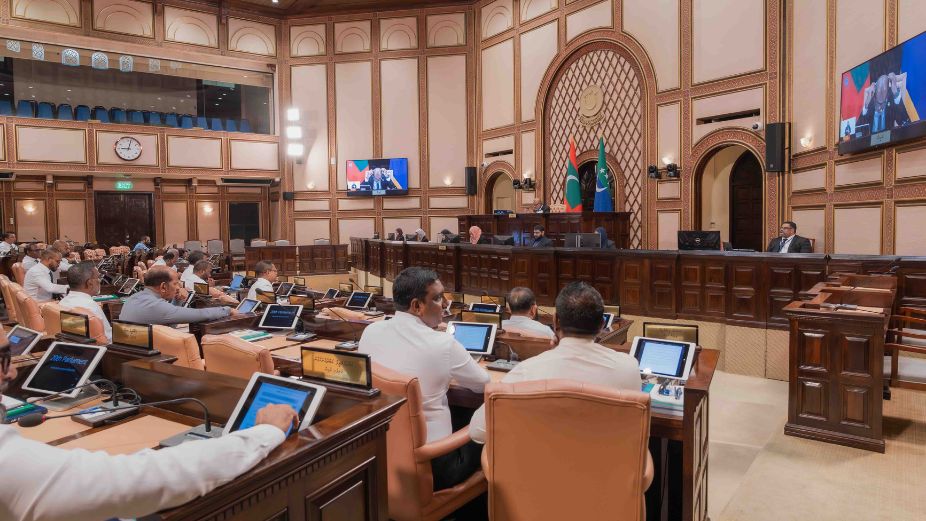
Parliament has moved a step closer to reshaping how the Maldives manages its marine resources, as lawmakers signalled support for an amendment to the Fisheries Act that would formalise ecosystem-based protection within fisheries policy.
The bill, introduced by South Thinadhoo representative Mohamed Alsan Ahmed, centres on requiring structured fisheries management plans that extend beyond catch regulation to include broader environmental considerations. The proposed framework would mandate assessments of marine habitats, including the relationships between species and the wider ecological impact of fishing activity. The shift reflects a policy direction that treats fisheries not only as an economic sector but as part of a larger environmental system requiring coordinated oversight.







While the intent to strengthen conservation has received backing, debate in parliament has pointed to concerns over how authority would be exercised under the new framework. Some lawmakers have raised questions about the scope of powers granted to the ministry, cautioning that without clear safeguards, the provisions could allow excessive control over marine resources. Concerns were framed around the risk of mismanagement or overexploitation if oversight mechanisms are not clearly defined during the legislative process.
Discussion also extended beyond environmental management to longstanding structural issues within the fisheries sector. Velidhoo representative Mohamed Abbas highlighted uneven regional development, noting that processing infrastructure remains concentrated in areas such as Kooddoo and Felivaru. This concentration, he argued, reflects a broader pattern of politicisation that has limited the equitable distribution of industry benefits across the country. The debate touched on a wider question of economic returns, with lawmakers urging a clearer understanding of what the state gains from the sector relative to its central role in the national economy.
At the same time, members stressed that any reform effort would need to incorporate the perspectives of those directly engaged in the industry. Baarah representative Ibrahim Shujau pointed to the importance of involving fishers in the policy process, particularly as the bill moves to the committee stage where provisions are likely to be refined. Ensuring participation from industry stakeholders is expected to shape both the practical implementation of management plans and the level of acceptance within the sector.
The proposed amendment arrives at a time when the Maldives faces increasing pressure to balance economic reliance on fisheries with environmental sustainability. As the bill advances through parliament, its final form is likely to depend on how lawmakers reconcile the need for stronger ecological safeguards with demands for accountability, regional equity, and industry inclusion.