Maldives’ Coral Reef Ecosystems Classified as Critically Endangered in IUCN Assessment
- IUCN's first global coral reef assessment classifies all three Maldivian reef regions—North, Central and South—as Critically Endangered due to projected ocean warming and mass bleaching.
- Reef collapse threatens tourism, fisheries and coastal protection, as reefs act as natural barriers and sediment sources that help sustain the islands.
- Climate-driven bleaching combines with local pressures like dredging, reclamation, pollution and overfishing, while monitoring gaps leave Maldives-North listed as Data Deficient.
The Maldives’ northern, central and southern coral reef ecosystems have all been classified as Critically Endangered in a new IUCN assessment, with projected ocean warming placing them at an extremely high risk of collapse over the next 50 years.
The findings, published on 22 October, form part of the first global assessment of coral reefs under the International Union for Conservation of Nature’s Red List of Ecosystems. For the Maldives, they identify a long-term threat to ecosystems that support tourism, reef fisheries and the natural protection of islands.







The South Asia assessment divides Maldivian reefs into three broad ecological regions: Maldives-North, Maldives-Central and Maldives-South. All three receive the same overall classification because of projected marine heatwaves and mass bleaching under the Intergovernmental Panel on Climate Change’s intermediate emissions scenario, SSP2-4.5.
When assessed using only observed changes over the past 50 years, all three Maldivian regions fall into the Vulnerable category. Including projected warming raises their official overall status to Critically Endangered, showing how future heat stress is expected to intensify existing pressures.
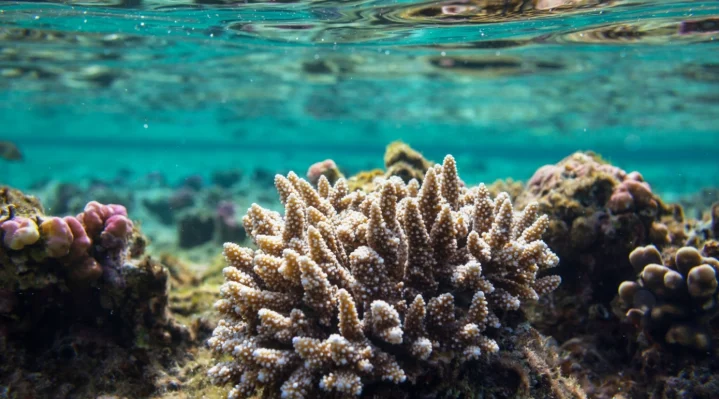
The classification measures the risk of losing functioning reef ecosystems. IUCN describes collapse as a transformation in which reef-building hard corals almost disappear and algae, rubble and sponges take over, substantially reducing the ecosystem’s ability to support marine life.
For the Maldives, the consequences extend beyond underwater biodiversity. A World Bank roadmap on Maldivian reef resilience identifies coral reefs as natural barriers against coastal hazards and a source of sediment that helps sustain islands. Reef deterioration therefore carries implications for coastal settlements and tourism infrastructure, alongside fishing livelihoods and underwater attractions.
The regional assessment identifies ocean warming and bleaching as the most immediate widespread threats to South Asian reefs. It records major regional losses of live hard coral during the 1998 and 2016 bleaching events.
The Maldives has previously demonstrated an ability to recover from severe bleaching. However, the World Bank’s roadmap warns that increasingly frequent events could disrupt natural regeneration by reducing the time available for recovery and affecting the supply of coral larvae from less damaged reefs.
Local pressures add to the climate threat. The South Asia summary identifies dredging, land reclamation, harbour construction, pollution and overfishing among the activities affecting reef habitats across the region. The World Bank separately identifies reclamation and harbour dredging as causes of reef damage in the Maldives, including through sediment that interferes with coral settlement and survival.
The assessment also reveals gaps in monitoring. Maldives-North is listed as Data Deficient under the criteria assessing reductions in reef distribution and disruption of biological processes, although sufficient evidence under other criteria supports its overall classification.
Across South Asia, all 13 assessed reef ecoregions are classified as Critically Endangered when future warming is included. Globally, 122 of the 127 assessed ecosystems, or 96 per cent, fall into that category.
IUCN identifies rapid reductions in greenhouse gas emissions as essential to limiting future losses. It also recommends reducing pollution, improving fisheries management and protecting resilient reef areas to help ecosystems withstand heat stress and recover.
For Maldivian reef management, the findings place greater weight on controlling damage from coastal development, maintaining healthy fish populations and improving monitoring. IUCN says restoration can complement these measures, while stressing that its cost and uncertain effectiveness at scale make action on the underlying causes of reef decline essential.