Maldives’ Renewable Energy Capacity More Than Doubles, Says Environment Minister
- The Maldives' renewable energy capacity has more than doubled from 53 MW to 136 MW over three years, according to Environment Minister Ali Shareef.
- Around 30 per cent of President Muizzu's target to raise renewable generation to 33 per cent by 2028 has been achieved.
- Further expansion includes a 100 MW project under way and a planned 150 MW project, against an annual fuel bill of USD 700 million.
The Maldives’ renewable energy capacity has increased from 53 megawatts (MW) to 136 MW over the past three years, Minister of Climate Change, Environment and Energy Ali Shareef has said, as work continues towards the government’s 2028 renewable energy target.
Speaking on PSM News’ 156 Weeks programme, marking the administration’s third anniversary, Minister Ali Shareef said renewable energy projects inaugurated across several islands had more than doubled the capacity recorded when the government took office.






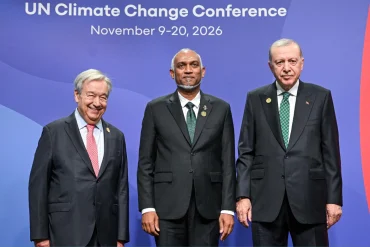
The expansion forms part of efforts to achieve the target announced by President Dr Mohamed Muizzu at the 2023 COP Summit to raise the share of renewable energy generation to 33 per cent by 2028.
Minister Ali Shareef said the government began its work by assessing the country’s existing renewable energy capacity, which stood at 53 MW. He said approximately 30 per cent of the work towards the President’s target had been achieved.
Further expansion is being pursued through a 100 MW renewable energy project currently under way. The Minister said efforts were also continuing to sign an agreement for an additional 150 MW project.
The investment comes against a substantial national fuel bill. Minister Ali Shareef said the Maldives spends approximately USD 700 million annually on fuel, equivalent to around 10 per cent of gross domestic product.
The capacity figures describe the scale of renewable energy installations. Progress towards the 33 per cent generation target also depends on how much electricity those installations produce.