Stronger El Niño Raises Food, Water and Reef Risks for Maldives

- A very strong El Niño, expected to peak in late 2026, could raise food prices in the Maldives, which imports around 90 per cent of its food.
- El Niño may weaken India's summer monsoon and stress crops like rice and maize, tightening export supplies for import-dependent countries.
- Local risks include pressure on harvested rainwater supplies and reef-dependent businesses, though a food shortage is not inevitable given strong projected global cereal output.
The Maldives could face pressure on food bills, water supplies and reef-dependent businesses as El Niño strengthens, with the country exposed to both changing local weather and potential harvest disruptions overseas.
The World Meteorological Organization (WMO) says the event is expected to reach very strong intensity before peaking towards the end of 2026. Its latest update, released on 3 September, puts the likelihood of El Niño persisting through February 2027 at nearly 100 per cent.







El Niño is a naturally occurring warming of the central and eastern equatorial Pacific Ocean that influences rainfall, temperatures and atmospheric circulation far beyond the Pacific. Its effects vary between countries and seasons, with conditions in the Indian Ocean also shaping the weather experienced by the Maldives.
For Maldivian households and businesses, food imports are a significant source of exposure. The Food and Agriculture Organization (FAO) estimates that the country imports around 90 per cent of its food items. This dependence means weather damage in agricultural exporting countries can affect local supplies and prices even when conditions in the Maldives remain manageable.
FAO has warned that El Niño can weaken the summer monsoon across much of India, placing rainfed crops such as rice and maize under stress during their growing season. Disruption across major producing regions could tighten export supplies and increase competition among importing countries.
For the Maldives, the potential consequences extend from household grocery spending to procurement costs for restaurants, guesthouses and resorts. If overseas suppliers raise prices, businesses would face decisions about absorbing the increase, changing suppliers or passing costs on to customers.
A food shortage is not inevitable, however. FAO’s July outlook still projected global cereal production in 2026 to be the second highest on record. The eventual impact on Maldivian food costs will depend on harvest outcomes, available stocks, trade policies and the ability of importers to secure alternative supplies.
The local weather outlook is also more varied than a nationwide drought warning would suggest.
The Maldives Meteorological Service’s September forecast indicates below-normal rainfall across northern atolls and parts of the central atolls, while above-normal rainfall is expected over parts of the central and southern atolls. Both maximum and minimum temperatures are expected to remain slightly above normal throughout the country.
That outlook applies to September. It does not establish rainfall conditions for the whole period through early 2027, and WMO cautions that the strength of an El Niño event alone does not determine the severity of its effects in an individual country.
For communities that use harvested rainwater, a prolonged dry spell could nevertheless place pressure on stored supplies. UNDP’s work on water security in the Maldives has documented households exhausting rainwater reserves during dry periods, alongside the cost and logistical difficulties of emergency water deliveries.
Where rainfall falls short, greater reliance on desalination, bottled water or transported supplies could increase costs. This makes storage capacity, maintenance of water systems and reliable backup supplies relevant to preparations by island councils, utilities and businesses.
Coral reefs present another area of concern, with consequences for tourism and coastal protection.
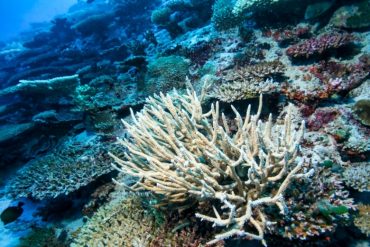
The Maldives experienced severe bleaching during the 2015–2016 El Niño. Research published in the journal Oceans reports that a wider assessment across 71 sites recorded an average bleaching level of approximately 73 per cent. That figure describes bleaching among surveyed corals, rather than the proportion of all Maldivian reefs that died.
Bleaching occurs when stressed corals lose the algae that provide much of their energy. Corals can recover if conditions improve, but prolonged heat stress can cause mortality. Another period of sustained ocean warming would therefore warrant close monitoring, although the current WMO forecast does not establish the timing or severity of a Maldivian bleaching event.
The economic exposure extends beyond the appearance of dive sites. The World Bank identifies healthy reefs as essential to beach formation, coastal protection and tourism. Further damage could weaken these natural assets and affect businesses whose appeal depends on the marine environment.
Fisheries also require attention. Research on Indian Ocean tuna has linked El Niño-related ocean conditions to changes in tuna abundance and production. Changes in where fish are available could affect fishing activity and operating costs, but the global forecast alone cannot establish whether Maldivian catches will decline.
Taken together, these risks make the coming months relevant to business planning as well as disaster preparedness. Importers have reason to review supplier concentration and stock arrangements, while councils and utilities can assess water reserves and backup capacity. Tourism operators can incorporate food and water contingencies alongside reef monitoring.
The practical task is to translate successive forecasts into decisions about supplies, infrastructure and livelihoods. For an economy reliant on imported food and healthy marine ecosystems, preparations will need to account for weather developments both within the Maldives and across the countries supplying it.