The Maldives’ exposure to El Niño extends far beyond changes in the weather. Warmer seas can damage coral reefs, reduce natural coastal protection, disrupt fisheries and raise operating costs across tourism. At the same time, agricultural and transport disruptions abroad can increase the price of food, fuel and other imports, placing additional pressure on households, businesses and public finances.
Few countries are as closely tied to the condition of the ocean as the Maldives. The islands are low-lying, geographically dispersed and protected from waves largely by coral reefs. Tourism depends on healthy marine environments, attractive beaches and reliable transport, while the tuna industry depends on ocean conditions, reef-associated baitfish and the availability of fish close enough to be caught by local vessels.







The country also imports most of its food, fuel, construction materials and consumer goods. Many islands have limited freshwater storage and depend on rainwater harvesting or desalination. These features mean that El Niño can reach the Maldivian economy through several connected routes, even when its local effects are less visible than those experienced in the Pacific.
The strongest evidence for the Maldives concerns sea temperatures and coral bleaching. Other effects, including rainfall changes, tuna movements and imported inflation, are more variable. They may be influenced by El Niño, but also by the Indian Ocean Dipole, long-term climate change, domestic policy, market conditions and local environmental pressures. El Niño should therefore be treated as a source of elevated risk rather than a single explanation for every environmental or economic disruption.
From Pacific warming to Indian Ocean impacts
El Niño is the warm phase of the El Niño-Southern Oscillation, a recurring interaction between the tropical Pacific Ocean and the atmosphere. Under normal conditions, trade winds push warm surface water towards the western Pacific, allowing colder, nutrient-rich water to rise near South America. During El Niño, these winds weaken and warm water shifts eastwards.
This change reorganises atmospheric circulation and can alter rainfall, winds and temperatures across distant regions. The effect on the Maldives is indirect and may occur with a delay. Research cited in the supplied assessment suggests that Pacific conditions can take several months to influence the Indian Ocean, where they interact with regional climate patterns.
One of the most important is the Indian Ocean Dipole. During a positive phase, waters in the western Indian Ocean become warmer relative to the eastern basin. When El Niño coincides with a positive Indian Ocean Dipole, heat stress in parts of the Indian Ocean can intensify. However, the relationship is not identical during every event, and local ocean circulation can produce very different outcomes between atolls.
Climate change adds another layer. El Niño is a natural cycle, while human-driven warming is raising the long-term temperature of the ocean. As the baseline becomes warmer, a temporary climatic fluctuation is more likely to push sea temperatures beyond biological limits. Reduced wind, greater solar exposure and weaker water mixing can add to the stress.
This distinction is important. El Niño does not cause the underlying rise in global ocean temperatures, but it can temporarily add heat to an already warmer system.
The record of bleaching in the Maldives
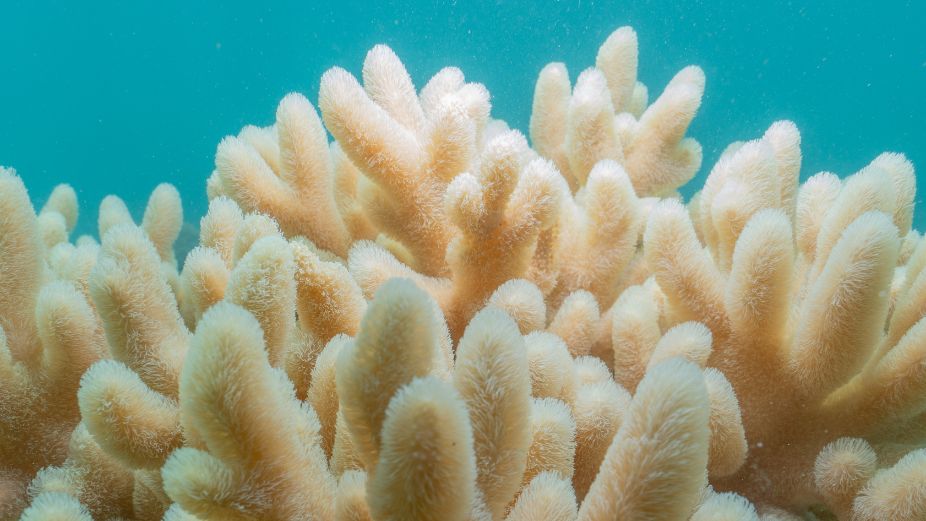
The 1997-98 El Niño remains the clearest historical demonstration of the Maldives’ vulnerability. The associated marine heatwave caused extensive coral mortality, with research cited by the World Bank indicating that national coral cover fell from about 40 per cent to below 2 per cent. Up to 90 per cent of shallow-water corals died in heavily affected areas.
Reefs eventually recovered across many locations, helped by coral larvae arriving from less damaged areas. Yet the process took about a decade. During that period, reef structures remained less biologically productive and potentially less effective as coastal barriers.
The 2015-16 El Niño produced another major shock. Sea surface temperatures around the Maldives exceeded 32 degrees Celsius during the peak period, while reefs experienced between four and 11 Degree Heating Weeks. This measure combines the intensity and duration of heat exposure.
Monitoring by the Maldives Marine Research Institute and the International Union for Conservation of Nature found bleaching across 73 per cent of corals at 71 surveyed sites. Bleaching affected both shallow and deeper areas, as well as sheltered and exposed reefs. Subsequent research recorded mortality exceeding 50 per cent at some Maldivian sites, with branching Acropora corals among the groups most heavily affected.
The 2023-24 period brought the fourth global coral bleaching event. In the Maldives, thermal stress exceeded nine Degree Heating Weeks in some areas, while sea surface temperatures reached about 31.5 degrees Celsius.
Research covering the 2024 event found substantial geographical differences. Live hard coral cover in surveyed central atolls declined by more than 40 per cent on average, with one lagoon reef in Ari Atoll recording a 57 per cent fall. Dead coral and rubble increased, while branching and table-forming corals experienced particularly heavy losses.
The same study found no comparable mortality on surveyed ocean reefs in southern Huvadhoo Atoll. Coral cover increased at some southern sites. This does not mean the southern reefs are immune to future warming, but it shows that local circulation, reef conditions and human pressures can change the outcome considerably.
These historical events establish a scientifically credible chain of impact. Prolonged heat causes corals to expel the microscopic algae that provide much of their energy. The coral turns white, becomes weakened and may die if temperatures remain high. Dead coral skeletons then erode and break apart, reducing the height and physical complexity of the reef.
Repeated bleaching is particularly damaging because recovery requires time. When severe heat returns before coral populations have rebuilt, slower-growing species may fail to recover and the reef can shift towards less complex forms.
When reef loss reaches balance sheets
Coral reefs are not only ecological assets. They create sand, support fish populations and reduce the force of waves before they reach islands. Studies cited in the research suggest that healthy reefs can dissipate up to 97 per cent of incoming wave energy and substantially reduce wave height.
As coral structures erode, more wave energy can reach beaches and shorelines. This can increase erosion, threaten buildings and utilities, and raise the cost of coastal protection. The World Bank has estimated that the absence of reef protection could expose the Maldives to additional annual flood damage valued at approximately USD 442 million, equivalent to about 8 per cent of GDP under the study’s assumptions.
This estimate represents a modelled value of the service provided by reefs, not a forecast that the Maldives will automatically lose 8 per cent of GDP following an El Niño event. Reef decline occurs over time and is shaped by storms, sea-level rise, construction, dredging, reclamation and coastal engineering.
Even so, the direction of the economic risk is clear. Resorts and inhabited islands may need to spend more on beach nourishment, groynes, seawalls and breakwaters when natural barriers deteriorate. The government may face additional requests for harbour repairs, erosion control and emergency protection.
Hard structures can protect selected areas, but they may also interfere with sediment movement and transfer erosion elsewhere. This creates the possibility of recurring expenditure rather than a one-time investment.
Tourism is exposed through the same process. Bleached or degraded reefs can reduce the visual quality of snorkelling and diving sites. Loss of reef structure may affect marine biodiversity, while erosion can damage the beaches on which resort marketing and guest experience depend.
A direct, nationwide relationship between bleaching and tourist arrivals has not been conclusively demonstrated in the research provided. Travellers choose the Maldives for many reasons, and resorts can adapt through alternative activities, reef restoration and beach management. The more immediate business effect may therefore appear through costs rather than an abrupt decline in demand.
Hotter weather and longer dry periods can increase electricity consumption for air conditioning, refrigeration and water production. Resorts that rely on desalination may need to produce more freshwater when rainfall is limited. They may also spend more on coral monitoring, nurseries, shoreline works and repairs.
For an industry operating across isolated islands, even modest increases in diesel use, desalination and coastal maintenance can accumulate across the sector.
Fisheries face a less certain but important risk
The effect of El Niño on Maldivian tuna fisheries is more complex than the relationship between marine heat and coral bleaching. Skipjack and yellowfin tuna respond to changes in water temperature, currents, oxygen, prey and the depth of the thermocline. During unusually warm periods, tuna may move horizontally, remain deeper in the water column or shift towards areas with more favourable feeding conditions.
This matters because Maldivian pole-and-line and handline vessels depend on fish being available near the surface and within an economically accessible distance. If vessels must travel farther to locate schools, fuel use rises and fishing time increases. If fish remain deeper, surface fishing methods may become less productive even when tuna are still present in the wider region.
The Indian Ocean Tuna Commission reported total Maldivian tuna landings of 107,157 tonnes in 2024. Skipjack accounted for about 75 per cent and yellowfin for the remaining quarter. This illustrates the scale of economic activity potentially exposed to changes in tuna distribution.
However, historical studies have not found a simple relationship in which every El Niño produces lower Maldivian catches. Indian Ocean tuna landings have varied during both El Niño and La Niña years. Fishing effort, fleet size, fish prices, fuel costs, ocean currents and stock conditions also influence recorded catches.
It is therefore reasonable to identify altered tuna availability as a plausible risk, but not to attribute a particular decline in fishing activity to El Niño without detailed catch, effort and oceanographic data.
A second transmission route involves live baitfish. Pole-and-line fishing depends on bait collected from reefs. Coral degradation can reduce habitat complexity and affect reef-associated species, potentially making bait more difficult to locate. Yet the research base does not establish a direct national estimate of how much baitfish abundance has declined because of El Niño-related bleaching.
The strongest conclusion is that reef degradation may weaken one of the foundations of the pole-and-line system. The scale and timing of that effect require further monitoring.
Lower catch rates would affect fishers first through income and fuel expenses. They could then reduce supplies to processors, weaken export volumes and raise the domestic price of fish. The impact on exports would depend on international tuna prices, processing capacity and whether vessels can adjust their fishing grounds.
Imported shocks from food, fuel and transport
El Niño can also affect the Maldives without producing an extreme local weather event. Changes in rainfall across food-producing countries can damage crops, raise commodity prices and lead governments to restrict exports.
India and other South Asian suppliers are important to Maldivian food security. El Niño has historically been associated with weaker monsoon rainfall in parts of India, although the relationship varies by year and region. Poor harvests can increase the cost of rice, onions, vegetables and other staples.
Export restrictions can magnify the effect. India’s restrictions on non-basmati white rice demonstrated how domestic food policy in a supplier country can influence international markets. The Maldives secured special import arrangements, illustrating how diplomatic access and state purchasing can reduce immediate shortages without removing the underlying exposure.
For households, higher import costs pass through to retail prices, particularly when freight rates and foreign currency pressures are also rising. For businesses, the effects can include more expensive food supplies, construction materials, packaging and hospitality inputs.
The connection between El Niño and fuel prices is less direct. Global oil prices are primarily driven by production decisions, conflict, demand and broader economic conditions. El Niño may influence energy demand, shipping conditions or agricultural fuel use, but it should not be presented as the main cause of an oil price movement without specific evidence.
Aviation and shipping can also be affected indirectly. Drought has previously reduced water levels in the Panama Canal, causing vessel restrictions and higher freight costs. Such disruption may not directly affect every route serving the Maldives, but global shipping delays can move through interconnected freight networks.
For tourism, higher aviation fuel prices or route disruptions could raise airfares and operating costs. The effect on arrivals would depend on how airlines adjust capacity and whether travellers absorb the higher price.
Fiscal exposure and the cost of response
Environmental and imported shocks become a public finance issue when the state intervenes to stabilise prices, supply water, protect islands or support state-owned companies.
More expensive food and fuel imports increase demand for foreign currency. Higher electricity generation and desalination can add to diesel consumption. If government subsidies prevent the full cost from reaching households, the fiscal burden is transferred to the budget or to state-owned enterprises.
The same applies to essential food imports. State Trading Organisation interventions can support supply and price stability, but bulk purchasing, storage and distribution expose the company and the government to international prices, freight costs and foreign exchange availability.
Emergency water shipments create another expense. Many islands rely on rainwater and desalination because groundwater lenses are limited or contaminated. During prolonged dry periods, stored water can run out, requiring production and transport from other islands. This consumes fuel, shipping capacity and public funds.
El Niño does not by itself determine the Maldives’ fiscal position. Existing debt, infrastructure spending, subsidy design, exchange rate conditions and state-owned enterprise finances are much larger structural factors. Nevertheless, a climate-related shock can increase expenditure at a time when the government has limited room to absorb additional costs.
The research cites public debt at 123 per cent of GDP in 2023. In this setting, repeated emergency spending and higher import bills can add to financing pressure. If tourism receipts or fisheries exports weaken at the same time, foreign currency inflows may slow while demand for imports remains high.
The result could be pressure on reserves, the exchange market and government support mechanisms. This is a risk pathway rather than an established outcome of every El Niño event.
Preparing for a connected environmental and economic risk
The Maldives already has a Coral Bleaching Response Plan supported by satellite monitoring and reef surveys. Early warnings can help agencies and businesses prepare vessels, monitoring teams and public communications. During periods of high heat stress, reducing dredging, pollution, anchor damage and other local pressures may improve the survival prospects of already stressed corals.
Monitoring should extend beyond coral colour. Repeated measurements of coral mortality, reef structure, beach movement, baitfish availability and coastal damage would help authorities estimate how ecological change reaches fisheries, tourism and public infrastructure.
Fisheries preparedness requires better integration of catch, effort, fuel use, baitfish and sea temperature data. This would allow policymakers to distinguish climatic effects from changes in fishing effort or market conditions.
Water security can be improved through larger rainwater storage, decentralised desalination, renewable-powered water systems and clear emergency distribution plans. Solar and battery investment can also reduce the amount of imported diesel required for cooling and desalination, although renewable projects carry their own financing and maintenance needs.
Economic preparedness should include food import diversification, minimum storage arrangements, supply agreements and closer monitoring of crop conditions in major supplier countries. Fiscal planning could identify in advance how water emergencies, coastal repairs and food interventions will be financed.
The proposed use of parametric reef insurance deserves further assessment. Such insurance could release funds when satellite indicators cross an agreed heat threshold, avoiding delays associated with conventional damage assessments. Yet insurance cannot prevent bleaching, and premiums may be high. Its value would depend on clear rules for using payouts and a wider programme of reef management.
The most credible El Niño risks for the Maldives are marine heatwaves, coral bleaching and the resulting pressure on reef-dependent natural assets. The historical evidence from 1998, 2016 and 2024 is substantial. Increased cooling and desalination demand during hot, dry periods is also a credible operational risk.
Effects on tuna distribution, baitfish, tourist demand, inflation and government finances are plausible but less easily isolated. These outcomes depend on other climate patterns, local environmental conditions, trade policies, fuel prices, exchange rates and domestic decisions.
The policy challenge is therefore not to treat El Niño as the cause of every disruption. It is to recognise that a temporary climate cycle can interact with warmer oceans, damaged reefs, import dependence and limited fiscal space. Better monitoring of those connections would allow the Maldives to prepare before environmental stress develops into a broader economic shock.