- In 1965, Maldives joined the UN as its smallest member, arguing small states can meaningfully contribute to global coexistence.
- President Gayoom warned the General Assembly in 1987 that rising seas could mean 'the death of a nation.'
- After the 1988 mercenary attack, the Maldives pushed for UN action on the security of small states.
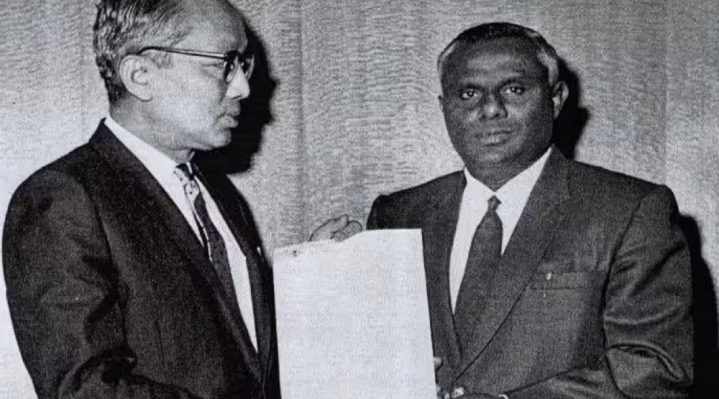
On 11 October 1965, the Maldivian flag had yet to be raised outside the United Nations. Inside the General Assembly, Ahmed Hilmy Didi was already speaking for the country it represented. The ceremony would take place the following afternoon. First came the argument for what a small nation’s place in the room could mean.
The Maldives had gained independence from Britain less than three months earlier. It joined the UN on 21 September, after the Security Council recommended its admission. In his first address to the Assembly, Hilmy Didi described a country of scattered islands, few resources and a population small enough to make it, at the time, the organisation’s smallest member. Then he turned that apparent weakness into a claim: “whatever the size of a country or its population, a free State can make a contribution to the cause of coexistence.”







It was an ambitious thing to say on behalf of a country still finding its footing in the world. Hilmy Didi spoke of peace, friendship and negotiation, and argued that the organisation would grow stronger as more countries joined it. For the Maldives, UN membership offered something beyond a diplomatic address. In the General Assembly, the Charter gave the new state a vote equal to that of any other member. It could bring its concerns before countries whose decisions would reach its shores, even when its own resources could not.
The decades since have tested how much that promise can achieve. A vote cannot command the sea to stop rising. A resolution cannot, by itself, keep an armed force away. But the Maldives has repeatedly used the Assembly to make its vulnerabilities matters of international concern, asking other countries to recognise dangers that a small state cannot meet alone.
The sea brought one of those dangers into view in 1987. Severe tidal swells flooded Malé and damaged parts of the country. That October, President Maumoon Abdul Gayoom stood before the General Assembly during a debate on environment and development. He described what rising seas could mean for an archipelago whose islands sit close to the water. A sufficiently large rise, he warned, would be “the death of a nation”. The flooding had made the country’s exposure visible. Gayoom’s warning concerned what rising sea levels could do over time.
The next year exposed a different vulnerability. On 3 November 1988, armed mercenaries attacked the Maldives. India sent forces at the Maldivian government’s request and helped end the assault. The episode raised a question that Hilmy Didi’s appeal for peaceful coexistence had left open: what protection could a small country expect when its sovereignty was threatened?
In 1989, the Maldives pursued both questions through international cooperation. It requested a General Assembly agenda item on the protection and security of small states. In December, the Assembly adopted a resolution under that title without a vote, recognising their exposure to external threats and affirming the principles of sovereignty and non-interference. The measure did not create an international rescue force. It did put a problem the Maldives knew firsthand into the Assembly’s continuing work.
That November, Malé hosted small island countries for a conference on sea-level rise. Their declaration called for action on global warming and was transmitted to the UN. Weeks later, the General Assembly adopted a resolution that took note of the declaration and asked international scientific bodies to examine the particular risks facing islands and low-lying coasts. What Gayoom had described as a danger to one country became the basis for a common diplomatic campaign. The Alliance of Small Island States emerged the following year, allowing countries separated by oceans to negotiate together over a threat they shared.
The UN system also mattered at home. After the 2004 Indian Ocean tsunami, its agencies joined the relief and recovery effort in the Maldives. Hilmy Didi had entered the Assembly promising a contribution to the world body. The decades that followed showed how much an island country might also need from it.
The value of multilateralism is clearest when countries act together on a problem none can settle alone. The Maldives cannot substantially change the world’s emissions by itself. Working with other island states, it can press for a place in negotiations over emissions targets, climate finance and adaptation. The 2015 Paris Agreement committed countries to pursue efforts to limit warming to 1.5°C, a threshold long championed by vulnerable states. Putting that aim in an agreement was a diplomatic achievement. Meeting it remains another matter.
In 2021, a Maldivian, Abdulla Shahid, was elected president of the General Assembly for its seventy-sixth session. The path from Hilmy Didi’s first address to a Maldivian presiding over the chamber says something about how fully the country has entered an institution it once approached as the smallest member.
Yet a seat at the table has never erased the difference in what countries can afford to do. Tourism has brought the Maldives prosperity, while dependence on a few industries, imported goods and costly infrastructure leaves it exposed to shocks. For years, small island states have argued that income per person cannot capture the cost of protecting dispersed communities or recovering from a disaster. In 2024, the General Assembly adopted a framework for a multidimensional vulnerability index, intended to give such risks greater weight in development and financing decisions. Its adoption is a step; whether lenders and donors use it meaningfully is a further test.
There is a difficult truth running through this history. The Assembly can give a small state an equal vote and a way to build alliances. It cannot make the countries most responsible for emissions act at the speed the islands need, or turn every expression of solidarity into finance. The Maldives’ experience makes the case for multilateralism compelling precisely because it shows both its reach and its limits. The country has helped place its concerns on the world’s agenda. Much of what happens next depends on whether larger and wealthier states act on what they have agreed.
Hilmy Didi understood the value of a larger membership in 1965: more countries in the room meant more lives and interests represented when the world made decisions. The Maldivian flag went up the day after he spoke. Sixty-one years later, the question is no longer whether the Maldives belongs beneath it. The question is whether the world will respond to what it has spent those years saying.