Central Bank Targets 80 Per Cent Maldivian Representation in Senior Banking Roles
- The MMA aims to raise Maldivian representation in senior banking roles above 80 per cent within five years, cutting expatriate management from 40 to 20 per cent.
- Governor Munawar highlighted an AICB agreement and youth development efforts to build local banking expertise and retain capital domestically.
- Banks earned MVR 5.15 billion pre-tax last year, but USD 200 million in profits left the country over five years.
The Maldives Monetary Authority has set a target to increase Maldivian representation in senior banking roles to more than 80 per cent within five years, as the central bank moves to reduce reliance on expatriate management in the sector.
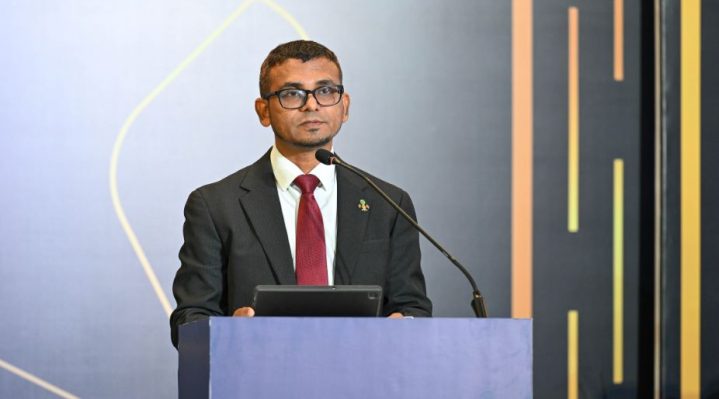
Speaking at the inauguration ceremony of Maldives Premier Bank on Monday night, MMA Governor Ahmed Munawar said foreign nationals currently occupy about 40 per cent of management-level positions across the country’s banking industry.







He said the central bank aims to reduce that proportion to 20 per cent or lower over the next five years, leaving Maldivians in more than 80 per cent of management roles.
Munawar said achieving the target will require greater investment in youth development and professional capacity building. He announced that the MMA has signed an agreement with the Asian Institute of Chartered Bankers as part of efforts to develop local expertise within the industry.
The Governor also pointed to the sector’s profitability, stating that banks recorded pre-tax profits of MVR 5.15 billion last year.
According to Munawar, about USD 200 million in banking-sector profits has left the Maldives over the past five years. He said increasing Maldivian participation and investment in the sector, alongside the development of stronger local banks, would help retain more capital in the domestic economy.
Munawar described the establishment of Maldives Premier Bank as a step towards expanding the role of local institutions alongside international banks. The broader objective, he said, is to develop a resilient financial system with stronger domestic participation and investment.