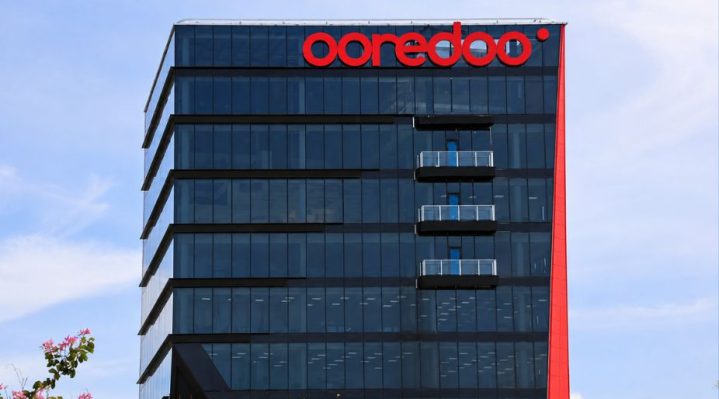
- Ooredoo Maldives marks its 21st anniversary since launching commercial operations as Wataniya Telecom in 2005, introducing competition to a single-operator market.
- The company achieved key milestones including the first 3G (2008), LTE (2013), 5G (2020), a 1,200km submarine cable network, and a Tier III-ready data centre.
- In 2025, Ooredoo completed the Maldives' first submarine cable landing at a tourist resort, and its infrastructure now bridges the distance between atolls and the capital for education, healthcare, and services.
In the Maldives, telecommunications infrastructure does more than connect one person to another. It connects dispersed islands to schools, hospitals, banks, government services, businesses and international markets.
That national role provides the broader context for Ooredoo Maldives’ 21st anniversary. Since beginning commercial operations as Wataniya Telecom Maldives on 1 August 2005, the company has helped transform a market once centred on calls and text messages into one increasingly built around mobile broadband, fibre, cloud infrastructure and digital services.






Its arrival also introduced competition into a telecommunications market previously served by a single operator. Over the following two decades, that competition encouraged faster network development, wider service availability and greater consumer choice.
Connecting the Maldives
Ooredoo’s contribution can be seen through several important technology milestones.
The company launched the Maldives’ first 3G network in 2008, followed by the country’s first LTE service in 2013 and LTE Advanced in 2014. It later introduced fixed broadband through SuperNet, established nationwide 4G+ coverage and launched commercial 5G and 5G AirFibre services in 2020.
These developments changed what telecommunications could provide. Mobile phones became tools for accessing information, conducting transactions, operating businesses and reaching services that had previously required travel or a physical presence in Malé.
For an archipelago, however, wireless coverage depends on extensive infrastructure beneath and beyond the sea. Ooredoo completed an approximately 1,200-kilometre domestic submarine cable network in 2016, providing a high-capacity backbone connecting different regions of the country.
The company has since expanded fibre broadband to additional inhabited islands and invested in international connectivity through the PEACE Cable system. It has also developed a Tier III-ready data centre in Hulhumalé, providing local hosting, storage and cloud infrastructure for businesses and institutions.
In 2025, Ooredoo completed the Maldives’ first submarine cable landing directly at a tourist resort. The connection at Waldorf Astoria Maldives Ithaafushi, supported by private 5G capability, demonstrated how digital infrastructure is becoming an increasingly important part of the tourism industry itself.
Together, these investments have expanded Ooredoo’s role beyond that of a mobile network provider. The company now operates infrastructure supporting consumers, businesses, resorts and digital platforms across the country.
What Connectivity Means for the Country
The wider significance of this investment lies in what people and institutions can do with it.
For island communities, stronger mobile and broadband networks reduce the practical distance between the atolls and the capital. Students can access online learning materials, patients can communicate with healthcare providers, businesses can receive digital payments and citizens can use government services without travelling to Malé for every interaction.
Connectivity has also lowered barriers for small businesses. A company operating from an island can advertise nationally, communicate with suppliers, receive orders and serve customers through social media and digital platforms. This does not remove the disadvantages created by geography, but it gives businesses more ways to overcome them.
Tourism has become similarly dependent on reliable telecommunications. Resorts use broadband for reservations, payments, security systems, internal operations, entertainment and communication with guests. As visitor expectations rise, the quality and resilience of digital infrastructure increasingly form part of the Maldives’ competitiveness as a premium destination.
For fisheries, mobile connectivity supports communication between vessels, buyers and island communities, while improving access to weather information and market updates. Banks and payment providers depend on telecommunications networks to deliver online services across the country.
The COVID-19 pandemic made this dependence particularly visible. Education, public administration, healthcare and commerce increasingly moved online, turning reliable internet access from a convenience into essential national infrastructure.
Important gaps nevertheless remain. Census data showed a continuing difference in internet use between Malé and the atolls. Coverage alone also does not guarantee inclusion. Households must be able to afford suitable devices and data packages, while users need the skills and confidence to navigate digital services safely.
The next measure of progress must therefore be not only how many islands receive a signal, but how effectively people can use that connection to improve education, employment, business productivity and access to essential services.
The Next Decade
Ooredoo enters its third decade as telecommunications begins another transition. The coming phase will be shaped less by basic connectivity and more by artificial intelligence, cloud computing, automation, cybersecurity and data-intensive services.
The company has already moved into this area through local data infrastructure, business cloud services, digital identity systems and an AI-powered Dhivehi customer service assistant. Its continuing 5G expansion could support more advanced applications across resorts, airports, hospitals, ports and public services.
For the Maldives, these technologies offer considerable potential. AI could improve customer service, analyse tourism demand, support remote healthcare and help businesses automate routine work. Connected devices could assist with energy management, marine monitoring, logistics and infrastructure maintenance.
Realising that potential will require more than fast networks. It will depend on affordable access, reliable service, stronger cybersecurity, effective data protection and a workforce capable of using new technologies productively. International cable resilience and local data capacity will also become increasingly important as more essential services move online.
Ooredoo’s first 21 years were largely about expanding the reach and capacity of connectivity. Its next chapter will be judged by whether that infrastructure helps create stronger businesses, more accessible services and wider economic opportunities.
The company has helped connect the islands. The challenge for the next decade is to help the Maldives make more productive, inclusive and secure use of those connections.