Maldives Advances Renewable Energy Push as ‘Magey Solar’ Reaches First 250 Households
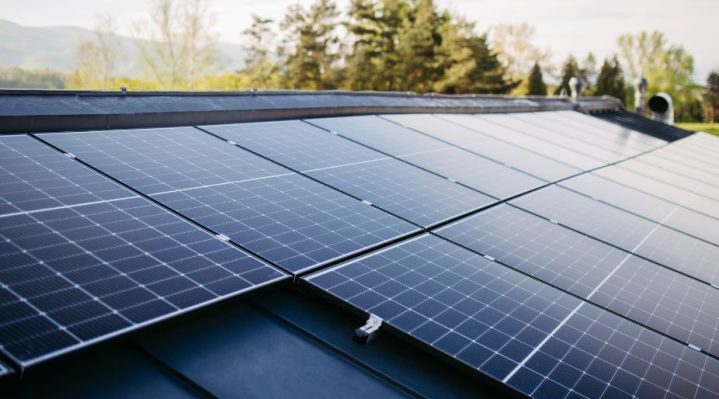
- Maldives has installed 1 MW of solar across 250 households under the national 'Magey Solar' initiative, with Fenaka targeting 298 more by next month.
- The scheme aims to reach 748 households archipelago-wide via first-come, first-served selection, offering 3 kW or 5 kW net-metered systems with no upfront hardware cost.
- The project supports the government's goal of 33 percent renewable electricity, and expansion for the general public is now under evaluation.
The Minister of Climate Change, Environment and Energy Ali Shareef has announced that so far, 1 MW of solar systems have been installed in 250 households in the Maldives under the national ‘Magey Solar’ initiative.
Speaking on the public broadcast programme ‘Ahaashey Bunaanan’, Minister Shareef outlined the progress of the state-backed green energy project. State utility provider Fenaka Corporation Limited, which holds the installation contract, plans to fit panels in a further 298 registered households by the end of next month.






The scheme ultimately targets 748 households across the archipelago, with specific allocations assigned to each atoll. Selection follows a strict ‘first-come, first-served’ order based on initial application dates.
Engineers carry out preliminary surveys at each property to determine the technical requirements before setting up either 3 kW or 5 kW systems, available in single-phase or three-phase configurations. Participating homes utilise a net-metering setup, allowing households to feed surplus electricity directly back into the main grid to offset their monthly energy bills.
To reduce financial barriers, the government requires no upfront payment for the solar hardware, though homeowners must pay an installation fee upon signing their contract.
The ‘Magey Solar’ project serves as a key pillar in the government’s broader strategy to generate 33 percent of the country’s electricity from renewable sources while easing household utility expenditure. Following recent directives to expand access, the ministry is currently evaluating options to broaden the programme for the general public.