Maldives Gains National Channel to Green Climate Fund Through MFLC

- MFLC became the Maldives' first national Direct Access Entity after approval at the GCF's 46th Board meeting in South Korea.
- The accreditation lets a Maldivian institution develop and submit climate proposals directly to the fund and oversee approved projects.
- Planned focus areas include renewable energy, energy efficiency, sustainable maritime transport and water security, supporting the Maldives' NDC 3.0 priorities.
The Maldives has gained a domestic channel for seeking international climate finance following the approval of Maldives Finance and Leasing Company Pvt Ltd (MFLC) as an accredited institution of the Green Climate Fund (GCF), according to the Ministry of Climate Change, Environment and Energy.
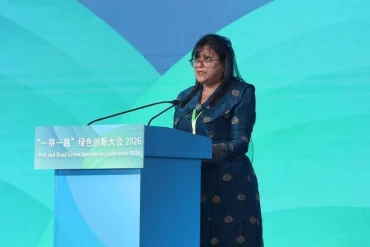
The ministry said MFLC became the country’s first national Direct Access Entity following approval at the GCF’s 46th Board meeting, held in Songdo, South Korea, from 26 to 29 October 2026. The status opens a route for a Maldivian financial institution to develop and submit climate investment proposals directly to the fund and oversee approved projects.







The Maldives already receives GCF support through international institutions. Its existing portfolio includes water security work through the United Nations Development Programme, coastal resilience projects through the Japan International Cooperation Agency, and an early warning initiative through the United Nations Environment Programme. MFLC’s accreditation adds a national institution to the channels available for accessing that support.
For businesses and project developers, the potential benefit is a local financing partner able to develop proposals around domestic investment needs. The ministry said MFLC intends to explore projects covering renewable energy, energy efficiency, sustainable maritime transport, water security and other investments that improve resilience to climate change.
These areas cover the GCF’s two main purposes: mitigation, which reduces greenhouse gas emissions, and adaptation, which helps communities and economies cope with climate impacts. Renewable energy investments can reduce emissions, while more resilient water supplies can help communities manage climate-related shortages.
Accreditation and project funding are separate decisions. MFLC will still need to develop proposals that satisfy GCF requirements and obtain approval before financing can be committed to particular investments. Access for individual businesses will depend on the projects and financing programmes subsequently developed.
GCF financing can take several forms, including grants, concessional loans, equity and guarantees. Consequently, the terms available to beneficiaries will depend on how each approved project is structured. Accreditation alone does not establish a new grant scheme or determine the interest rates and repayment conditions of future financing.
According to the ministry, MFLC underwent an 11-month accreditation process involving institutional assessments, technical evaluations and improvements to its governance, risk management and operational arrangements. GCF accreditation assesses institutions’ capacity to manage funds and meet environmental, social and gender requirements.
The ministry said future proposals would support national priorities, including the Maldives’ Third Nationally Determined Contribution, or NDC 3.0. The next stage will be to turn the accreditation into a pipeline of investment proposals, with MFLC taking responsibility for developing projects, securing approvals and overseeing delivery.