Maldives Signs Inter-Ministerial MoU for 10-Island Agroforestry Project
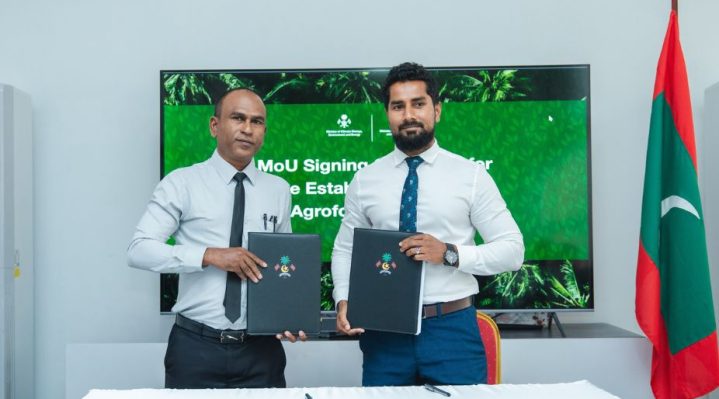
- The Maldives signed an inter-ministerial MoU to launch integrated agroforestry farming across 10 selected islands.
- The agriculture ministry will distribute 400,000 plants and establish ten community-managed nurseries with local councils.
- The project aims to boost food security, protect coral reefs, and reduce reliance on imports.
The Maldives is set to introduce integrated farming models across 10 selected islands, following a newly formalised agreement between the Ministry of Climate Change, Environment and Energy and the Ministry of Fisheries, Agriculture and Ocean Resources. This collaborative effort is designed to bolster domestic food production, safeguard local ecosystems, and drive long-term economic growth.
Under the operational plan, the agriculture ministry will distribute 400,000 young plants to the chosen locations. These zones will transition into dynamic agricultural landscapes that actively blend traditional crop cultivation and livestock rearing with forestry. To optimise the available land, cultivators will plant a strategic mix of nutrient-enriching plant species, fruit trees, and essential food crops.







To guarantee a reliable source of plants and encourage community ownership, national authorities have finalised partnerships with local councils. This framework includes the creation of ten dedicated, community-managed nurseries, ensuring each participating island hosts its own cultivation hub.
Environmental officials emphasise that introducing forestry into traditional farming significantly improves soil fertility while combatting erosion. This mitigation is vital for shielding the archipelago’s delicate coral reefs from harmful agricultural runoff. Beyond marine protection, the increased vegetation will capture greater amounts of carbon and help local communities weather the impacts of a changing climate.
Furthermore, this effort directly complements the national 5 Million Trees Planting Programme, an ongoing government campaign that has successfully cultivated 1.8 million plants to date.
The initiative ranks high on President Dr Mohamed Muizzu’s policy agenda, reflecting a broader strategy to cultivate a resilient domestic economy. Agriculture officials anticipate that these new farming hubs will open up fresh commercial avenues for both raw harvests and locally processed agricultural goods.
By equipping growers with better resources and diverse crop options, the programme aims to elevate their financial security. Ultimately, the administration intends for this boost in local yield to slash the nation’s dependence on foreign food imports, steering the Maldives towards agricultural independence.