- Ambassador Thoriq Ibrahim presented his credentials as the Maldives' Permanent Representative to IRENA on 14 October in Abu Dhabi.
- Discussions focused on IRENA's technical support for the Maldives' energy planning and renewable energy expansion across its islands.
- Renewable energy holds economic importance for the Maldives by reducing costly diesel imports, foreign currency demand and subsidy pressures.
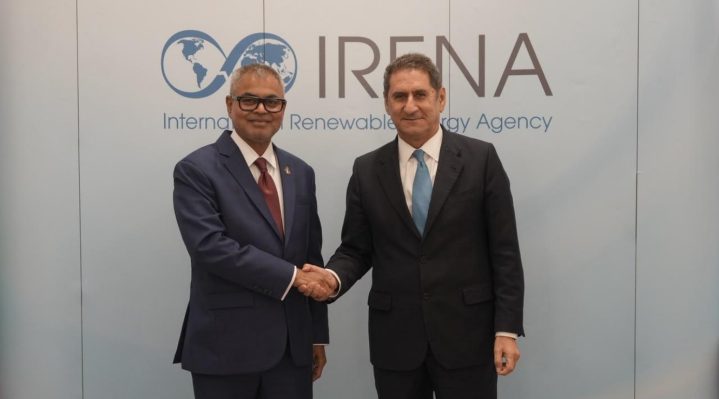
Maldives’ cooperation with the International Renewable Energy Agency (IRENA) on energy planning and renewable energy development formed the focus of discussions as Ambassador Thoriq Ibrahim presented his credentials as the country’s Permanent Representative to the agency.
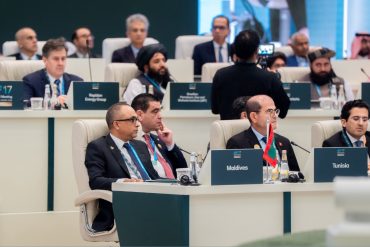
Thoriq presented his Letter of Credence to IRENA Director-General Francesco La Camera on 14 October, on the sidelines of the 32nd meeting of the IRENA Council at the Sheraton in Abu Dhabi.







IRENA is an intergovernmental organisation that helps countries expand renewable energy through technical advice, policy support, research and international cooperation. Its work includes helping governments assess renewable energy resources, plan electricity systems and identify barriers to investment.
During the ceremony, Thoriq expressed the Maldivian government’s appreciation for IRENA’s work globally. He highlighted the agency’s technical assistance and contributions to the Maldives, which have supported energy planning and the expansion of renewable energy across the country’s islands.
La Camera welcomed Thoriq to the role and reaffirmed IRENA’s commitment to supporting the Maldives in achieving its renewable energy goals. He also highlighted the importance of small island developing states in the global energy transition and expressed the agency’s readiness to continue working closely with the Maldivian government.
For the Maldives, renewable energy has direct economic importance. Heavy reliance on imported diesel for electricity generation exposes the country to international fuel price changes, creates demand for foreign currency and adds pressure to government spending through fuel and electricity subsidies. Expanding renewable generation offers a way to reduce those costs and improve energy security.
The transition also requires careful planning across geographically dispersed islands with limited land and separate electricity systems. Solar installations, battery storage and grid improvements need to be coordinated to maintain reliable supplies as renewable generation increases. IRENA’s technical expertise is relevant to these challenges.
The agency’s engagement with the Maldives includes a renewable energy roadmap published in 2015 at the request of the Ministry of Environment and Energy. It examined barriers to renewable energy development and recommended technical and policy measures, including approaches to land constraints and greater private sector participation.
Thoriq was accompanied by Fathmath Niusha, First Secretary at the Embassy of the Maldives in Abu Dhabi, United Arab Emirates. Maldives became a member of IRENA in June 2009.