- President Muizzu has offered to facilitate the resumption of stalled SAARC summits, positioning the Maldives as a potential convenor and mediator.
- SAARC has lacked a leaders' summit since 2014, largely due to India-Pakistan tensions, leaving South Asia among the world's least economically integrated regions.
- A functional regional platform would benefit the Maldives' connectivity, food, health and climate resilience, but revival requires more than a venue.
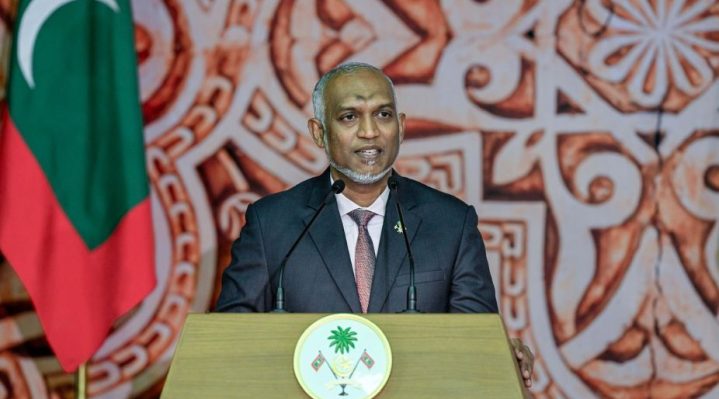
President Dr Mohamed Muizzu has offered to facilitate the resumption of South Asian Association for Regional Cooperation meetings, casting the Maldives as a potential convenor at a time when the region’s main political forum has been without a leaders’ summit for more than a decade.
The proposal, made during the Maldives’ 61st Independence Day ceremony, is significant less for what it can settle immediately than for what it acknowledges: South Asia’s political divisions have left its regional institutions unable to address shared economic, climate and security challenges collectively.







SAARC’s last summit was held in Kathmandu in 2014. A planned summit in Islamabad two years later did not take place after India announced it would not attend amid tensions with Pakistan, and several other member states also withdrew. The organisation has continued limited technical and administrative work, including a Programming Committee meeting in Kathmandu in February, but high-level political engagement has remained at a standstill.
The absence of summit diplomacy has had consequences beyond symbolism. South Asian countries have some of the world’s closest geographic and cultural links, yet remain among its least economically integrated regions. World Bank research has estimated that trade within South Asia could rise from USD 23 billion to at least USD 67 billion if countries reduced tariff, non-tariff and connectivity barriers. Intra-regional trade accounts for only about five percent of the region’s total trade.
For the Maldives, a more functional regional platform could have practical value. The country depends on regional links for air connectivity, food supplies, health cooperation, education and climate resilience. It also shares with its neighbours the risks of extreme weather, rising seas, public-health emergencies and disruptions to global trade.
But SAARC’s revival cannot be achieved through a venue alone. The association was built around consensus, and its charter excludes bilateral and contentious issues from deliberations. That arrangement was intended to allow cooperation to proceed despite political differences. In practice, the India-Pakistan dispute has repeatedly prevented the organisation from meeting at the level where major decisions are made.
President Muizzu said the Maldives had consistently supported the peaceful settlement of disputes and was prepared to play a leading role in encouraging dialogue.
“The Maldives calls on all parties with differing views to come together around the table, prioritise regional development and peace, and work in a spirit of cooperation. If there are difficulties in doing so, the Maldives stands ready to take the initiative and serve as a mediator to help advance those discussions,” he said.
A Maldivian offer to host or facilitate talks would therefore be a diplomatic opening rather than a solution. The country has limited leverage over the region’s larger powers, but it can make a credible case for restoring a forum that includes all South Asian states, rather than leaving cooperation to smaller groupings that exclude one or more of them.
The immediate objective need not be a full summit. Resuming foreign-ministerial and sectoral meetings on trade, disaster management, health, energy and climate adaptation could begin to rebuild institutional trust. Such a step-by-step approach would also test whether the political conditions exist for a wider revival.
The President’s remarks placed that argument within the Maldives’ wider foreign-policy position. He said the country rejects war and conflict as a means of resolving differences, and reiterated its condemnation of Israel’s actions in Palestine, which he described as genocide.
President Muizzu also said the Maldives would maintain diplomatic relations with all countries except Israel, citing its policy barring Israeli passport holders from entering the country. He said the government would continue strengthening relations with Arab and Islamic countries.
Whether SAARC returns as an effective forum will depend on the willingness of its largest members to engage. But after years in which regional cooperation has been treated as secondary to geopolitical rivalry, the Maldives’ offer highlights an increasingly urgent reality: the region’s common problems have not paused simply because its leaders have stopped meeting.